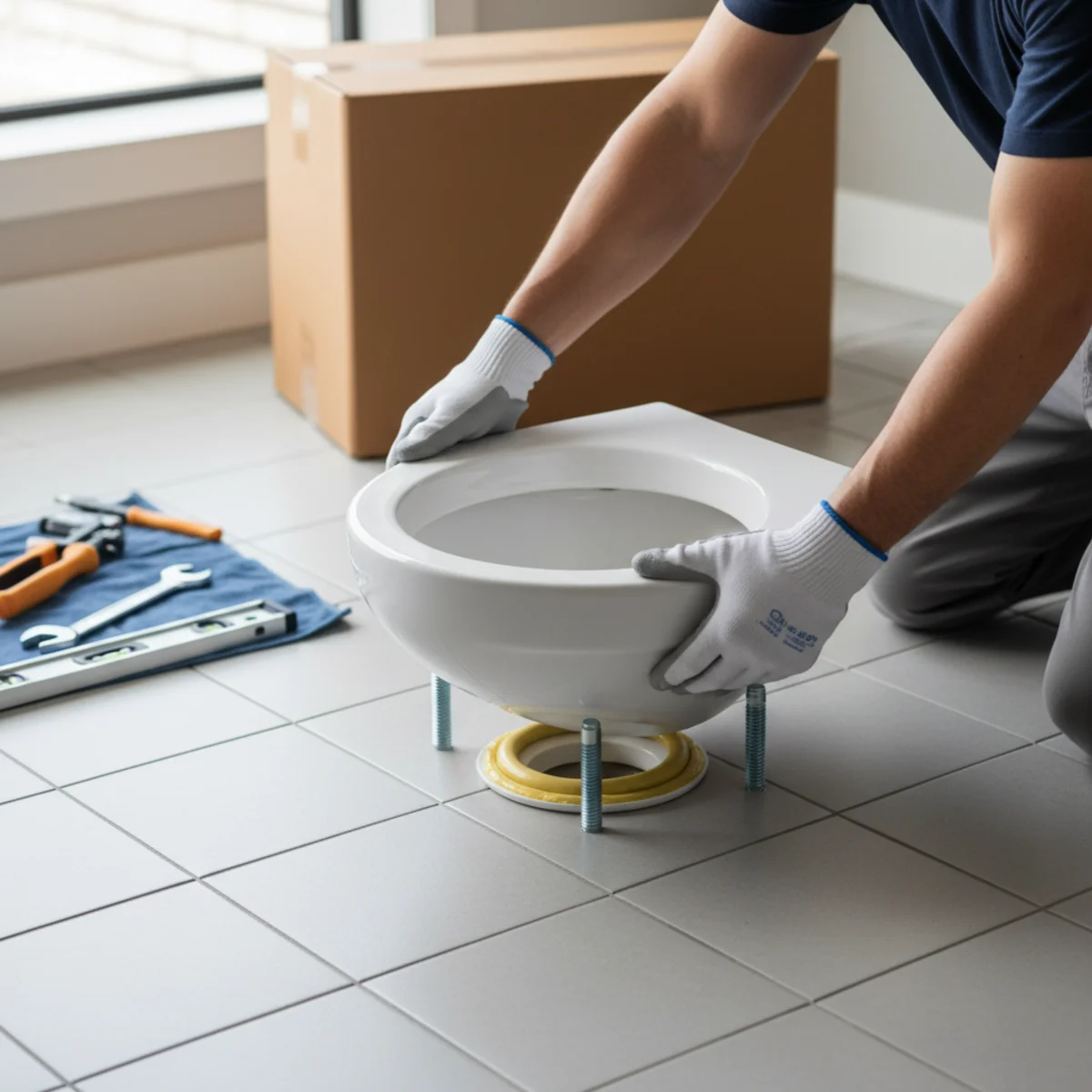
Toilet Installation in Roselle Park, NJ
Toilet installation in Roselle Park, NJ is a thirty-minute job on paper and a different story on a 1920s bathroom floor. We measure the rough-in before you buy, check the flange before we set, and bolt the new bowl down level and solid. And when your existing toilet only needs a rebuild, we say so — selling you porcelain you do not need is not how we want to be remembered.
- 24/7 Emergency Availability
- Upfront Estimates Before Work Begins
- Local Roselle Park Dispatch
The Problem, As You're Living It
Maybe the old toilet finally cracked. Maybe it clogs weekly, guzzles five gallons a flush, or sits so low your knees file a complaint every morning. Either way, you have been at the home center staring at a wall of boxes that all claim a powerful flush, with no idea which ones will actually fit your bathroom.
Here is what the box does not tell you: toilet installation in an older Roselle Park home turns on two things you cannot see in the showroom — the rough-in distance from the wall to the drain, and the condition of the closet flange under the old bowl. Buy a 12-inch toilet for a 10-inch rough-in and it simply will not fit. Set a new toilet on a corroded eighty-year-old flange and you have installed a future leak.
We sort both out before the box is even opened, so the new toilet goes in once, correctly.
What Toilet Installation Includes
- Measuring your rough-in distance and bolt spread before purchase, because older Roselle Park bathrooms often hide 10-inch rough-ins that modern 12-inch toilets cannot fit.
- Removal and haul-away of the old toilet, with the water shut off cleanly and the open drain capped against sewer gas while we work.
- Inspection and repair of the closet flange before setting, including spanner flanges and repair rings for corroded cast-iron originals.
- Setting the new bowl on a fresh wax ring or waxless seal, aligned over the closet bolts and pressed level in one motion.
- Comfort-height, elongated, dual-flush, and compact installs matched to the actual dimensions of the bathroom, not just the catalog photo.
- New shutoff valve and supply line as part of every install, so the toilet can be isolated instantly the next time anything goes wrong.
- Shimming and leveling on the wavy floors common in pre-war homes, so the bowl sits solid without rocking the seal open.
- Tank assembly, fill level adjustment, and seat installation, finished with a clean caulk line at the base.
- An honest pre-purchase consult on whether your current toilet is worth rebuilding instead, with the price difference laid out plainly.
How the Job Gets Done
- 1
Talk through fit before you buy
Before money changes hands, we confirm the rough-in distance, bolt pattern, and bathroom clearances, and ask how the household actually uses the bathroom. Five minutes of measuring prevents the single most common toilet-install disaster: a beautiful new fixture that physically cannot sit where the old one did.
- 2
Pull the old toilet cleanly
Water off, tank emptied, supply disconnected, and the old unit unbolted and carried out without a drip trail across your hallway. The open drain gets plugged immediately — an uncapped closet bend breathes sewer gas into the house and has swallowed more than one dropped tool.
- 3
Inspect and repair the flange
This is the step that separates an installation from a future leak. We check the closet flange for cracks, corrosion, and height relative to the finished floor. On the borough's older cast-iron systems we frequently fit a repair ring or spanner flange so the new bolts anchor into solid metal, not rust.
- 4
Set, level, and connect
Fresh seal on the flange, bowl aligned over the bolts and pressed home in one motion — never lifted and re-dropped, which voids the wax seal. We shim until dead level, snug the bolts evenly, mount and adjust the tank, and connect the new supply line to the new shutoff valve.
- 5
Flush-test and finish
A series of full flushes while we check the base, the tank bolts, and the supply for any weeping. Fill level set to spec, seat installed, base caulked with a gap left at the back so a future leak shows itself instead of hiding. Old toilet and packaging leave with us.
Why This Matters in Roselle Park
The borough's pre-war housing makes toilet installation a measure-twice trade. Plenty of Roselle Park bathrooms were plumbed with 10-inch rough-ins, and the modern 12-inch toilet a homeowner brings home from the big-box store on Route 22 will not fit them. Floors here are often three layers deep — original mud-set tile under vinyl under something newer — which leaves closet flanges sitting too low and demands spacers or repair rings to seal correctly. And in the two-family homes near the train station, a second-floor toilet set badly does not just leak; it leaks into somebody else's kitchen. We measure before you buy, carry the flange hardware these old floors demand, and set every bowl like the ceiling below belongs to us.
Why Call a Local Plumbing Pro
An honest installer starts with a question, not a sale: does this toilet actually need replacing? Roughly a third of the replacement calls we get would be better served by a rebuild kit on a sound bowl, and we say so even though it is the smaller invoice. When replacement is right, the value of a plumber is in the invisible work — the rough-in check, the flange repair, the level set, the new shutoff — that determines whether the toilet is still dry underneath five years from now. That is the standard every install gets.
What Affects the Cost of Toilet Installation
A straightforward swap on a sound flange is short and predictable. The cost climbs with what the old floor hides. The rough-in distance has to match the fixture — many pre-war borough bathrooms have 10-inch rough-ins a modern 12-inch toilet will not fit — and the closet flange frequently needs a repair ring because old cast iron has corroded or sits too low under layered flooring.
Every install includes a fresh seal, a new shut-off valve, and a supply line, plus shimming on wavy floors. The toilet you choose sets its own price, and basement baths sometimes need an upflush or ejector setup. Often a rebuild of your current toilet is the honest answer, which we say before you spend.
No honest plumber can quote this from a web page. You get an upfront estimate after the problem is seen, and you approve it before any work begins. Call (207) 419-2600 for a straight answer on your situation.
Toilet Installation Across Union County
All Service AreasRelated Plumbing Guides
Helpful reading from our blog on problems related to toilet installation — what to watch for, what's safe to DIY, and when to call.
Kitchen & Bath
Toilet Keeps Running? The Step-by-Step Fix You Can Do Yourself
A toilet that runs and runs is wasting water by the hundreds of gallons, and the fix is almost always a cheap part you can replace yourself. Here is the diagnosis ladder, from the easiest cause to the one that needs a plumber.
Read the guideKitchen & Bath
Bathroom Plumbing Warning Signs You Shouldn't Ignore
A bathroom rarely fails all at once. It warns you first — a stain on the ceiling below, a floor that gives underfoot, drains that all slow together. Here is how to read those signals before they become a repair you cannot ignore.
Read the guideKitchen & Bath
Kitchen Plumbing Upgrades to Make Before the Cabinets Go In
The rough-in is the one part of a kitchen remodel you cannot redo once the cabinets and counters are in. Here are the plumbing decisions to lock down before the drywall closes, in a Roselle Park home.
Read the guide
Toilet Installation FAQs
Need Toilet Installation in Roselle Park, NJ?
Call now for prioritized dispatch, or send the details and we'll follow up fast. Upfront estimates before any work begins.