Kitchen & Bath
Bathroom Plumbing Warning Signs You Shouldn't Ignore
8 min read · Published March 23, 2026
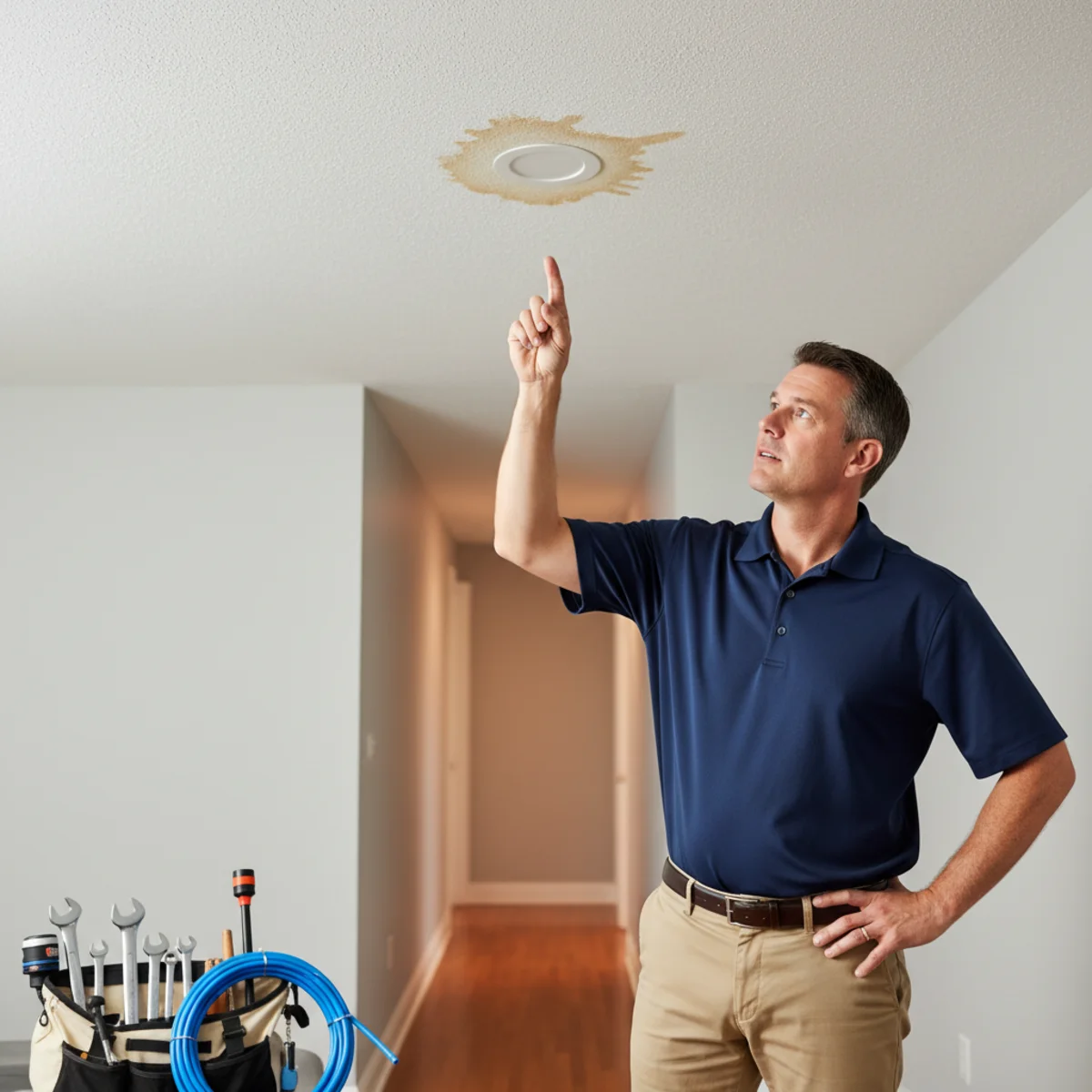
A bathroom rarely fails all at once. It warns you first — a stain on the ceiling below, a floor that gives underfoot, drains that all slow together. Here is how to read those signals before they become a repair you cannot ignore.
Key Takeaways
- A ceiling stain below the bath is a leak traveling along joists — painting over it stops nothing.
- A soft, spongy floor means the subfloor is already rotting and the damage spreads to the joists.
- When the sink, tub, and toilet all slow together, the clog is in the shared branch drain or vent.
- An intermittent sewer smell often traces to a dried-out trap — run water to refill it first.
- Faded pressure and rusty water point to galvanized supply pipe near the end of its life.
A Stain on the Ceiling Below the Bathroom
The most common warning a bathroom gives shows up in the wrong room. A brown or yellow ring on the ceiling below the bath — in the kitchen, the dining room, or a finished basement — is water that escaped upstairs and traveled down a joist before it dripped through.
The source is rarely where the stain is. Water runs along framing and follows the path of least resistance, so a stain near the light fixture might come from a tub three feet over. The usual suspects are a failing wax ring under the toilet, a leaking shower pan or tile, a tub overflow gasket that has dried out, or a supply or drain joint that weeps a little with every use.
The trap with ceiling stains is that they look small and stable, so people paint over them and move on. The leak does not stop because you hid it. It keeps soaking the subfloor and the joists, and what started as a wax-ring swap becomes a framing repair.
A fresh stain that grows, feels damp, or comes back after painting needs a look while it is still cheap. In Roselle Park's many homes with a bath over a finished space, this is the warning that protects the room below.
A Floor That Feels Soft or Spongy
Walk your bathroom barefoot and pay attention to the floor, especially around the toilet and the base of the tub or shower. If it gives underfoot, flexes, or feels spongy instead of solid, the subfloor beneath the tile or vinyl has been getting wet and is rotting.
This is the slow, hidden cousin of the ceiling stain. A toilet whose wax ring failed, a shower whose grout and caulk let water through, or a supply line that has wept for years all feed water into the subfloor. Wood holds that water, softens, and eventually loses its structure. By the time the floor feels soft, the damage has been building for a long while.
Near the toilet, a soft floor often pairs with a base that rocks — the rot has loosened the flange the toilet bolts to. Near the tub, it usually points to a leaking shower or a failed seal where the tub meets the floor.
This is not a wait-and-see sign. A subfloor that is rotting will keep rotting, the rot spreads to the joists, and the bathroom can develop a real structural problem. Catching it early can mean a bathroom plumbing fix and a small floor patch instead of rebuilding the room.
Every Drain in the Bathroom Is Slow at Once
One slow drain is a local clog. When the sink, the tub, and the toilet all drain sluggishly at the same time, the problem is not in any single fixture — it is in the branch drain or the vent they all share.
A shared slow-down points to a partial clog deeper in the line where all the bathroom fixtures tie together, or to a venting problem that starves the drains of the air they need to flow. You will often hear the signature of a vent issue: a sink that gurgles when the tub drains, or a toilet bubble when the shower runs. That gurgle is air being pulled through the traps because it cannot get in the proper way.
If the slow drains in the bathroom come with slow drains elsewhere in the house, the diagnosis moves downstream again, toward the main line — and a backing-up main line clog is a different and more urgent animal than a single sluggish sink.
The key is to notice the pattern. Treating a shared-drain problem as four separate clogs and snaking each fixture in turn just chases the symptom. The fix is in the line they have in common, and finding it is the whole job.
Smells, Mildew, and Phantom Moisture
Your nose catches bathroom problems before your eyes do. A persistent sewer smell that comes and goes is one of the clearest warnings, and it usually traces to a dried-out trap or a failing seal.
Every drain has a trap that holds a plug of water to block sewer gas from rising into the room. A floor drain or a rarely-used tub that has not run in weeks can lose that water to evaporation, and the gas comes straight up — common in guest baths and basement bathrooms. The fix is often as simple as running water to refill the trap. A smell that persists after that points to a wax-ring leak or a vent problem instead.
Unexplained mildew, peeling paint, or a wall that feels damp behind the tub is moisture escaping where you cannot see it. A shower valve or a supply line leaking inside the wall keeps the cavity wet, and mildew and bubbling paint are the only signs until the drywall gives way.
If the smell is more rotten-egg than sewer, that is a separate issue worth ruling out fast, because gas odors are never something to wait on. When a smell will not clear with simple steps, call (207) 419-2600 and we will track it to the source.
Pressure, Discoloration, and the Pipes Behind the Wall
Some warning signs are about the water itself, and in an older home they often point back to the pipes feeding the bathroom.
Weak water pressure at the shower or sink, especially hot-side pressure that has faded over years, is a classic symptom of galvanized supply lines rusting shut from the inside. The rust narrows the pipe until barely a trickle gets through. If your Roselle Park home still has its original galvanized supply, the bathroom is often where you feel it first because it sits at the end of a long run.
Rusty or brown water from the bathroom taps, particularly on the first draw of the morning, is the same story — corrosion shedding from the inside of aging pipe. If it clears after a few seconds, the pipe is the source; if it does not, the water heater may be involved.
These are not fixture problems, and swapping the faucet will not help. They are the pipes telling you they are near the end. The honest answer is often pipe replacement for the affected run rather than another patch — galvanized that is closing up does not reopen, and chasing it fitting by fitting just moves the restriction down the line.
What's a Safe DIY Check and What Needs a Pro
Plenty of bathroom warning signs start with checks you can do yourself before calling anyone. Run water down a rarely-used floor drain or tub to refill a dry trap and see if a smell clears. Re-caulk a tub-to-floor seam or a shower corner where the bead has cracked. Clean a slow sink's pop-up and trap. Tighten a visibly loose supply nut. These solve real problems and cost almost nothing.
Where it stops being DIY is anything behind a wall, under a floor, or below the bathroom. A ceiling stain, a soft floor, several drains slow at once, a smell that will not clear, mildew from a hidden leak, or fading pressure across the bathroom all mean the real problem is out of reach — and guessing wrong while it keeps soaking the framing only raises the cost.
Those are the moments to bring in a professional with the tools to find the source without tearing the room apart. We track leaks to where they actually originate, not where the stain shows, so you repair one spot instead of three.
Call (207) 419-2600 with what you are seeing — the stain, the soft spot, the smell — and where it is. We serve Roselle Park and the towns around it, give a clear ETA before the truck rolls, and protect the finishes while we work.
Why Older Bathrooms Age All at Once
There is a reason bathroom problems seem to arrive in clusters. In a home built decades ago, everything in that bathroom was installed at the same time and has aged on the same clock.
The wax ring, the supply lines, the shutoff valves, the shower valve, the caulk and grout, the drain assemblies — all original, all the same age, all reaching the end of their service life within a few years of each other. So when one thing fails, the others are not far behind, and a single repair sometimes uncovers two more problems waiting their turn.
That is not a reason to panic, but it is a reason to think a step ahead. When a plumber is already in the wall fixing a shower valve, addressing the tired shutoffs or the failing supply line on the same visit costs far less than a separate trip later. A remodel or a major repair is the natural moment to bring the whole bathroom up to date.
The borough's housing stock is full of bathrooms quietly aging in unison. Reading the early warnings lets you get ahead of the cluster instead of chasing it one emergency at a time, and the toilet repair or wax-ring fix you do today is cheaper than the framing repair you avoid tomorrow.
Frequently Asked Questions
Keep Reading
Kitchen & Bath
Toilet Keeps Running? The Step-by-Step Fix You Can Do Yourself
A toilet that runs and runs is wasting water by the hundreds of gallons, and the fix is almost always a cheap part you can replace yourself. Here is the diagnosis ladder, from the easiest cause to the one that needs a plumber.
8 min read · April 6, 2026

Kitchen & Bath
Kitchen Plumbing Upgrades to Make Before the Cabinets Go In
The rough-in is the one part of a kitchen remodel you cannot redo once the cabinets and counters are in. Here are the plumbing decisions to lock down before the drywall closes, in a Roselle Park home.
9 min read · February 2, 2026
Kitchen & Bath
Garbage Disposal Not Working? Safe Fixes Before You Call
A dead or jammed garbage disposal usually has a simple, safe fix you can do yourself — if you know which sound means what. Here is the homeowner playbook, and the one rule you never break.
7 min read · December 1, 2025