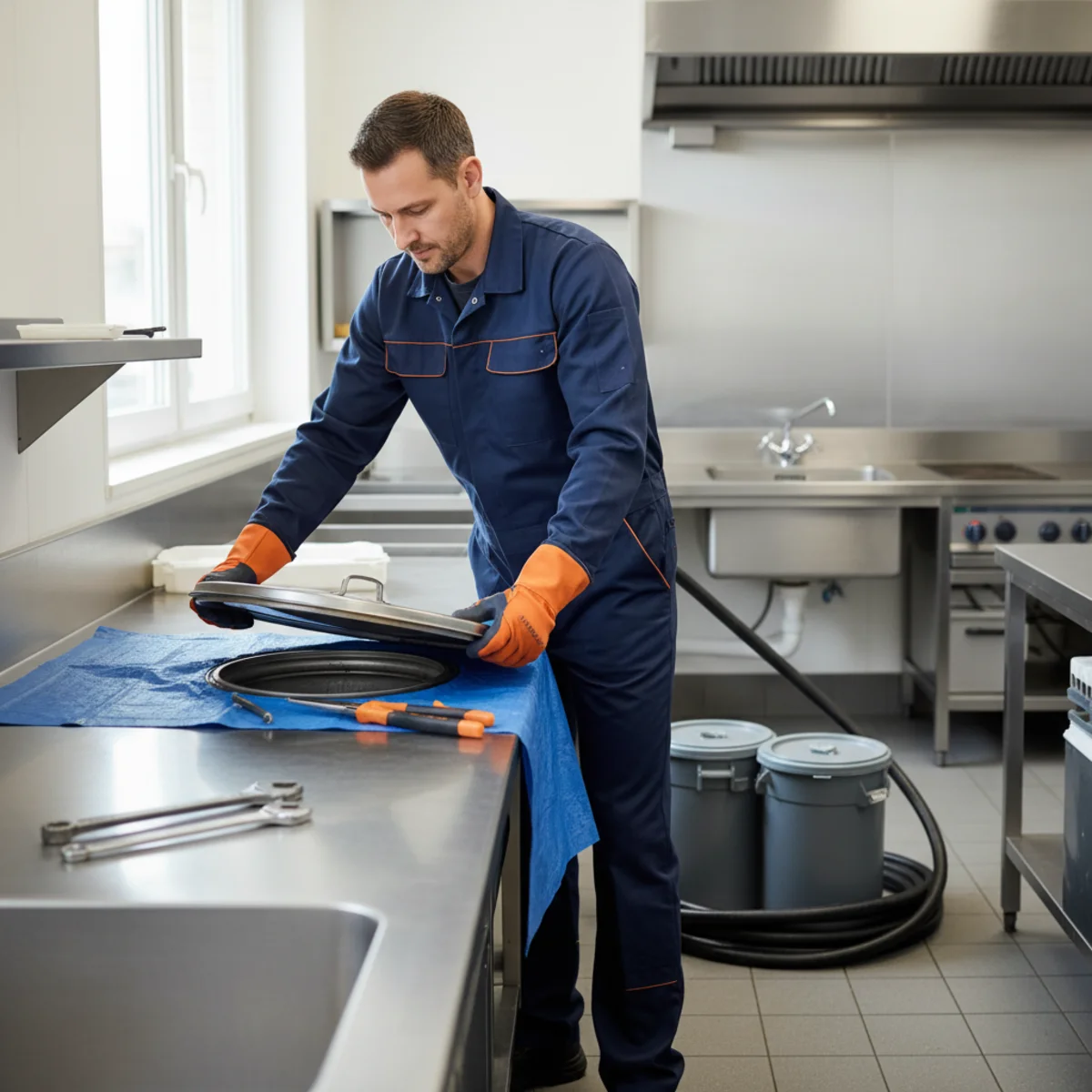
Grease Trap Cleaning in Roselle Park, NJ
A grease trap only works when it's serviced — past its interval, it's just a box that grease swims through on its way to clogging your lateral. Our grease trap cleaning service in Roselle Park, NJ pumps, scrapes, and documents interceptors for kitchens on the Westfield Ave corridor and across Union County. Call (207) 419-2600 to get on a schedule that fits your volume.
- 24/7 Emergency Availability
- Upfront Estimates Before Work Begins
- Local Roselle Park Dispatch
The Problem, As You're Living It
Grease traps fail quietly. The kitchen runs fine, the sinks drain, and the trap under the dish station fills — first with the grease it's supposed to catch, then past the point where it can catch anything at all. Once the trap is saturated, every fryer cleanout and greasy pan sends fat straight down the line, where it cools, hardens, and starts closing your building's drain from the inside.
By the time you smell it, you're behind. Trap odor reaching the dining room, floor drains bubbling during dish-up, lines needing emergency snaking on a Friday — these are all late-stage symptoms of an interceptor that needed service weeks earlier.
Then there's the inspection problem: health inspectors ask for grease trap service records, and an overflowing trap with no log is the kind of finding that makes the rest of your inspection longer. Scheduled service is cheaper than every version of catching up.
What Grease Trap Cleaning Includes
- Complete pump-outs of under-sink traps and larger in-ground interceptors, removing grease, solids, and wastewater rather than skimming the surface layer.
- Manual scraping of trap walls, baffles, and inlet and outlet fittings, because a pumped trap with coated baffles goes back to failing within days.
- Inspection of baffles, gaskets, and lids during every service, catching the cracked baffle or failed seal before it becomes a bigger problem.
- Service intervals set to your actual kitchen volume using the quarter-full standard, not a one-size contract that over-services or under-services you.
- Written service records after every visit — date, condition, volume removed — kept the way health inspectors expect to see them.
- Honest sizing assessments when your trap is genuinely too small for your volume, and a straight answer when it isn't.
- Drain line jetting downstream of the trap when grease has already escaped and started coating the building lateral.
- Odor diagnosis when trap smell reaches the kitchen or dining room — often a gasket, vent, or interval problem with a cheap fix.
- Proper, legal disposal of everything removed, because what leaves your kitchen has to go somewhere accountable.
How the Job Gets Done
- 1
Tell us about the kitchen
Call (207) 419-2600 with your trap's location and size if you know them, your kitchen's pace, and the last service date if one exists. From that, we can usually tell you on the phone whether you're due, overdue, or about to have a problem.
- 2
First service and assessment
The first visit is a full pump-out and a hard look: trap condition, baffle integrity, how saturated it actually was, and whether grease has already escaped downstream. You get an honest read on what your service interval should really be going forward.
- 3
Pump, scrape, inspect
Full evacuation of grease, solids, and water — then the part cut-rate services skip: scraping the walls, baffles, and fittings clean, and checking gaskets and lids. A trap that gets pumped but never scraped goes right back to failing within days.
- 4
Leave it clean and documented
The trap goes back together sealed and working, the area is left clean enough that your morning crew wouldn't know we were there, and the service record goes into your log — ready for the health inspector before they ever ask for it.
- 5
Set the real interval
Based on how full your trap actually was, we recommend a service rhythm — then shorten or stretch it after a couple of visits as the evidence comes in. The right interval is the one matched to your kitchen, not the one printed in a contract template.
- 6
Watch the line downstream
If grease escaped during the neglected stretch, we tell you what the downstream line looks like and whether it needs jetting now or just watching for a while. No drama either way — just what the pipe actually needs and roughly when it will need it.
Why This Matters in Roselle Park
Roselle Park's kitchens mostly operate in older buildings along Westfield Ave and near the train station — spaces that have cooked for decades, with traps and interceptors of every age, including a few that predate everyone currently working there. The borough's drain infrastructure raises the stakes: laterals from these buildings are old clay and cast iron, already rough inside, and escaped grease grabs that roughness and builds fast. A neglected trap on this corridor doesn't just threaten your kitchen — it can take a shared building line down, and in a mixed-use building that drags the upstairs tenants into your problem too. We're on the same avenue at 472 E Westfield Ave, we know which blocks run the oldest lines, and we keep trap service in early and after-hours slots so it never touches your service window.
Why Call a Local Plumbing Pro
Grease trap service is easy to do badly — pump the liquid, skip the scraping, leave no record, gone in twenty minutes. The trap looks serviced and fails within the week. We do the unglamorous full job: evacuate everything, scrape the baffles, check the seals, write it all down. And we're straight about sizing — some kitchens genuinely need a bigger interceptor, but most just need the right interval, and we're not in the business of selling equipment that a schedule would fix. Your inspector sees a log, your drains stay open, and your dining room smells like food.
What Affects the Cost of Grease Trap Cleaning
Grease trap cleaning is priced by the size of the unit and how often it genuinely needs service, set on the quarter-full standard rather than a template. A small under-sink trap in a high-volume kitchen may need service monthly or faster; a larger in-ground interceptor at a lower-grease operation stretches much longer. Matching the interval to your volume keeps the cost honest, and we measure yours on the first visit.
The service is a full pump-out of grease, solids, and water, plus the scraping of walls and baffles that cut-rate outfits skip. Legal disposal is folded in — a quote that looks impossibly cheap is usually cutting that corner. Jetting a grease-coated lateral downstream is a separate item.
No honest plumber can quote this from a web page. You get an upfront estimate after the problem is seen, and you approve it before any work begins. Call (207) 419-2600 for a straight answer on your situation.
Grease Trap Cleaning Across Union County
All Service AreasRelated Plumbing Guides
Helpful reading from our blog on problems related to grease trap cleaning — what to watch for, what's safe to DIY, and when to call.
Commercial
Backflow Prevention for Businesses: What It Is and Why Testing Exists
Backflow prevention is the compliance item most business owners forget until a notice arrives. Here is what backflow actually is, why testing exists, and how to stay ahead of it.
Read the guideCommercial
Apartment Building Plumbing Issues and How They Spread
In a multifamily building, plumbing is never just one unit's problem. Here is how stacked units and shared risers turn a single leak into a building-wide headache, and who pays.
Read the guideCommercial
The Property Manager's Plumbing Emergency Plan
A tenant calls at 2 AM about water coming through the ceiling. Here is the playbook every Roselle Park property manager should have ready before that phone rings.
Read the guide
Grease Trap Cleaning FAQs
Need Grease Trap Cleaning in Roselle Park, NJ?
Call now for prioritized dispatch, or send the details and we'll follow up fast. Upfront estimates before any work begins.