Commercial
Apartment Building Plumbing Issues and How They Spread
8 min read · Published March 30, 2026
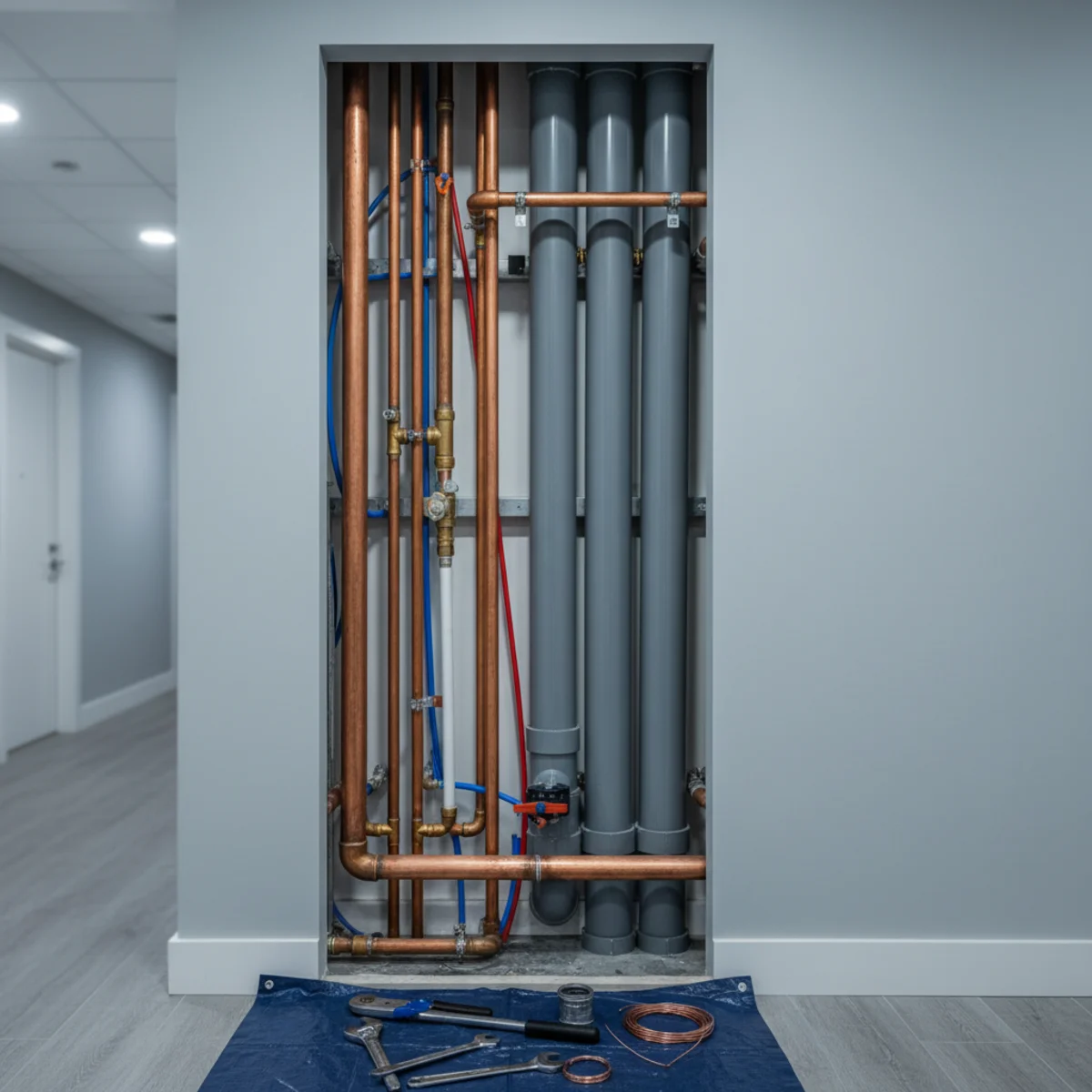
In a multifamily building, plumbing is never just one unit's problem. Here is how stacked units and shared risers turn a single leak into a building-wide headache, and who pays.
Key Takeaways
- In a multifamily building one leak is shared property the moment it starts, touching units below.
- Diagnosis starts with one question: what wet room sits directly above the damaged spot?
- A clogged shared drain stack backs up the lowest fixture first — often an innocent tenant's.
- Patching ancient galvanized or cast iron is usually throwing good money after bad; budget to repipe.
- The owner owns the shared systems; document the cause so the lease, not an argument, decides cost.
One Leak, Three Units: The Multifamily Reality
In a single-family house, a leak is the homeowner's problem and stays in their house. In an apartment building, the same leak is shared property the moment it starts. Water from a third-floor bathroom does not stay on the third floor. It runs down through the structure into the unit below, then the one below that, and finally the basement.
That is the defining fact of apartment plumbing. The systems are connected, so the problems are connected. A clog in a shared drain line backs up the lowest fixture on that stack, which might belong to a tenant who did nothing wrong. A failing riser affects everyone whose bathroom ties into it.
For landlords and managers of the train-station-area multifamily buildings in Roselle Park, this shapes everything: how you respond to a call, how you assign cost, and how you maintain the building. Treating each unit as an island guarantees you will be surprised. Understanding the shared systems is what keeps a small leak from becoming a three-unit claim. When it does spread, (207) 419-2600 reaches a plumber who works on multifamily buildings.
Stacked Units and Why Location Matters
Most apartment buildings are designed to stack the wet rooms. The bathrooms sit directly above one another, the kitchens line up, and the plumbing runs in a vertical chase between them. This is efficient to build, but it means the units share fate.
When a supply line fails in an upper unit, gravity carries the water straight down through the chase into every unit beneath it and the basement. A tenant on the first floor can have a soaked ceiling from a problem they will never see, in a unit they cannot access.
This is why diagnosing apartment leaks starts with the question: what is directly above the wet spot? The answer points to the source nine times out of ten. It is also why a building's shutoff map matters so much, because reaching the source might mean entering a unit two floors up. Older buildings around the Roselle Park train station were often built this way decades ago, and the original supply lines stacked in those chases are now well past their prime. Knowing your stack layout turns a frantic search into a direct route to the valve.
Shared Risers and Drain Stacks
A riser is the vertical pipe that serves stacked fixtures, and it is the shared backbone of apartment plumbing. There are supply risers carrying water up to each floor and drain stacks carrying waste down. Both are common property, and trouble in either is everyone's trouble at once.
When a drain stack clogs, the blockage backs up the lowest open fixture on that stack first. A floor-drain or first-floor tub can overflow because of grease or debris sent down from an apartment three floors up. The tenant who suffers is rarely the tenant who caused it.
That is what makes shared-stack problems so frustrating to assign and so important to maintain proactively. Clearing a clogged stack is not a job for a hardware-store snake, because a shared drain stack runs the full height of the building and the blockage could be anywhere in it. This is professional sewer cleaning territory, often paired with a camera inspection to find exactly where the buildup sits before anyone starts opening walls. Guessing wastes money and walls.
The Aging Pipe Problem in Older Buildings
Many of Roselle Park's multifamily buildings date to the early and middle twentieth century, and they still carry a lot of their original plumbing. That means two materials worth worrying about: galvanized steel supply pipe and cast-iron drain lines.
Galvanized pipe corrodes from the inside out. Over decades the interior fills with rust scale that chokes water flow and eventually leaks. When tenants across a building complain about weak water pressure, aging galvanized supply lines are a common culprit, and the only real fix is replacement, not another patch. Cast-iron drain lines rust and crack with age, developing leaks and rough interiors that catch debris and clog.
For a landlord, the honest truth is that patching ancient pipe in a multifamily building is often throwing good money after bad. At some point repiping or replacing a failing stack costs less over time than the steady drip of emergency calls. A camera inspection and a frank conversation about pipe age tell you which buildings are near that line. Knowing it lets you budget instead of react.
Who Pays When Units Are Connected
The shared-systems reality makes the who-pays question harder than in a single-family rental, and getting it right protects both your finances and your tenant relationships.
The building owner generally owns the shared systems: the risers, the drain stacks, the building main, the water heater serving multiple units, and the supply and drain lines inside the walls. When those fail, it is the owner's cost, even when the damage shows up in a tenant's unit through no fault of their own. The tenant is generally responsible only for what they damage through misuse within their own fixtures.
The tricky cases are the shared ones. When a drain stack clogs because of what several units sent down it, the cost falls to the building, not one tenant. When an upstairs tenant's overflow damages a downstairs unit, insurance and the leases sort it out, and a plumber's written diagnosis of the cause is what keeps it from becoming a dispute. This is exactly the documentation that good apartment plumbing service provides, so you can apply the lease instead of arguing about it.
Maintenance That Protects the Whole Building
Because the systems are shared, maintenance protects every tenant at once, which makes it some of the best money a landlord spends. The goal is to catch the slow failures before they become the leak that touches three units.
Keep the drain stacks clear with periodic professional cleaning, especially in buildings where tenants are hard to train on what not to flush or pour. Watch building-wide water pressure as an early signal of galvanized pipe closing up. Service shared water heaters on a schedule. Keep the sump pump and the building's main cleanout accessible and tested. And maintain a current shutoff map so any emergency response is fast.
The landlords who run multifamily buildings well around Roselle Park treat the building as one connected system, not a stack of separate apartments. They maintain the shared backbone, document everything, and keep a plumber who knows the building on call. That approach turns plumbing from a source of midnight surprises into a line item they can plan around. To set up that kind of relationship, call (207) 419-2600.
Frequently Asked Questions
Keep Reading
Commercial
Backflow Prevention for Businesses: What It Is and Why Testing Exists
Backflow prevention is the compliance item most business owners forget until a notice arrives. Here is what backflow actually is, why testing exists, and how to stay ahead of it.
8 min read · April 27, 2026

Commercial
The Property Manager's Plumbing Emergency Plan
A tenant calls at 2 AM about water coming through the ceiling. Here is the playbook every Roselle Park property manager should have ready before that phone rings.
8 min read · February 26, 2026
Commercial
Restaurant Drain Cleaning Guide for Roselle Park Kitchens
Grease is the enemy of every commercial kitchen drain. Here is how Roselle Park restaurants keep lines flowing, pass inspections, and avoid the backup that shuts the dining room down.
8 min read · December 22, 2025