Commercial
Backflow Prevention for Businesses: What It Is and Why Testing Exists
8 min read · Published April 27, 2026
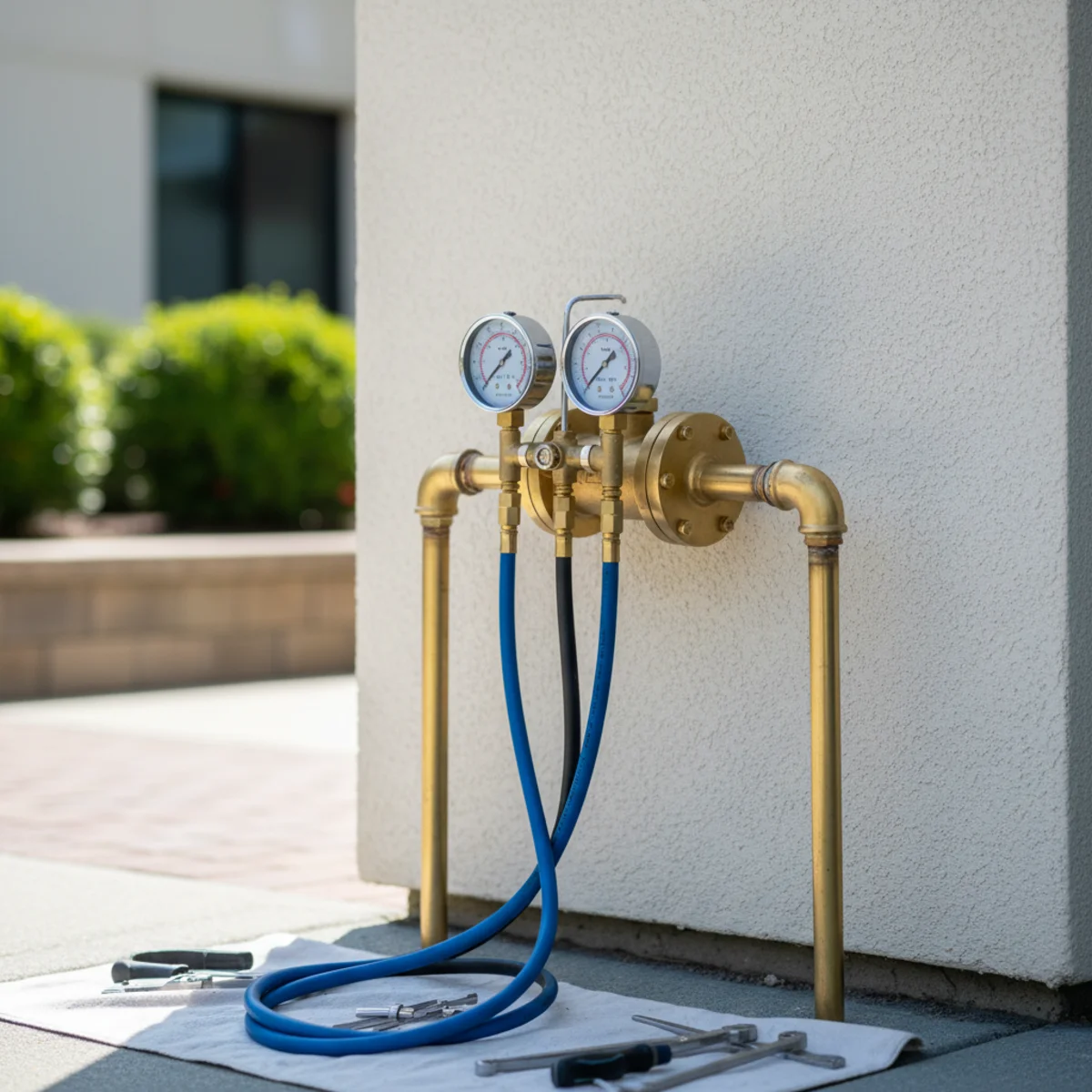
Backflow prevention is the compliance item most business owners forget until a notice arrives. Here is what backflow actually is, why testing exists, and how to stay ahead of it.
Key Takeaways
- Backflow is building water reversing into the public supply, carrying whatever it touched inside.
- It happens two ways: back-siphonage from a pressure drop, or back-pressure from a pump or boiler.
- A preventer has springs and seals that wear and fail silently, so annual testing proves it still works.
- Restaurants, irrigation, salons, medical offices, and boiler systems almost always need a tested device.
- A failed test usually means a repairable worn part — a good tester fixes it rather than overselling.
What Backflow Actually Is
Water in your building is supposed to flow one way: from the clean public supply, through your pipes, and out your fixtures. Backflow is when that flow reverses and water from inside your building gets pulled or pushed back into the public supply.
That matters because the water inside your building is not always clean. It might have touched chemicals in a mop sink, fertilizer in an irrigation line, grease in a kitchen, or worse in a commercial process. If that water flows backward into the main, it can contaminate the supply your neighbors drink. Backflow prevention exists to make that physically impossible.
Most business owners have never thought about it because it works silently and invisibly. But it is a real plumbing system with real legal requirements, and ignoring it is one of those compliance gaps that stays quiet right up until it costs you. Understanding it is the first step to staying ahead of it. If you are not sure your Roselle Park business even has a backflow device, that is a question worth answering before a notice forces it, and (207) 419-2600 can help you find out.
How Backflow Happens
There are two ways the one-way flow reverses, and understanding them shows why the protection is necessary.
The first is back-siphonage. When pressure in the public main suddenly drops, from a water-main break, a fire hydrant opening, or heavy demand nearby, it creates suction. That suction can pull water backward out of your building, the same way sucking on a straw pulls liquid up. A hose left sitting in a bucket of cleaning solution can get siphoned straight into your pipes.
The second is back-pressure. When pressure inside your building rises higher than the supply pressure, from a boiler, a pump, or a pressurized system, it can push your water backward into the main against the normal flow.
Either way, contaminated water ends up where clean water belongs. A backflow preventer is a device with internal check valves and air gaps that block the reverse flow no matter which direction the pressure imbalance comes from. It is a simple idea doing a serious job, which is exactly why it has to be tested to prove it still works.
Why Annual Testing Is Required
A backflow preventer is a mechanical device with moving parts: springs, check valves, and seals that wear over time. A device that worked perfectly when it was installed can fail silently years later, and you would never know from looking at it. A worn check valve does not announce itself. It just stops protecting the water.
That is why testing exists. A certified tester connects gauges to the assembly and verifies that each internal component still holds pressure and closes properly. The test proves the device will actually stop backflow when it counts, not just that it is sitting there.
Many NJ commercial properties with a testable assembly are required to have this done annually, and the requirement traces back to protecting the public water supply that everyone shares. The water utility and local code drive it. This is not a fee a plumber invented; it is a real public-health rule. Our backflow prevention service handles the annual testing and the paperwork that proves you did it. Skipping it does not make the requirement disappear; it just means you find out the hard way.
Which Businesses Need a Backflow Preventer
Not every building has the same risk, and the requirement scales with what your business does to the water.
Higher-risk operations almost always need protection: restaurants and commercial kitchens, anything with an irrigation system, car washes, medical and dental offices, salons, buildings with boilers or chemical processes, and properties with their own pumps or fire-suppression systems. Any place where building water could pick up a contaminant and get pushed back toward the main is a candidate.
Lower-risk spaces like a simple retail storefront may have minimal requirements, but the only way to know for sure is to check your water connection and your local code. The Westfield Ave commercial corridor has a real mix, from kitchens that absolutely need protection to small shops that may not.
If your business falls in any of the higher-risk categories, assume you need a tested device and confirm it. The cost of a commercial plumbing visit to check is trivial next to a contamination incident or a compliance penalty. When in doubt, find out.
Staying Compliant Without the Headache
Compliance fails not because business owners refuse to do it but because they forget. The notice arrives, the deadline is tight, and a scramble follows. The fix is to make it routine.
Put your annual backflow test on a recurring calendar reminder, dated to your device's install or last-test anniversary. Keep the test reports filed where you can find them, because being able to produce a current certificate turns an inspector's question into a non-event. Note when your device was installed, since older assemblies eventually need repair or replacement rather than just testing.
The cleanest approach is to fold backflow testing into a broader maintenance relationship. A plumber who already tests your device, services your grease trap, and knows your building handles the whole compliance picture in coordinated visits instead of scattered emergencies. Businesses across Roselle Park run it this way, and it turns a nagging worry into a checked box. Schedule your test before the deadline, not after the notice, by calling (207) 419-2600.
What Happens If the Device Fails the Test
Sometimes a backflow preventer fails its annual test, and that is exactly what the test is for. A failure does not mean disaster; it means the device caught a problem before it caught you.
When an assembly fails, the cause is usually a worn check valve, a fouled relief valve, or a debris-clogged seal. Many of these are repairable: the tester rebuilds the failed component with a repair kit and retests to confirm it holds. The device goes back into service certified. Other times, especially with an old assembly, replacement is the honest call because rebuilding a worn-out unit is throwing money at a part that is going to keep failing.
A good tester tells you which situation you are in straight, rather than pushing a replacement you do not need or patching one that should be retired. That honesty is the whole point of working with a plumber who treats your building as a long-term relationship. Get the device fixed or replaced, get the passing certificate, and your water and your compliance are both protected for another year.
Frequently Asked Questions
Keep Reading
Commercial
Apartment Building Plumbing Issues and How They Spread
In a multifamily building, plumbing is never just one unit's problem. Here is how stacked units and shared risers turn a single leak into a building-wide headache, and who pays.
8 min read · March 30, 2026

Commercial
The Property Manager's Plumbing Emergency Plan
A tenant calls at 2 AM about water coming through the ceiling. Here is the playbook every Roselle Park property manager should have ready before that phone rings.
8 min read · February 26, 2026
Commercial
Restaurant Drain Cleaning Guide for Roselle Park Kitchens
Grease is the enemy of every commercial kitchen drain. Here is how Roselle Park restaurants keep lines flowing, pass inspections, and avoid the backup that shuts the dining room down.
8 min read · December 22, 2025