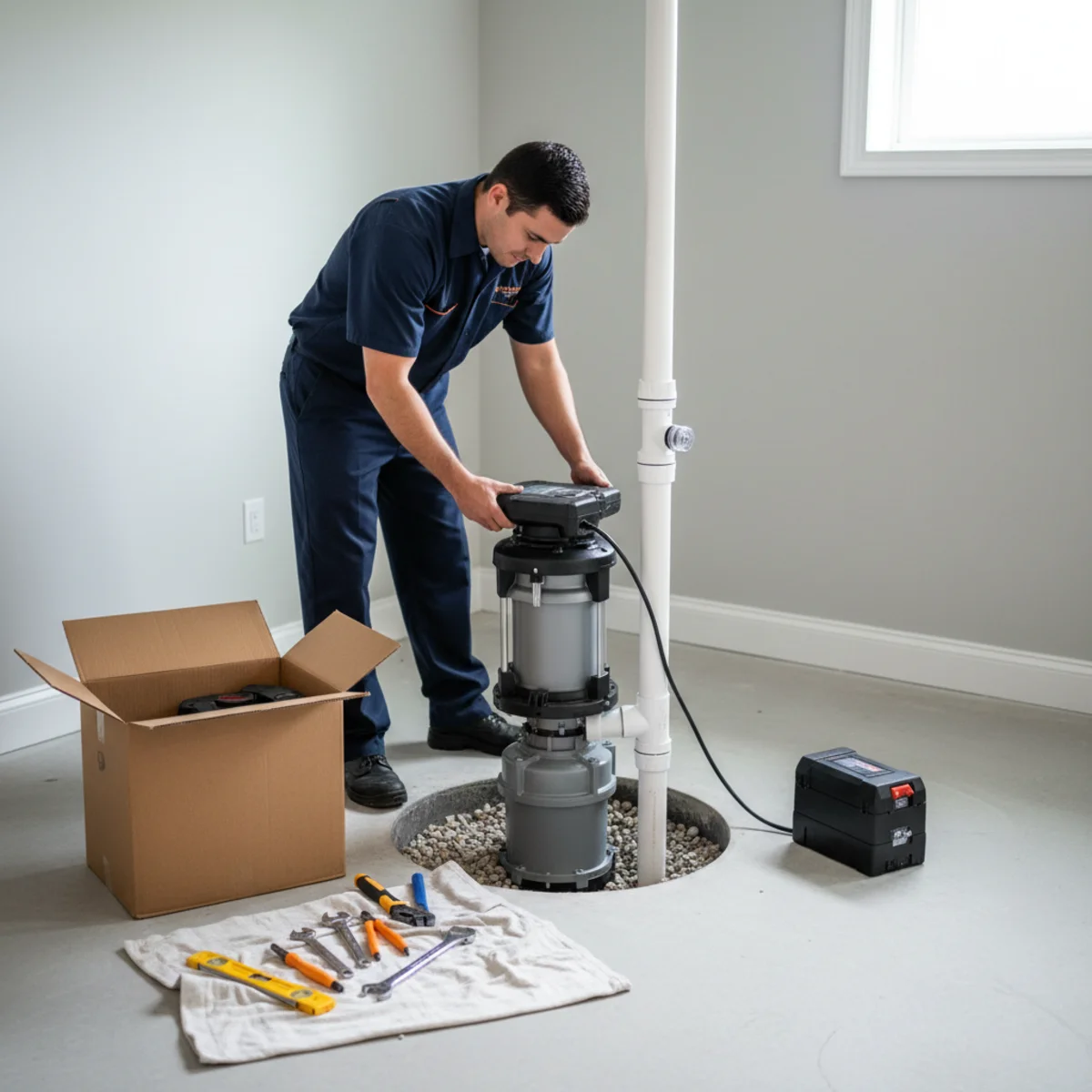
Sump Pump Installation in Roselle Park, NJ
A sump pump without a battery backup fails exactly when the power does — in the middle of the same storm that's filling your pit. We handle sump pump installation in Roselle Park, NJ, from new pits and primary pumps to backup systems and discharge lines, sized for how your basement actually takes on water. Call (207) 419-2600 for an honest recommendation, not the most expensive unit on the truck.
- 24/7 Emergency Availability
- Upfront Estimates Before Work Begins
- Local Roselle Park Dispatch
The Problem, As You're Living It
Plenty of Roselle Park basements were finished decades after the house was built, and the sump arrangement never got the upgrade to match. The pit that was fine protecting a bare concrete floor and some storage shelves is now the only thing standing between a nor'easter and your drywall, carpet, and home office.
Here's the math that matters: the storms that flood basements are the same storms that knock out power. A primary pump with no backup is a setup designed to fail at the worst possible moment. And an undersized pump — or one dropped into a basin that's too small — will short cycle through storm after storm until it burns out years early.
A proper installation isn't just swapping hardware. It's matching pump capacity to your water table, setting the float right, valving the discharge correctly, and deciding honestly whether battery backup belongs in the plan. For most finished basements here, it does.
What Sump Pump Installation Includes
- New primary sump pump installation sized to your pit dimensions, water table, and the actual inflow your basement sees during a sustained storm.
- Replacement of worn-out pumps with proper float adjustment and a fresh check valve, because reusing tired fittings undermines a new motor.
- Battery backup pump systems installed, wired, and proven by cutting primary power during the final test — not just promised on paper.
- New sump pit and basin construction where a basement collects water but was never built with anywhere to put it.
- Water-powered backup pumps for homes with strong municipal pressure, explained honestly alongside their water-usage trade-offs before you choose.
- Discharge line routing and replacement with freeze-resistant terminations, graded so the line drains empty between cycles instead of icing shut.
- Check valves and unions positioned so future pump service takes minutes with a wrench instead of a saw.
- High-water alarms and smart leak alerts for commuters who want to know the pit is rising while they're still at work.
- Removal and disposal of the old equipment, plus repeated loaded test cycles of the finished setup before we call it done.
How the Job Gets Done
- 1
Walk the Basement Together
We look at where water actually enters, where the low corner is, what the existing pit and discharge are doing, and what's at stake — finished space, furnace, storage. Ten minutes of looking beats sizing a pump off a phone call every single time.
- 2
Size the System Honestly
Pump capacity gets matched to your inflow rate and pit dimensions, not picked off the top shelf. An oversized pump short cycles itself to an early death; an undersized one loses the race in a sustained storm. Right-sized is a calculation, not a guess.
- 3
Price the Options Without Pressure
You get a written estimate with real choices: primary only, primary plus battery backup, water-powered backup where the street pressure supports it, alarms if you travel or commute. We'll tell you which option we'd put in our own basement and why.
- 4
Install It Clean
The new pump gets set level on a stable base, a check valve with unions goes in for easy future service, the discharge line gets glued and supported properly, and the cord lands on a grounded outlet. Old equipment leaves with us, and the floor gets swept.
- 5
Test Under Storm Conditions
We load the pit repeatedly and watch full cycles — and for backup systems, we cut the primary power and prove the battery unit takes over on its own. A backup that has never been tested on installation day is a promise, not protection.
- 6
Hand It Over Properly
You learn what the alarm sounds like, the battery maintenance schedule, the bucket test, and where the discharge exits so you can keep it clear of leaves and snow. We'd rather you never need an emergency call for this pit again.
Why This Matters in Roselle Park
Roselle Park is a square mile of early-1900s frame houses and colonials, and nearly every one of them sits over a basement. A lot of those basements got finished long after the house was built — drywall, carpet, a home office for the days you skip the train — while the sump arrangement stayed whatever the previous owner left behind. When the remnants of Ida came through Union County in 2021, the basements that stayed dry were mostly the ones with working pumps and backups; the rest taught expensive lessons. Our clay-and-sandy soil drains unevenly, so two houses on the same block can sit over completely different water tables. That's why we size sump pump installation in Roselle Park to the individual pit, not to the zip code.
Why Call a Local Plumbing Pro
Anyone can drop a pump in a hole. Sizing it to the pit, valving the discharge correctly, proving the battery backup under a simulated outage, and being honest about which options your basement actually needs — that's the difference between hardware and protection. We've stood in enough flooded Union County basements to know what fails: oversized pumps that short cycled to death, backups that were never tested, discharge lines that froze solid. Every installation we do is built around those lessons, quoted upfront, and tested with the pit loaded before we leave your house.
What Affects the Cost of Sump Pump Installation
Sump pump installation is priced by what the basement needs, and the biggest split is whether a pit already exists. Dropping a new primary pump into a working pit with a fresh check valve is a couple of hours; cutting the slab to build a brand-new basin is a full day of concrete work, gravel, and discharge routing. Capacity is sized to your pit and inflow rate, not square footage — and an oversized pump short cycles itself to an early death.
The backup decision is the next lever. A battery backup adds the unit and wiring; a water-powered backup needs adequate street pressure. Discharge routing with freeze-resistant terminations and removal of the old equipment also factor in.
No honest plumber can quote this from a web page. You get an upfront estimate after the problem is seen, and you approve it before any work begins. Call (207) 419-2600 for a straight answer on your situation.
Sump Pump Installation Across Union County
All Service AreasRelated Plumbing Guides
Helpful reading from our blog on problems related to sump pump installation — what to watch for, what's safe to DIY, and when to call.
Basement & Pumps
How to Prevent Basement Plumbing Backups in Your Roselle Park Home
A basement backup is the worst kind of plumbing failure — it comes up through the floor and it is not clean water. Here is how to stop it before it starts, and what your insurance actually covers.
Read the guideBasement & Pumps
What Causes Low Water Pressure in an Older Roselle Park Home
Low water pressure has a dozen causes, from a clogged aerator you can fix in five minutes to galvanized pipe closing up inside the walls. Here is how to tell which one you have.
Read the guideBasement & Pumps
Water Line Leak Warning Signs Every Roselle Park Homeowner Should Know
The water line from the street to your house can leak underground for weeks before you notice. These are the warning signs — soggy lawn, spinning meter, falling pressure — that catch it early.
Read the guide
Sump Pump Installation FAQs
Need Sump Pump Installation in Roselle Park, NJ?
Call now for prioritized dispatch, or send the details and we'll follow up fast. Upfront estimates before any work begins.