Kitchen & Bath
Kitchen Plumbing Upgrades to Make Before the Cabinets Go In
9 min read · Published February 2, 2026
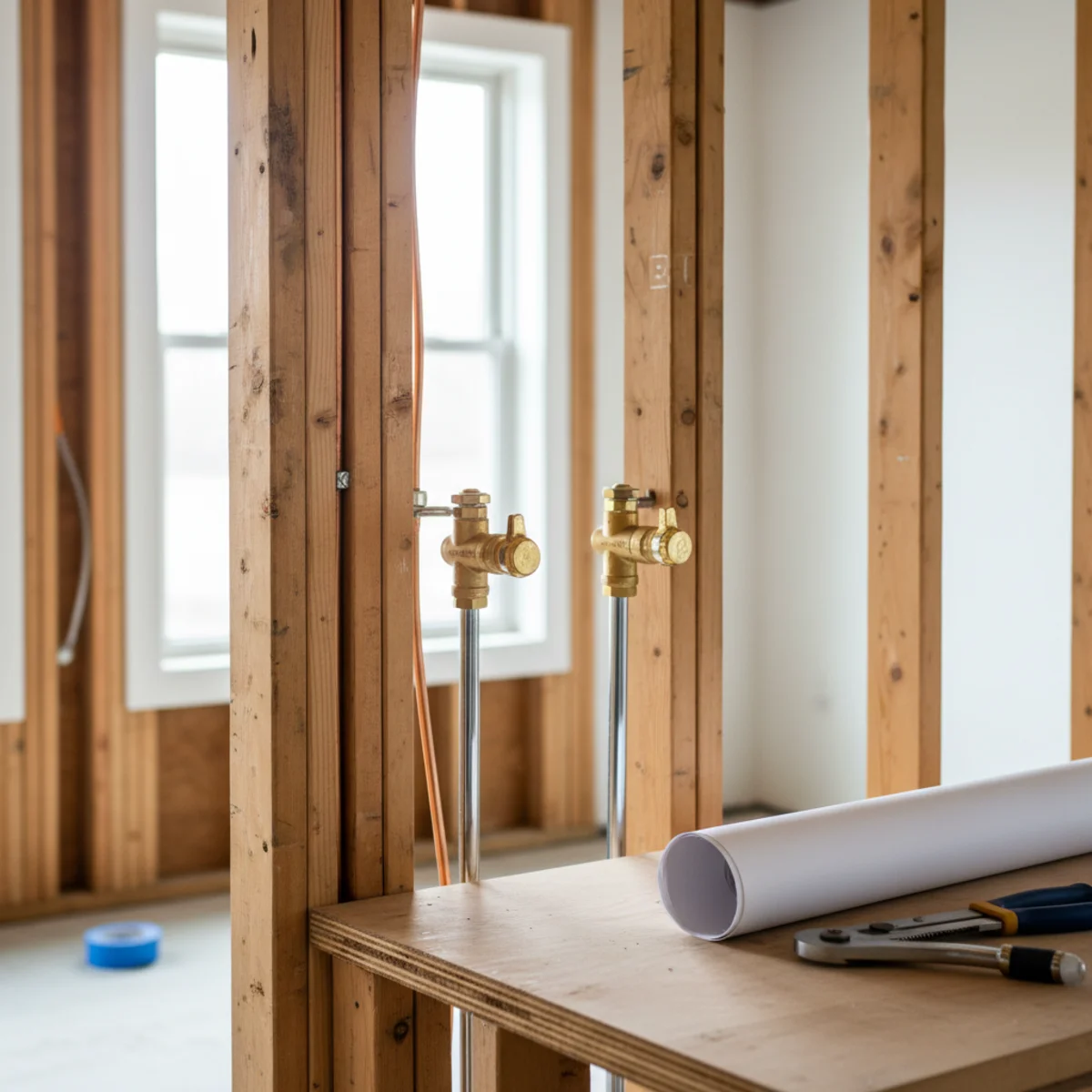
The rough-in is the one part of a kitchen remodel you cannot redo once the cabinets and counters are in. Here are the plumbing decisions to lock down before the drywall closes, in a Roselle Park home.
Key Takeaways
- Lock down every supply, drain, and vent decision before the cabinets and tile cover the rough-in.
- Moving the sink means re-routing the drain and vent — the drain slope is the real constraint.
- With the walls open, swap seized shutoffs for quarter-turn valves and replace galvanized supply runs.
- Pot fillers, prep sinks, and filtered water each need their lines set during rough-in, not after.
- Relocating drains or adding fixtures in NJ generally needs a permit and an inspection.
Why Rough-In Is the Decision You Can't Undo
A kitchen remodel hides its most important plumbing work inside the walls and under the floor, where you will never see it again. That is the rough-in: the supply lines, drains, and vents that get set before the cabinets, counters, and backsplash go on top of them.
Everything visible later — the faucet, the sink, the disposal — is the easy part. It bolts on at the end. The expensive part is the plumbing behind it, because once the cabinets are installed and the tile is up, moving a drain six inches means tearing out finished work.
That is the whole point of planning rough-in early. The decisions are cheap to make on paper and brutal to change after demolition is done. A sink moved to the island, a pot filler over the range, a second prep sink — each of these is a small job during rough-in and a major one afterward.
So before the first cabinet lands, walk the new layout with your plumber and settle every water-and-drain decision. In an older Roselle Park kitchen, that walk-through often turns up surprises hiding behind the old cabinets, and you want those on the table before the budget is locked.
Relocating the Sink and Dishwasher
The single biggest plumbing decision in a kitchen remodel is whether the sink stays put. Moving it changes everything downstream.
A sink needs both supply lines and a drain, and the drain is the constraint. Drains run on gravity, so they need the right slope to the main stack, and every drain needs a vent to let air in behind the water — without it, the trap siphons dry and you get sewer gas and gurgling. Moving the sink to a new wall or out to an island means extending the drain and figuring out the vent, sometimes with an island vent loop or an air-admittance valve where code allows.
The dishwasher rides along with the sink, since it drains into the disposal or a dedicated tailpiece and ties into the sink's supply. Relocating the sink almost always means re-routing the dishwasher line and adding a proper high loop or air gap to keep dirty water from backing into the machine.
In Roselle Park's older homes, the existing drain is often undersized or made of aging cast iron, and a remodel is the moment to upgrade that run while it is open. Doing it now is cheap; doing it after a backup is not.
Upgrade the Shutoffs, Supply Lines, and Drain While It's Open
When the cabinets are out and the walls are open, you are looking at parts you will not see again for twenty years. Replace the tired ones now.
The shutoff valves under the sink are the first thing. Many older Roselle Park kitchens still have the original multi-turn valves that seize up and weep, and the day you need to shut the water off fast is the day you discover they will not turn. Swapping them for quarter-turn ball valves during the remodel is a few minutes of work and a lifetime of easy shutoffs.
The supply lines feeding the kitchen are next. If the home still runs on galvanized steel, the section feeding the kitchen is decades into rusting shut from the inside, choking your water pressure. An open wall is the ideal, and cheapest, time to replace that run with copper or PEX. We cover that tradeoff in depth in our pipe replacement work — patching galvanized rarely makes sense when the wall is already open.
Finally, the drain and trap arm. Old, scaled, or improperly sloped drain runs cause slow sinks forever. Replacing the run while it is exposed costs little and ends a lifetime of recurring clogs.
Planning for the Extras: Pot Filler, Prep Sink, Filtered Water
Modern kitchens add fixtures the original plumbing never accounted for, and every one of them is a rough-in decision.
A pot filler over the range is a wall-mounted faucet that needs a cold-water line run up inside the wall behind the stove. There is no drain — you carry the pot to the sink — but the supply line and the in-wall shutoff have to be set before the backsplash tile goes up. After tile, it is a demolition job.
A second prep sink in an island or a baking station needs its own supply, drain, and vent, exactly like the main sink, and the island location makes venting the tricky part. Decide on it during layout, not after.
A pot filler, instant-hot dispenser, or chilled and filtered water at the sink each needs its own under-cabinet space and a tap into the supply. If you want genuinely better water rather than a marketing filter, plan the under-sink or whole-house water filtration into the rough-in so the lines and the space exist. Retrofitting any of these after the cabinets are loaded means emptying and unbolting them again.
The Permit and Inspection Reality in New Jersey
Here is the part the remodel shows on TV never mentions: in New Jersey, the plumbing work in a kitchen remodel is regulated, and skipping the permit creates problems that outlast the project.
Relocating drains, adding new fixtures, extending vents, and altering supply lines generally require a plumbing permit and an inspection from the local building department. The inspector checks that the venting is right, the drain slope is correct, the materials meet code, and the work is safe before the walls get closed. That inspection is on your side — it is the independent check that the hidden work was done right.
Work done without a permit can surface later as a snag when you sell the house, since buyers and their inspectors ask about un-permitted renovations, and an unpermitted kitchen can stall a closing. It can also void parts of your homeowner's coverage if hidden faulty work causes damage.
We are not the office that issues your permit, but a real plumber builds the rough-in to pass inspection and coordinates the timing so the inspector sees the work before the cabinets cover it. If you are not sure what your project triggers, call (207) 419-2600 and we will walk through which parts of your plan need a permit.
What an Older Roselle Park Kitchen Hides Behind the Cabinets
Demolition day in a borough home built in the early 1900s tends to reveal a few things the listing never mentioned, and a good plan accounts for them.
Behind the old cabinets you commonly find galvanized supply lines clogged with rust, cast-iron drain stacks corroding at the joints, a sink drain that was re-routed by a previous owner without a proper vent, and supply lines stapled across joists in ways no inspector would pass today. Sometimes there is evidence of an old slow leak — soft subfloor or staining — that the cabinet kindly hid for years.
None of this is a disaster if you plan for it. A remodel is the rare moment when the walls are open and these aging systems are reachable, so the smart money fixes them now rather than patching around them and re-closing the wall.
That is why we like to look before the budget is final. An honest assessment of what is actually back there lets you decide whether to address the bathroom plumbing above on the same stack while access is open, or to update the kitchen run alone. Either way, you go in with eyes open instead of finding a budget-wrecking surprise on demolition day.
Sequence the Plumber Into the Project Correctly
A kitchen remodel involves several trades, and plumbing comes in at two distinct moments. Getting the order right keeps the job from stalling.
The plumber's first visit is the rough-in, after demolition and before the walls and floors close up. This is where supply lines, drains, and vents get set in their final positions for the new layout, and where the inspection happens. Cabinets and counters cannot go in until this passes.
The second visit is the finish set, after the cabinets, counters, and sink are installed. This is where the faucet, disposal, dishwasher, and any pot filler or filter get connected and tested. It is quick because the hard work was done at rough-in.
Getting that sequence right is the difference between a smooth remodel and a stalled one. Loop your plumber in during the design phase, not after the cabinets are ordered, so the layout actually matches what the drains and vents can support. When you are planning a kitchen project anywhere in Roselle Park, call (207) 419-2600 early — the cheapest time to fix a plumbing plan is before anyone swings a hammer.
Frequently Asked Questions
Keep Reading
Kitchen & Bath
Toilet Keeps Running? The Step-by-Step Fix You Can Do Yourself
A toilet that runs and runs is wasting water by the hundreds of gallons, and the fix is almost always a cheap part you can replace yourself. Here is the diagnosis ladder, from the easiest cause to the one that needs a plumber.
8 min read · April 6, 2026

Kitchen & Bath
Bathroom Plumbing Warning Signs You Shouldn't Ignore
A bathroom rarely fails all at once. It warns you first — a stain on the ceiling below, a floor that gives underfoot, drains that all slow together. Here is how to read those signals before they become a repair you cannot ignore.
8 min read · March 23, 2026
Kitchen & Bath
Garbage Disposal Not Working? Safe Fixes Before You Call
A dead or jammed garbage disposal usually has a simple, safe fix you can do yourself — if you know which sound means what. Here is the homeowner playbook, and the one rule you never break.
7 min read · December 1, 2025