Local Tips
Winter Plumbing Tips for New Jersey Homeowners
9 min read · Published November 30, 2025
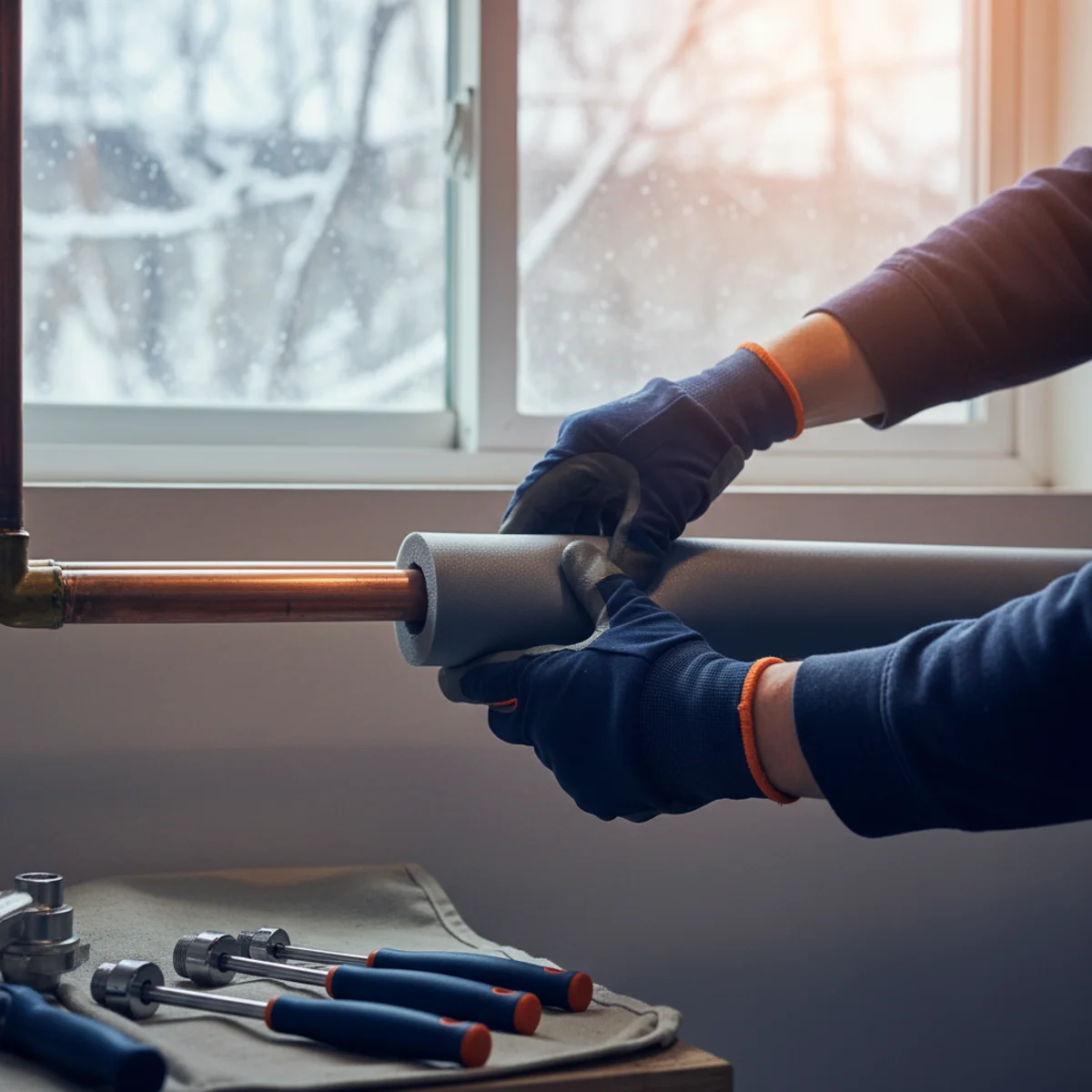
A New Jersey winter finds every weak spot in your plumbing. This guide walks through the freeze prep that actually prevents burst pipes, plus what to do the morning a line freezes anyway.
Key Takeaways
- Pipes burst from trapped pressure, not the ice, so the split can be feet from the actual freeze.
- Disconnect garden hoses first — trapped water in the sillcock splits the pipe inside the wall.
- Sleeve only the pipes that actually freeze: exterior walls, foundation vents, and unheated spaces.
- Never let the house drop below about 55 degrees, even in empty rooms or while you travel.
- If a line freezes, open the faucet and thaw gently — never with an open flame or torch.
Why New Jersey Winters Break Pipes
A frozen pipe does not burst because of the ice itself. It bursts because of pressure. As water freezes and expands, it pushes against the closed faucet on one end and the growing ice plug on the other, and the pressure builds in the section between them until the pipe wall gives. That is why a burst often shows up several feet from where the actual freeze happened.
New Jersey is a particularly nasty climate for this because we do not stay frozen — we cycle. A run of mild days lulls everyone into forgetting, then a single hard night drops into the teens and finds the one uninsulated pipe nobody thought about. Older Roselle Park homes are especially exposed: uninsulated crawl spaces, basement runs along the rim joist, and supply lines threaded through unheated exterior walls are all classic freeze points.
The encouraging truth is that almost all of this is preventable, and most of the prevention is genuinely a homeowner job. You do not need a tradesperson to wrap a pipe or drain a hose bib — you just need to do it before the first hard freeze, not during it. Everything below is ordered the way you should tackle it as the temperature drops. When a freeze gets past your prep, call (207) 419-2600.
Handle the Outdoor Faucets First
Outdoor spigots are the most common burst point, and they are the easiest to protect, so start here.
Disconnect every garden hose. A hose left attached traps water inside the sillcock, and that trapped water freezes, expands, and splits the pipe — often inside the wall where you will not see the leak until spring when you turn the water on. This one mistake causes a surprising share of the calls we get.
If your home has interior shut-off valves for the outdoor spigots, close them, then open the outside faucet to drain whatever water is left in the line. Leave it open through winter. For spigots without an interior shut-off, an inexpensive insulated faucet cover from the hardware store adds real protection.
If you have already had a frost-proof sillcock crack in a past winter, or you are not sure your outdoor faucets are draining properly, it is worth getting them checked or upgraded before the cold sets in. A split that you catch now is a quick fix; the same split discovered mid-winter is an active leak that can mean burst pipe repair inside a finished wall.
Insulate the Pipes That Actually Freeze
Not every pipe needs insulating — focus your effort where the cold actually reaches. Walk your basement and crawl space and look for supply lines running along exterior walls, near foundation vents, or through any unheated space. Those are your freeze candidates.
Foam pipe insulation sleeves cost a few dollars, slip on by hand, and make a real difference. Cut them to length, snap them over the pipe, and tape the seams. Pay special attention to the rim joist area where the floor framing meets the foundation, because cold air pours in there in older homes.
For a pipe that has frozen in past winters despite insulation, self-regulating heat tape is the next step up — it warms the pipe only when temperatures drop. Follow the instructions carefully and never overlap it on itself.
While you are mapping cold spots, seal the obvious air leaks. A gap around a dryer vent, a missing pane in a basement window, an open foundation vent — each one funnels freezing air straight onto a vulnerable pipe. Plugging those drafts protects the pipe as much as the foam does. If you find a pipe already sweating heavily or showing corrosion in a cold spot, that is a weak link worth a pipe repair look before winter tests it.
Set Your Thermostat Floor and Keep It There
Heat is your cheapest insurance, and the temptation to save money by turning it way down is exactly how pipes freeze.
Never let the house drop below about 55 degrees, even in rooms you do not use and even when nobody is home. The pipes inside exterior walls rely on the surrounding rooms staying warm, and an unheated room lets the wall cavity get cold enough to freeze the line inside it.
On the coldest nights, open the cabinet doors under sinks on exterior walls so warm room air can reach the supply lines underneath. Kitchen and bathroom plumbing on the north and west sides of a New Jersey frame house are the usual trouble spots.
If you travel during winter, this matters even more. Keep the heat on, ideally have someone check the house, and consider shutting off the main water supply and draining the lines if you will be gone for an extended stretch. The worst burst-pipe damage we see is always in an empty house, where the water runs unnoticed for days. A commuter family coming home to a flooded first floor is the New Jersey winter classic, and it is entirely avoidable.
Don't Forget the Water Heater and the Sump
Winter stresses more than just your supply pipes, and two appliances deserve a pre-season look.
Your water heater works harder in winter because the incoming water is colder, so it has to heat further to deliver the same shower. If your heater was already marginal in the fall — slow recovery, popping sounds, rusty water — winter is when it will quit on you, usually on the coldest morning. A quick check now beats an emergency water heater repair during a cold snap. Look at the base for rust or moisture and listen for sediment noise.
The sump pump matters in winter too, even though we think of it as a rainy-season concern. New Jersey winters bring thaws and ice-melt that send water into the pit, and a discharge line that freezes solid where it exits the house can back water right up into your basement. Make sure the discharge pipe is pitched to drain and is not pooling at the outlet where it can freeze. Test the pump with a bucket of water before the first thaw. A finished basement raises the stakes on both of these — there is real money down there to protect.
What to Do the Morning a Pipe Freezes
Even with good prep, a brutal cold snap can freeze a line. Knowing what to do in the first few minutes keeps a freeze from becoming a flood.
The first sign is usually a faucet that slows to a trickle or stops entirely on a cold morning while other faucets work fine. That tells you a specific line is frozen, not the whole house.
Open the affected faucet right away. As the ice thaws, the open faucet relieves pressure and gives the melting water somewhere to go, which is what prevents the burst. Then warm the frozen section gently — a hair dryer, a space heater kept at a safe distance, or warm towels wrapped around the pipe. Work from the faucet end back toward the cold spot so melt water can escape.
Never use an open flame, a torch, or anything that could scorch the pipe or start a fire. That rule has no exceptions.
If you cannot locate the frozen section, cannot restore flow, or you find a pipe that has already split, shut off your water at the main and call. We handle frozen pipe repair throughout the winter, and the safe thaw is always the slow one. Reach us at (207) 419-2600.
Know Where Your Main Shut-Off Is Before You Need It
Every winter plumbing plan ends at the same place: your main water shut-off valve. When a pipe bursts, that valve is the one thing that turns a disaster into a manageable mess, and the worst time to go looking for it is while water is spraying across your basement.
Find it now. In most homes across Roselle Park and Union County the main is in the basement, usually on the wall facing the street near where the service line enters, often close to the water meter. Older homes may have a round gate valve you turn several full rotations; newer ones often have a quarter-turn ball valve with a lever.
Test it gently to make sure it actually closes. A lot of older valves have not been touched in years and seize up or weep when you work them. If yours will not turn or leaks when you try, replace it before winter — a working main shut-off is non-negotiable insurance.
Make sure everyone in the house knows where it is and which way it turns. When in doubt about any of this, call (207) 419-2600 and we will help you sort it out before the cold does it for you.
Frequently Asked Questions
Keep Reading
Local Tips
When to Call a Local Plumber vs. Do It Yourself
Some plumbing jobs are perfectly safe for a confident homeowner. Others quietly turn a small problem into an expensive one. Here is an honest decision tree for knowing which is which.
8 min read · May 4, 2026

Local Tips
How to Choose a Plumber in Roselle Park, NJ
Hiring a plumber in Roselle Park should not be a gamble. This guide shows you how to verify a New Jersey license, confirm insurance, understand permits, and read an estimate before you sign.
9 min read · February 12, 2026
Local Tips
Plumbing Problems in Older Union County Homes: The Big Three
If your Union County home was built before 1970, three aging materials cause most of its plumbing headaches. Here is how to recognize cast iron, galvanized pipe, and clay lateral failure before it floods you.
9 min read · October 6, 2025