Local Tips
When to Call a Local Plumber vs. Do It Yourself
8 min read · Published May 4, 2026
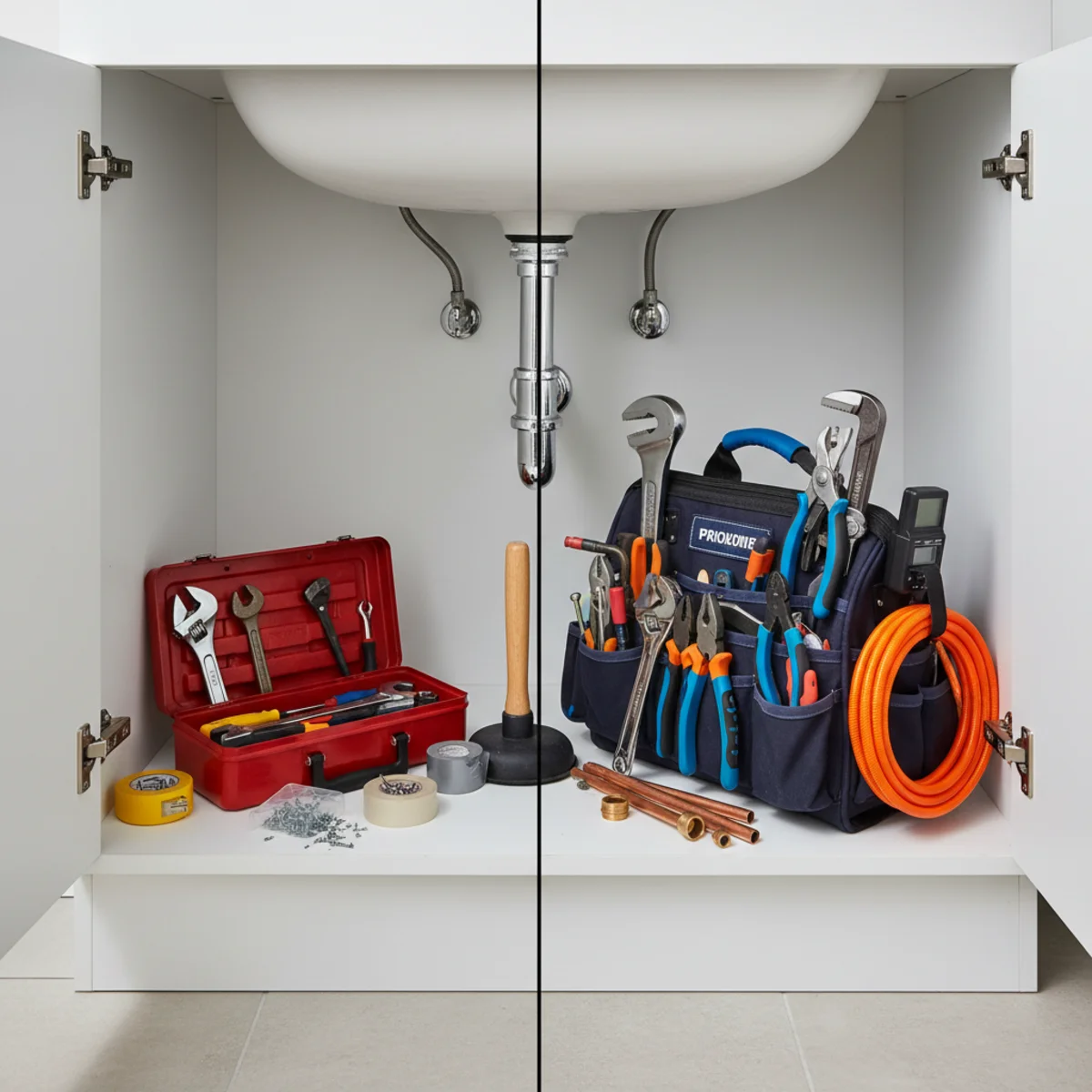
Some plumbing jobs are perfectly safe for a confident homeowner. Others quietly turn a small problem into an expensive one. Here is an honest decision tree for knowing which is which.
Key Takeaways
- The real question is not whether you can do it, but what happens if you get it wrong.
- Hair clogs, running toilets, faucet washers, and sump testing are all safe homeowner jobs.
- Gas, sewage, and main-line work are never DIY — those carry safety and code consequences.
- If a local shut-off valve will not work, you cannot isolate the water, so stop and call.
- Over-tightening a fitting is the classic mistake that cracks brittle old pipe and floods a basement.
The Real Question Isn't 'Can I?' It's 'Should I?'
Plenty of plumbing is genuinely do-it-yourself territory, and we will tell you that plainly — a plumber who pretends every dripping faucet requires a service call is not being straight with you. But the line between a safe DIY fix and a job that needs a pro is not about how handy you are. It is about consequences.
The right question is not "can I figure this out from a video?" It is "what happens if I get this wrong?" Tightening a slip nut wrong means a little water under the sink. Sweating a gas line wrong means something far worse. The stakes, not the difficulty, draw the line.
Three things push a job out of DIY range: safety risk, where gas, sewage, or main-line work can hurt you or your household; code and permits, where New Jersey law requires licensed work and inspection; and cost of failure, where a mistake floods a finished basement or damages the larger system. When any of those three is in play, the smart move is a phone call, not a YouTube tutorial.
This guide sorts common jobs into clear buckets so you can decide with confidence. When something lands in the call-a-pro column, we are at (207) 419-2600 — but plenty of it you can handle yourself, and we will say so.
Green Light: Jobs a Confident Homeowner Can Handle
Let's start with what you can absolutely do yourself, because the list is longer than people expect.
Clearing a hair clog from a bathroom sink or tub is squarely DIY. Pull the stopper, remove the gunk, run hot water. A plunger or a simple drain snake handles most surface clogs without chemicals — which we steer you away from anyway in older homes.
Swapping a toilet flapper, adjusting a float, or replacing a fill valve to stop a running toilet is a basic, low-risk repair with cheap parts. Same with a sink aerator that has clogged with mineral buildup — just unscrew it and clean it.
Replacing a worn faucet washer or cartridge to stop a drip is within reach for many homeowners, though it can get fiddly. Insulating exposed pipes, covering outdoor spigots for winter, and testing your sump pump with a bucket of water are all maintenance tasks you should be doing yourself.
The common thread: these jobs are reversible, the water stakes are low, and worst case you shut off a local supply valve and stop. If a clog keeps coming back no matter what you do, though, that is the pipe telling you it needs more than a snake — and that is a fair time to call for drain cleaning rather than fighting it monthly.
Yellow Light: Proceed Carefully or Call
Some jobs sit in the middle. A handy homeowner with the right tools and patience can sometimes do them, but they carry enough risk or complexity that calling is often the wiser choice.
Replacing a faucet or installing a new fixture is doable, but old shut-off valves that crumble when you turn them, corroded connections, and tight under-sink spaces turn a one-hour job into an afternoon — or a leak. If your shut-off valves do not work, you have already crossed into call-a-pro territory, because you cannot safely isolate the fixture.
A garbage disposal that hums but will not turn is often a simple reset or a jam you can free with the hex key from the bottom — never your hand, ever. But a disposal that is dead, leaking, or needs rewiring is a replacement job worth handing off.
A single slow drain you have snaked once is fine to attempt. A drain that backs up repeatedly, or several fixtures slowing at once, points past a simple clog toward the main line — and that is a clogged drain repair or worse. The rule for the yellow zone: if you hit a corroded valve, a part that will not budge, or water where it should not be, stop and call before you make it bigger.
Red Light: Always Call a Professional
Some jobs are never DIY, full stop. These three categories carry safety, legal, or system-wide consequences that are not worth any amount of saved labor.
Gas work is the hardest line. Anything involving a gas line — a gas line repair, a gas water heater connection, a new range or dryer hookup — requires a licensed professional and usually a permit and inspection. A gas leak is a fire and health hazard, and if you ever smell gas, you leave the house first and call from outside. There is no homeowner version of this job.
Sewage and main-line work is the second. A main sewer backup, a sewer line repair, or anything involving raw waste is a health hazard and a job for proper equipment. Snaking a main line is not a hardware-store-rental afternoon — get it wrong and you can damage an already-fragile old clay lateral.
Water heaters are the third. Beyond simple maintenance, water heater replacement and installation involve gas or high-voltage electric, venting, water connections, and New Jersey permit requirements. A bad install is a carbon-monoxide or flood risk. When a heater is leaking from the tank, shut off the water and the gas or power and call (207) 419-2600 rather than improvising.
The Hidden Cost of the Wrong DIY
The reason we push back on certain DIY jobs is not to drum up work — it is that we get called to clean up the predictable failures, and the cleanup costs far more than the original job would have.
The classic is the over-tightened fitting. A homeowner cranks down a connection to stop a small drip, cracks the fitting or strips the threads, and now there is a real leak instead of a weep. In an older Roselle Park home with brittle galvanized pipe, forcing a stuck connection can crack the pipe well past the fitting, turning a five-dollar repair into a section pipe repair.
Then there is the disturbed old pipe. Aging cast iron and galvanized are fragile, and a vigorous DIY snaking or an aggressive wrench can break a line that was holding on fine. The drain that was merely slow becomes a drain that leaks inside the wall.
And the water you cannot see. A small under-sink leak left to "watch" rots the cabinet and the subfloor for weeks. A supply line that lets go while you are at work — the commuter-town reality in Roselle Park — runs for hours into a finished basement. The math is simple: the cost of calling early is almost always less than the cost of cleaning up late.
A Simple Decision Tree You Can Remember
When you are standing there deciding, run through this in your head.
First: is gas, sewage, or the main line involved? If yes, stop — that is a professional job, every time. No exceptions for gas.
Second: can I shut off the water to just this fixture and work safely? If the local shut-off valve does not work, or there is no way to isolate the problem, call — you cannot do plumbing safely without being able to stop the water.
Third: if I get this wrong, what is the worst outcome? If the answer is "a little water I can wipe up," you are probably fine to try. If the answer is "a flooded finished basement" or "a gas hazard," the savings are not worth it.
Fourth: does New Jersey require a permit and inspection? Water heaters, gas, and sewer work generally do, and that work needs to be done by or under a licensed plumber to be legal and to protect your home's value.
If you clear all four — no gas or sewage, you can isolate the water, low failure cost, no permit required — go ahead and try it. If any one of them trips, that is your signal. And when you are genuinely unsure which bucket a job falls in, a quick call to (207) 419-2600 to talk it through costs nothing and can save you a far bigger bill. Knowing your limits is not a weakness; it is how you protect your Roselle Park home.
Frequently Asked Questions
Keep Reading

Local Tips
How to Choose a Plumber in Roselle Park, NJ
Hiring a plumber in Roselle Park should not be a gamble. This guide shows you how to verify a New Jersey license, confirm insurance, understand permits, and read an estimate before you sign.
9 min read · February 12, 2026
Local Tips
Winter Plumbing Tips for New Jersey Homeowners
A New Jersey winter finds every weak spot in your plumbing. This guide walks through the freeze prep that actually prevents burst pipes, plus what to do the morning a line freezes anyway.
9 min read · November 30, 2025
Local Tips
Plumbing Problems in Older Union County Homes: The Big Three
If your Union County home was built before 1970, three aging materials cause most of its plumbing headaches. Here is how to recognize cast iron, galvanized pipe, and clay lateral failure before it floods you.
9 min read · October 6, 2025