Rooter Service in Roselle Park, NJ
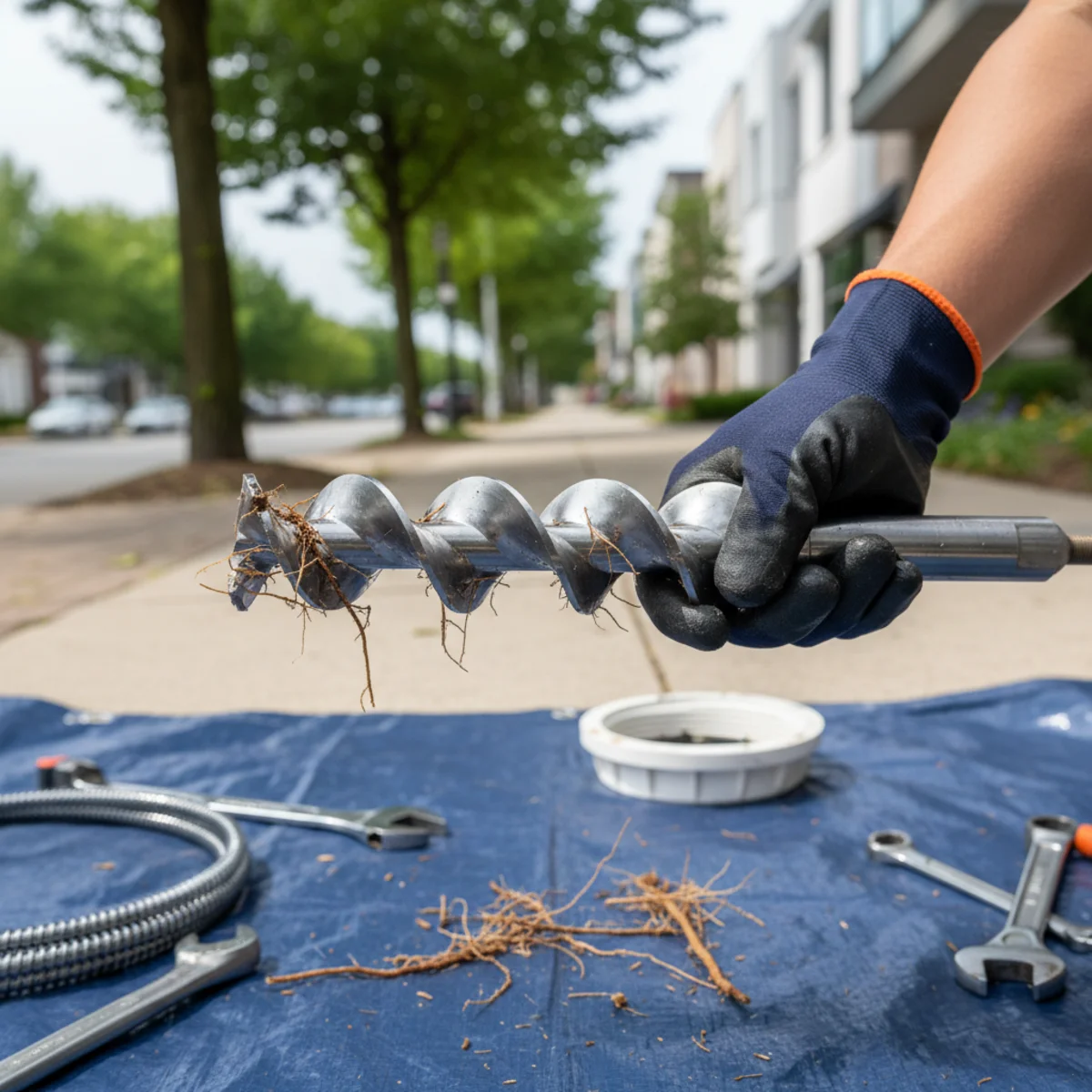
The same maples and oaks that make Roselle Park's streets worth walking send their roots straight into the joints of hundred-year-old clay sewer laterals — and once inside, they grow a living strainer that catches everything your house sends down. Our rooter service in Roselle Park, NJ cuts the intrusion back to the pipe wall and maps where it got in. Call (207) 419-2600 before the next backup picks the date for you.
- 24/7 Emergency Availability
- Upfront Estimates Before Work Begins
- Local Roselle Park Dispatch
The Problem, As You're Living It
Roots don't smash into a sewer pipe. They find it — a clay joint sweating moisture into dry summer soil is a beacon, and a root tip thinner than a hair slips into a gap no wider than a credit card. Then it drinks, and grows, and what entered as a thread becomes a wrist-thick mass wearing a beard of fine roots across the whole pipe.
From the house, the story plays out in chapters you've maybe already read: drains slow each spring, a backup gets snaked, things work for a while, repeat. Each cycle the regrowth comes back faster, because the cut roots respond like a pruned hedge — denser.
Rooter service in Roselle Park, NJ breaks the cycle two ways: cutting the intrusion back to the wall with the right blade, and showing you on camera exactly which joints are compromised, so you can decide between a maintenance schedule and a permanent fix with real information.
What Rooter Service Includes
- Mechanical root cutting through the full lateral with blades sized to the pipe, shaving intrusions back to the wall instead of punching past them.
- Spiral and C-cutter head selection matched to clay pipe's tolerance, aggressive enough to clear the joint without cracking what's left of it.
- Camera mapping of every root entry point after cutting, locating each compromised joint by position and depth from the surface.
- Jetting follow-up that flushes fine root hair and cut fragments out of the line, so the new growth has less scaffolding to build on.
- Honest regrowth forecasting based on what we cut and where, so your maintenance interval comes from evidence rather than a sales calendar.
- Emergency root clearing when an intrusion finally closes the line and the house stops draining entirely.
- Assessment of which trees are involved and what that means — sometimes the culprit is three doors down and nobody suspects it.
- Plain-language comparison of recurring rooter service versus joint sealing, lining, or spot repair, with the break-even math done in front of you.
- Documentation of root locations and pipe condition you can keep, use for repair bids, or hand to the next owner.
How the Job Gets Done
- 1
Book before the roots finish the job
Call (207) 419-2600 — slow drains and seasonal symptoms book as standard visits, while a line that's quit entirely gets emergency priority. Tell us about your trees and your snaking history; a lateral that's been cut annually for years tells us a lot before we arrive.
- 2
Cut the intrusion, not just a path
The machine runs the full lateral with a root-rated head, working each intrusion back to the pipe wall. The difference between a rooter job and a quick snake is thoroughness at the joints — a bored hole through a root mass regrows in months, while a wall-to-wall cut buys real time.
- 3
Flush out the debris
Cut roots don't vanish; fragments and fine hair stay behind and snag solids if left in the line. Where the buildup warrants it we follow the blade with a jetting pass, washing the cuttings downstream and leaving the joints clean instead of carpeted with stubble.
- 4
Map every entry point
The camera documents each joint where roots got in — how bad, how deep, where in the yard. Root entries are pipe defects by definition, and knowing whether you have one bad joint or eleven changes the entire conversation about what to do next.
- 5
Choose maintenance or a permanent fix
With the map in hand, we lay out the honest options: a cutting schedule timed to your regrowth rate, sealing or lining the compromised joints, or spot-repairing the worst section. Sometimes maintenance is genuinely the smart money for years; sometimes it's a treadmill. We show you which.
Why This Matters in Roselle Park
Roselle Park planted generously a century ago, and the borough's tree canopy is the envy of plainer towns — but every one of those mature maples, oaks, and sycamores stands within root-reach of an early-1900s clay lateral with joints every few feet. It's the perfect crime scene: vitrified clay lasts forever, but the mortar and gasket joints between sections gave up decades ago, and the trees found every gap. We cut roots on blocks off Chestnut Street where the same species lines both curbs and practically every lateral on the street has intrusion somewhere. One borough-specific note worth knowing: the tree responsible isn't always yours. Roots travel astonishing distances toward water, and we've traced intrusions to trees two properties away — which matters when you're deciding whether removing a tree would even solve anything.
Why Call a Local Plumbing Pro
Root work rewards experience in a way simple clogs don't. Cut too timidly and the regrowth returns by fall; run too aggressive a head through brittle clay and you've turned a maintenance call into an excavation. We've cut enough Roselle Park laterals to read the pipe through the cable, and the camera afterward keeps everyone honest — you see the cleared joints, the remaining defects, and the regrowth risk yourself. Then you get a real choice, priced upfront: keep cutting on a schedule that matches your line's actual behavior, or fix the entry points permanently. Both are legitimate; what's not legitimate is pretending one answer fits every yard.
What Affects the Cost of Rooter Service
Rooter work is priced by how badly the lateral is invaded and how thoroughly it is cleared. A quick bore through a root mass is cheaper but regrows in months; cutting wall-to-wall at the joints with a root-rated head buys real time and costs accordingly. Line length, how many joints are compromised, and a jetting follow-up to flush fragments all move the number.
The bigger cost question is maintenance versus a permanent fix. A cutting schedule timed to your regrowth is one ongoing cost; sealing the joints, lining the lateral, or spot-repairing the worst section costs more up front but ends the cycle. The camera map of where roots got in makes that break-even math real.
No honest plumber can quote this from a web page. You get an upfront estimate after the problem is seen, and you approve it before any work begins. Call (207) 419-2600 for a straight answer on your situation.
Rooter Service Across Union County
All Service AreasRelated Plumbing Guides
Helpful reading from our blog on problems related to rooter service — what to watch for, what's safe to DIY, and when to call.
Drain & Sewer
How to Unclog a Toilet Without a Plunger (Safely)
The plunger is missing and the bowl is full. Before you panic or pour something dangerous, try these safe home methods — and learn the bright line for when to stop and call a plumber.
Read the guideDrain & Sewer
Sewer Smell in the House? Work Through This Diagnosis Ladder
That sewer-gas smell has a source, and you can often find it by working from the simplest cause to the most serious. Here is the diagnosis ladder a plumber runs in their head, top rung to bottom.
Read the guideDrain & Sewer
Why a Camera Sewer Inspection Is the Smartest Plumbing Money You Spend
You would not buy a car without looking under the hood. A camera sewer inspection is how you look inside the one pipe you cannot see — before you dig, before you buy an older home, before a clog becomes a flood.
Read the guide
Rooter Service FAQs
Need Rooter Service in Roselle Park, NJ?
Call now for prioritized dispatch, or send the details and we'll follow up fast. Upfront estimates before any work begins.