Drain & Sewer
How to Unclog a Toilet Without a Plunger (Safely)
7 min read · Published March 2, 2026
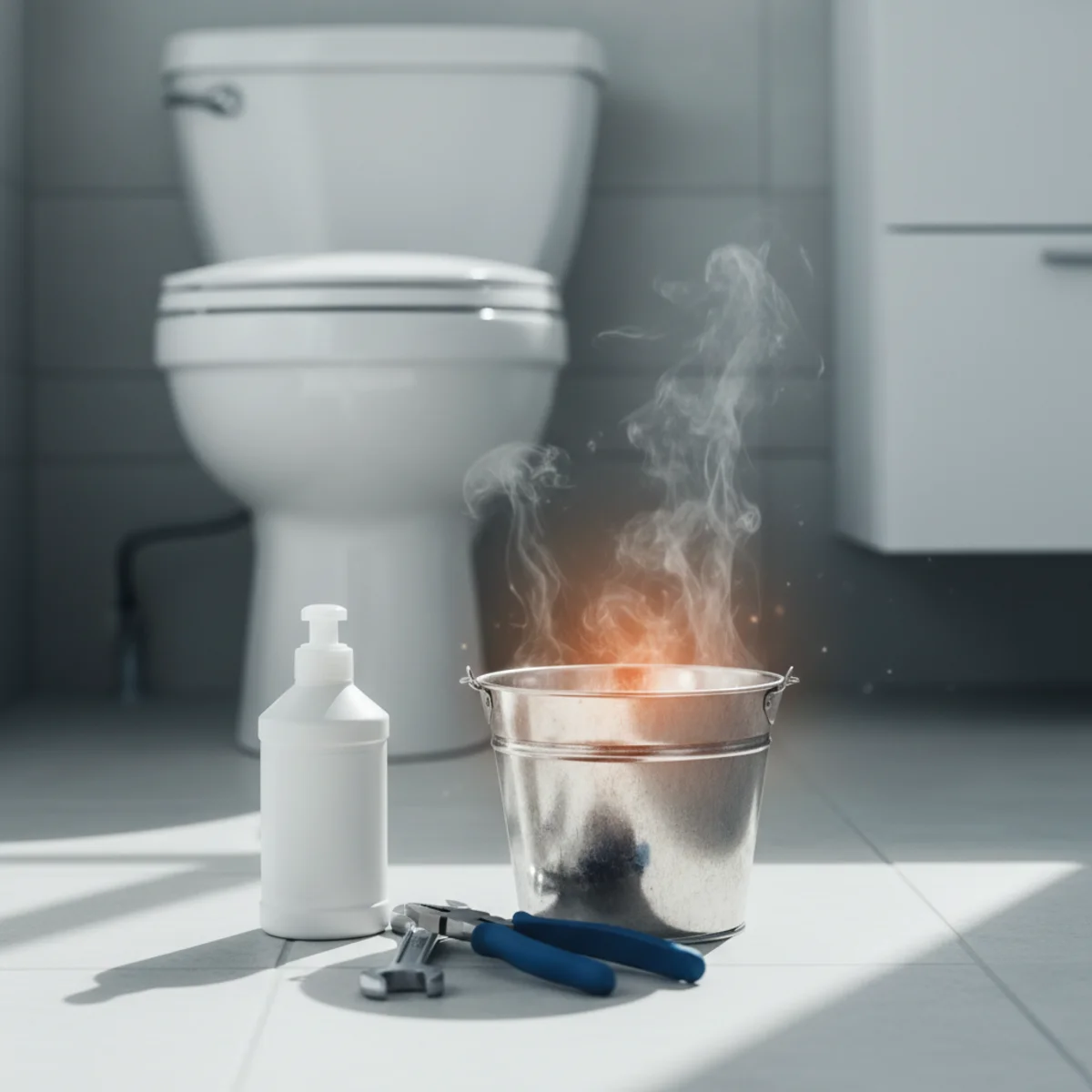
The plunger is missing and the bowl is full. Before you panic or pour something dangerous, try these safe home methods — and learn the bright line for when to stop and call a plumber.
Key Takeaways
- Do not flush again on a rising bowl; seal the flapper by hand and close the shutoff valve.
- Try dish soap plus hot, never boiling, water from waist height, repeating once if it drains slowly.
- A toilet brush or a proper closet auger gives you plunging action without a plunger.
- Never pour chemical drain cleaner in a toilet, it is diluted, dangerous, and can crack porcelain.
- Stop and call if other fixtures react or the same toilet clogs over and over.
First: Stop the Bowl From Overflowing
Before any unclogging trick, handle the immediate threat — a bowl about to spill over.
If the water is rising toward the rim, do not flush again. The instinct to try one more flush is exactly what turns a clog into a flood. Instead, take the lid off the tank and push the rubber flapper down by hand to seal it, which stops more water from entering the bowl. Then close the toilet's shutoff valve — the small football-shaped or oval handle on the wall behind or beside the base — by turning it clockwise. That cuts the water supply entirely.
Now the bowl is stable and you have time to work without a mess.
If the bowl is already too full to add anything to, bail some water out into a bucket with a cup so your methods have room to work. Wear gloves; nobody enjoys this part.
Most toilet clogs are simple — too much paper, or a kid's idea of an experiment — and clear with one of the methods below. The ones that do not clear are usually telling you the problem is past the toilet, and we will get to how you spot that. If you ever reach standing water on the floor or a backup that involves other fixtures, skip straight to calling (207) 419-2600 for clogged drain repair.
The Hot Water and Dish Soap Method
This is the first thing to try, and it clears a surprising number of clogs on its own.
Squeeze a generous amount of dish soap into the bowl — a good few seconds' pour. The soap works its way down around the clog and acts as a lubricant, helping a stuck mass of paper and waste slide free. Give it ten minutes to sink and do its work.
Meanwhile, heat a gallon or so of water until it is hot but not boiling. This part matters: do not use boiling water. A porcelain toilet bowl can crack from the thermal shock of boiling water, and a cracked bowl is a much bigger problem than a clog. Hot tap water or water heated just short of a boil is the safe call.
Pour the hot water into the bowl from about waist height. The height adds a little force, and the heat plus the soap loosens the clog. Wait a few minutes and see if the water level drops. If it does, the clog is breaking up — let it sit, then test with the shutoff barely cracked open before you fully flush.
If the level drops slowly, repeat the soap-and-hot-water once more. Many ordinary paper clogs give up after the second round. If nothing moves at all, the blockage is firmer and it is time for a more mechanical approach.
Make a Plunger Substitute
No plunger does not mean no plunging action. A few household items can move water in the bowl enough to dislodge a clog.
The toilet brush is the most available option. Wrap the bristle end in a plastic bag if you want to keep it cleaner, lower it into the drain hole at the bottom of the bowl, and pump it up and down to create suction and pressure against the clog. It is not elegant, but the back-and-forth water movement often breaks a soft clog loose.
A wire coat hanger can help with a clog you can reach. Unwind it, wrap the end in a rag or tape so the bare wire cannot scratch the porcelain, and gently work it into the drain to push or break up an obstruction near the top. Go gently — you are clearing a clog, not scraping the bowl, and you do not want to push the clog deeper or punch through anything.
The most effective DIY tool is a toilet auger or closet auger if you happen to own one. It is a short cable built to navigate the toilet's trap and reach a clog the other methods cannot. A regular drain snake is not ideal here and can scratch the bowl, but a proper closet auger is the right tool.
If hand methods clear it, great. If they do not, resist the urge to escalate to chemicals — and here is why.
What You Must Never Pour Down a Toilet
When the easy methods fail, the temptation is to reach for the heavy chemical drain cleaner. Don't. On a toilet, it is both ineffective and risky.
Chemical drain cleaners — the lye- and acid-based ones — are made for sinks and tubs, not toilets. The toilet's water-filled trap dilutes them, so they often do not even reach a clog with full strength. Meanwhile they sit in the bowl as a caustic pool. If you then have to plunge or auger, you are splashing skin-burning chemicals around. If the clog does not clear and a plumber has to remove the toilet, they are now reaching into a bowl of caustic water — an unsafe situation we genuinely dislike walking into.
They can also damage the toilet itself. The heat some chemicals generate can crack the porcelain or degrade seals and the wax ring over time.
Skip these too: do not pour boiling water (cracks porcelain), do not flush flushable wipes to push a clog through (they make it worse), and do not keep flushing in hope (that is how the floor floods).
The honest rule: a toilet clog is mechanical. It clears with water movement, soap, or an auger — not chemistry. If the safe methods have not worked, the problem is bigger than the bowl, and the right next step is a plumber, not a stronger bottle. That is when a quick call about toilet repair saves you from making it worse.
Why It Clogged — and How to Stop the Next One
Most toilet clogs trace back to a handful of habits, and fixing the habit beats fixing the clog every time.
Too much paper at once is the everyday culprit, especially with thick or quilted brands. The fix is the courtesy flush — flush partway through rather than sending a giant wad down at the end. Older toilets and low-flow models that struggle to clear waste are the most sensitive to this.
The bigger offenders are the things that should never go in. So-called flushable wipes do not break down like toilet paper and are a leading cause of stubborn clogs and main-line blockages. Paper towels, tissues, cotton swabs, dental floss, and feminine products all snag and build up. The honest rule is the simplest one: human waste and toilet paper only. Everything else goes in the trash.
Kids are their own category — toys, golf balls, and whatever fits often end up in the bowl. If a toilet suddenly clogs hard and nothing you try moves it, a lodged object is a real possibility, and that sometimes means pulling the toilet to retrieve it.
If you have cleaned up the habits and a particular toilet still clogs easily, the toilet itself may be the weak link — an old low-flow design or a partially blocked branch line. At that point a toilet repair or a quick drain check is worth more than another bottle of anything.
When to Stop and Call a Plumber
Knowing when to quit is as valuable as any unclogging trick. A few signs mean the problem is no longer a simple toilet clog.
Stop and call if other fixtures react when you use the toilet — the tub gurgles, the sink backs up, or the basement floor drain weeps. That means the clog is not in the toilet at all; it is in the main line everything shares, and no amount of plunging the bowl will fix a blockage forty feet out under the yard. This one is urgent — keep water use to a minimum until it is cleared.
Stop and call if the same toilet clogs over and over. A toilet that backs up regularly is telling you something is wrong past the bowl — a partial blockage in the branch line, a venting issue, roots in the lateral, or an old low-flow toilet that simply cannot move waste through a scaled-up drain. Repeated clogs are a diagnosis, not bad luck.
And stop the moment anything overflows onto the floor or you suspect a sewer backup. That is a cleanup and a clearing job, not a DIY afternoon.
A single, occasional toilet clog is normal household life and the methods here handle it. A pattern, a multi-fixture reaction, or any sign of sewage where it should not be is a plumber's call. When you are not sure, you are welcome to call (207) 419-2600 and describe what is happening — sometimes the right answer is a two-minute tip, and sometimes it is getting someone out before a small clog becomes a backed-up sewer line. Homeowners across Roselle Park deal with these old drain lines, and there is no shame in knowing where DIY ends.
Frequently Asked Questions
Keep Reading
Drain & Sewer
Sewer Smell in the House? Work Through This Diagnosis Ladder
That sewer-gas smell has a source, and you can often find it by working from the simplest cause to the most serious. Here is the diagnosis ladder a plumber runs in their head, top rung to bottom.
8 min read · February 9, 2026
Drain & Sewer
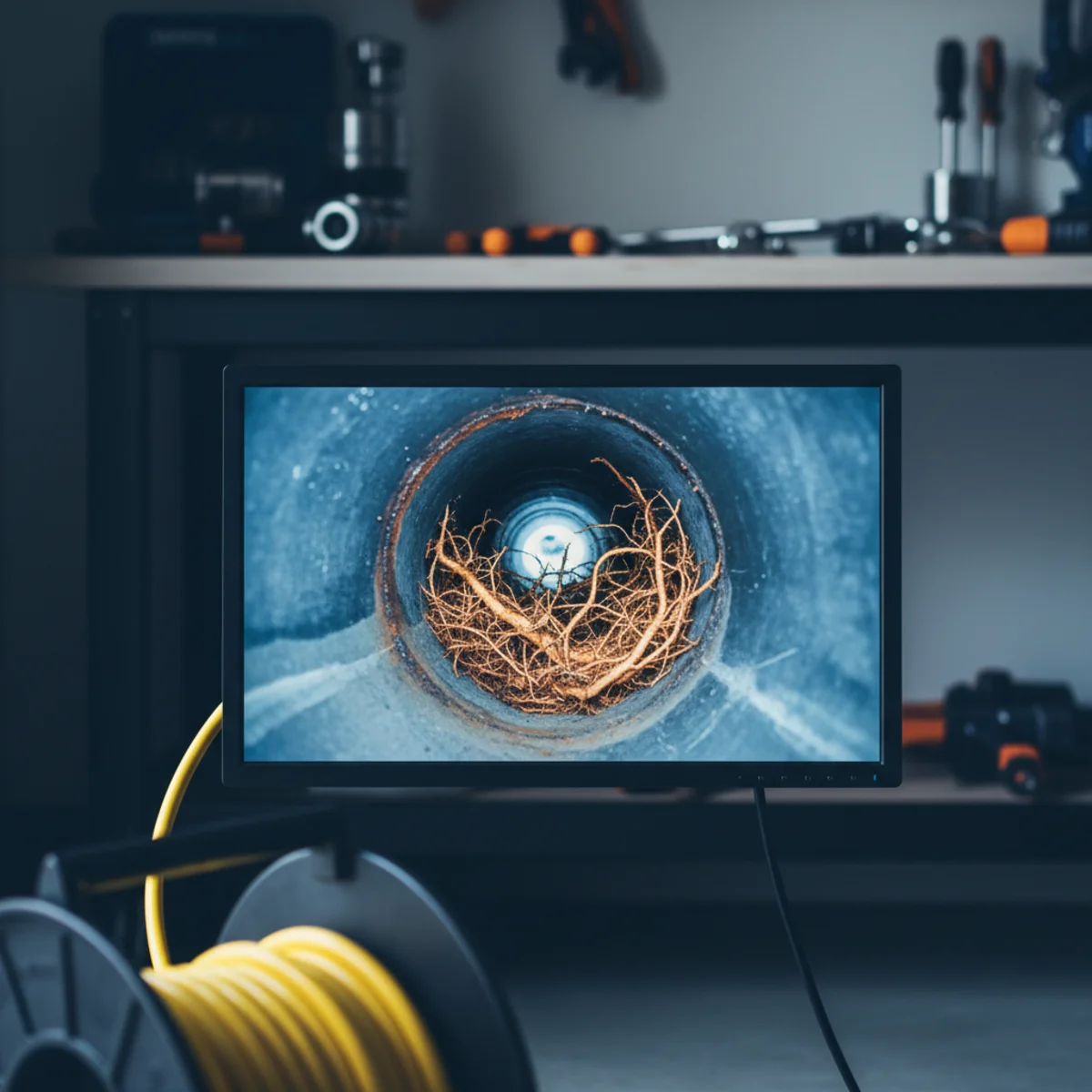
Why a Camera Sewer Inspection Is the Smartest Plumbing Money You Spend
You would not buy a car without looking under the hood. A camera sewer inspection is how you look inside the one pipe you cannot see — before you dig, before you buy an older home, before a clog becomes a flood.
7 min read · January 26, 2026
Drain & Sewer
7 Signs Your Main Sewer Line Is Clogged (Act Before It Backs Up)
A single slow drain is annoying. Several fixtures backing up at once is a warning the main sewer line is failing. Learn the signs that mean stop using water and call before sewage hits the floor.
8 min read · November 17, 2025