Drain & Sewer
Why a Camera Sewer Inspection Is the Smartest Plumbing Money You Spend
7 min read · Published January 26, 2026
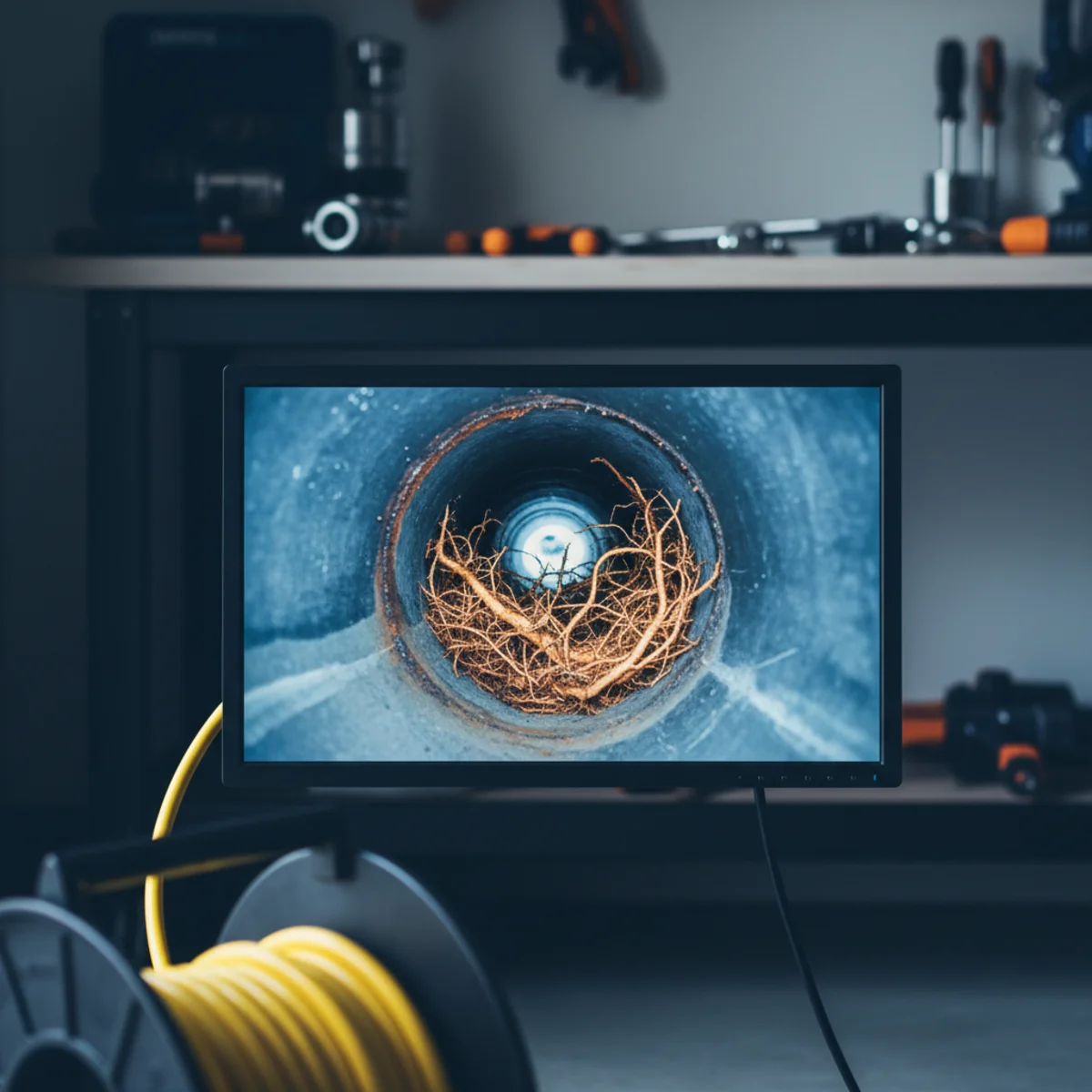
You would not buy a car without looking under the hood. A camera sewer inspection is how you look inside the one pipe you cannot see — before you dig, before you buy an older home, before a clog becomes a flood.
Key Takeaways
- A camera shows the buried lateral live, ending the guesswork about roots, cracks, or bellies.
- Diagnose before you dig: the camera marks exact location and depth so nobody trenches blind.
- Inspect the sewer before buying an older home; a standard inspection skips the buried lateral.
- The camera keeps you from over-fixing a sound pipe or under-fixing a failing one.
- It is diagnostic only and cannot always see past a full blockage, so a clog gets cleared first.
Seeing the One Pipe Nobody Can See
Your sewer lateral runs from the house, under the yard, to the street main. It is buried, often four to six feet down, and for most homeowners it is a complete mystery. You find out it exists the day it backs up.
A camera sewer inspection ends the mystery. A plumber feeds a waterproof, self-lit camera on a flexible push rod into the line through a cleanout and watches a live screen as it travels the pipe. You see the actual inside of your sewer — the joints, the pipe material, any roots, any cracks, any low spots holding water — in real time.
That is a genuinely different thing from guessing. Without a camera, diagnosing a sewer problem is reading symptoms and inferring. With one, you watch the problem on a monitor and know.
The equipment also locates. A transmitter on the camera head lets the plumber mark the exact spot and depth of a problem from the surface, so if a repair is needed, nobody digs a trench hunting for it. For Roselle Park's older homes, where the lateral is frequently aging clay or early cast iron, that look is the single most useful piece of information you can get before committing to any sewer line repair.
Diagnose Before You Dig
The most expensive way to fix a sewer is to start digging and find out what is wrong as you go. The cheapest way is to know first.
A camera tells you the cause and the location before a single shovel moves. Is it roots at one joint, or a collapsed section, or just a grease plug you can clean? Is the damage at fifteen feet or fifty? Is the pipe clay, cast iron, or PVC? Each answer points to a completely different fix and a completely different cost.
This is what protects you from doing too much. A backed-up line does not automatically need replacement. The camera might show roots in otherwise sound pipe — clear them and keep an eye on it. It might show one cracked section while the rest is fine — repair the one spot. It might show a belly you can manage with periodic cleaning instead of a dig.
It also protects you from doing too little. If the camera shows a lateral that is fractured along its length, you learn that before you pay to clean a pipe that is going to fail anyway. The camera is what lets a plumber recommend the right scope honestly — whether that is a quick drain cleaning or a full repair — instead of guessing high to be safe.
Buying an Older Home? Inspect the Sewer First.
Here is advice that saves people thousands: before you buy an older home, get the sewer lateral inspected. A standard home inspection does not include it. The inspector runs the faucets and checks for leaks, but nobody puts a camera down the sewer unless you ask.
In Roselle Park, where most of the housing stock dates to the early 1900s, that buried lateral is often the single biggest hidden liability in the house. Original clay pipe with root-invaded joints, cast iron rotting from the inside, a belly from a century of soil settling — none of it shows up at the open house, and all of it becomes the new owner's problem.
A pre-purchase camera inspection turns that unknown into a number. If the line is sound, you buy with confidence. If it is failing, you have a real basis to negotiate the price or ask the seller to address it before closing. Either outcome is worth far more than the inspection costs.
This is exactly the kind of thing a broader plumbing inspection covers for an older home, and the sewer camera is the centerpiece. If you are under contract on a vintage Roselle Park colonial, call (207) 419-2600 and get the lateral looked at before you sign.
Catching Small Problems Before They Flood Your Basement
Most sewer disasters were small problems first. The camera is how you find them while they are still small.
Root intrusion starts as a few hair-like roots reaching through a joint. Left alone, they thicken into a mat that catches everything and eventually blocks the line. Caught early on camera, they are a clear-and-monitor job instead of an emergency dig.
A developing belly holds a little water and a little sediment at first. Over time the standing water collects more debris and the spot clogs on a cycle. Seen early, you can manage it. Seen for the first time during a sewage backup, you are mopping a basement.
For a Roselle Park home with a finished basement — which is most of them — that early look has real stakes. A main-line backup that surfaces through the floor drain into finished space is exactly the disaster a periodic camera check is designed to prevent. If you have had even one mystery slow-down or gurgle, a camera says whether it was a fluke or the first sign of something building. Pairing the inspection with a sewer cleaning on a known-troublesome line keeps small problems from graduating.
What to Expect During the Inspection Itself
A camera inspection is one of the least disruptive things a plumber does in your home, which surprises people who picture digging.
It starts at an access point — usually an existing cleanout, a capped fitting in the basement or outside near the foundation. If there is no usable cleanout, a fixture like a pulled toilet can serve as the entry. There is no excavation and no mess in the living space.
The plumber feeds the camera in and walks it down the line while you watch the same monitor. That part matters: you are not handed a verdict, you see the pipe yourself. A good plumber narrates — that is the cast-iron-to-clay transition, that is a root ball at a joint, that is the belly holding water — so you understand the recommendation instead of taking it on faith.
A typical lateral inspection takes well under an hour. If the line is too clogged to see through, it gets cleared first with a sewer cleaning and then inspected, which adds time but is the only way to get a clear picture.
You should come away with a plain-language summary and, ideally, footage you can keep. That recording is useful for a real-estate negotiation, an insurance claim, or simply comparing the line a year from now. If a plumber will not show you the screen or share what they found, ask why.
What the Camera Actually Shows — and What It Doesn't
Honesty about the tool's limits matters as much as its strengths.
What it shows clearly: pipe material and where it transitions, roots at joints, cracks and offsets, collapsed or crushed sections, bellies holding water, scale and grease buildup, foreign objects, and the depth and location of any of those. It is excellent at telling you what is wrong and where.
What it cannot do: the camera does not fix anything — it is purely diagnostic. It cannot always see past a full blockage, which is why the line sometimes has to be cleared first and then inspected. And it does not read the pipe's remaining wall thickness like an X-ray; it shows the inner surface, and an experienced eye interprets the rest.
That is why a camera inspection is best understood as the step that aims every other decision. You clean, repair, or replace based on what the camera shows — not the other way around. Anyone who recommends a trench or a full replacement for an older home without ever putting a camera in the line is asking you to pay for a guess.
If a sewer problem has you weighing big numbers, insist on the look first. It is the cheapest line item in the whole project and the one that makes every other dollar smart. Across Roselle Park, the homes with the fewest sewer surprises are the ones whose owners put a camera in the line before they had to.
Frequently Asked Questions
Keep Reading
Drain & Sewer
How to Unclog a Toilet Without a Plunger (Safely)
The plunger is missing and the bowl is full. Before you panic or pour something dangerous, try these safe home methods — and learn the bright line for when to stop and call a plumber.
7 min read · March 2, 2026

Drain & Sewer
Sewer Smell in the House? Work Through This Diagnosis Ladder
That sewer-gas smell has a source, and you can often find it by working from the simplest cause to the most serious. Here is the diagnosis ladder a plumber runs in their head, top rung to bottom.
8 min read · February 9, 2026
Drain & Sewer
7 Signs Your Main Sewer Line Is Clogged (Act Before It Backs Up)
A single slow drain is annoying. Several fixtures backing up at once is a warning the main sewer line is failing. Learn the signs that mean stop using water and call before sewage hits the floor.
8 min read · November 17, 2025