Emergency
Why Water Leaks Get Worse Overnight
8 min read · Published December 8, 2025
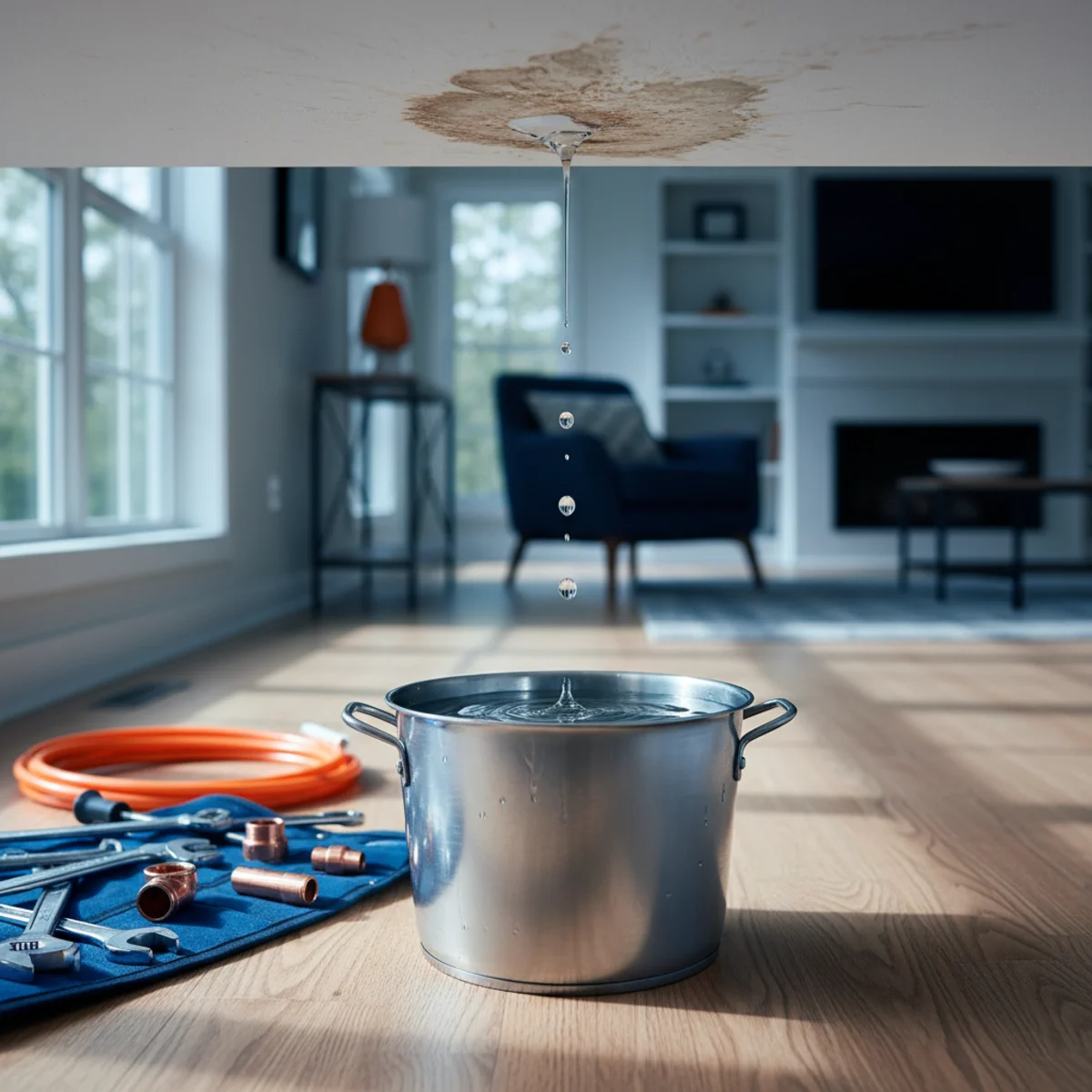
That drip you noticed at dinner really is worse by breakfast, and it is not your imagination. Night brings higher water pressure, colder pipes, and eight unwatched hours. Here is the mechanics.
Key Takeaways
- Leaks genuinely worsen overnight as municipal pressure climbs and pipes contract in the cold.
- Higher nighttime pressure drills a pinhole wider, and eight unwatched hours let it spread.
- In a commuter town, daytime leaks run just as freely while owners ride the train to work.
- Run the meter test: note the reading with everything off, then recheck after an hour.
- Braided stainless supply hoses and cheap battery leak alarms catch failures you would otherwise miss.
No, You Are Not Imagining It
Homeowners tell us a version of this story all the time: the drip under the sink was lazy at 9 PM, and by 6 AM there is a puddle reaching the hallway. They assume they misjudged it the night before.
Usually they judged it fine. The leak actually got worse — because night changes the conditions a leak lives under.
Three things shift after dark. Water pressure in the municipal system climbs as the neighborhood stops using water. Temperatures drop, and pipes physically move as they cool. And the leak gets eight uninterrupted, unobserved hours to work — no one opening a tap to relieve pressure, no one noticing the puddle doubling at 3 AM.
None of this is exotic. It is plain mechanics, and once you understand it, two useful things follow: you will stop trusting how a leak looks at dinnertime, and you will understand why plumbers treat a small evening drip more seriously than its size seems to deserve. Tonight's trickle is auditioning for a bigger role.
Nighttime Pressure: The Whole Town Stops Using Water
Your house does not get water at a constant pressure. It rides the municipal system, and that system breathes with demand.
From early evening, showers, dishwashers, and lawn watering all over town pull pressure down. After midnight, demand collapses — and the pressure in the mains rises toward its ceiling. The difference at your hose bib can be substantial between 7 PM and 3 AM.
For solid pipe, that swing is irrelevant. For a compromised spot — a pinhole forming in old copper, a fitting losing its bite, a hairline split in a worn washer — pressure is the bully leaning on the weak point. Higher pressure means more water pushed through the same defect, and moving water erodes its own channel wider. A pinhole literally drills itself bigger as flow increases.
This is also why homes with no pressure-reducing valve, or a failed one, leak at night first. If your faucets occasionally spit or your pipes thump in the small hours, your plumbing is telling you what the gauges would: nighttime is when your system runs hardest, exactly when no one is awake to see it.
Cold Nights Make Pipes Move
The second overnight force is temperature, and you do not need a January freeze for it to matter.
Metal pipe expands when warm and contracts as it cools. When the overnight temperature drops — in the basement, the crawl space, inside exterior walls — every copper and steel line in the house shrinks slightly. Joints tighten unevenly. Old solder, corroded threads, and stressed fittings get tugged in ways daytime never tugs them. A marginal joint that holds at 68 degrees can weep at 50.
New Jersey winters add the sharper version. Pipes in uninsulated crawl spaces and along rim joists chill far below room temperature overnight, and a frozen pipe does not announce itself until the morning thaw reveals the split. The freeze happens at 4 AM; the flood happens at 9.
Even the water itself plays a part. Cold water is slightly denser and carries pressure differently, and water heaters cycling overnight send expansion and contraction through the hot side too. Add it up and night is when your plumbing flexes the most — while the conditions for leaking are at their best.
Eight Hours of Nobody Watching
Here is the least technical factor and the most expensive one: time without eyes.
During the day, leaks get caught early by accident. You open the cabinet for dish soap and spot the drip at twenty minutes old. At night, the same leak runs from your last glance at 11 PM until your first coffee at 6 — seven unobserved hours. A drip per second is over a gallon by morning. A steady trickle is a soaked subfloor.
Water also uses the quiet hours to travel. It follows joists, wicks along subflooring, and soaks insulation, spreading sideways long before it drips somewhere visible. The puddle you find at breakfast is the overflow — the framing above it got first claim.
And daytime usage actually relieves the system in a way night never does. Every shower and flush bleeds pressure off and interrupts the steady feed pushing through the defect. Overnight, the leak gets a constant, undisturbed supply at peak pressure.
This is why the bucket-it-and-sleep instinct deserves one extra thought: a contained drip can wait, but only if you are sure where all the water is going.
The Commuter-Town Version: Leaks That Run All Day Too
Roselle Park adds its own twist to the nobody-watching problem. This is a commuter town — a big share of the borough rides the Raritan Valley Line out in the morning and walks back in after dark.
That schedule means a leak that starts at 8:15 AM gets the same free rein as an overnight one, except for ten hours instead of seven. We have seen supply hoses let go just after the morning rush and run until the 6:40 train brought someone home to a ceiling on the kitchen floor. Homes near the station area — and the borough's stacked two-family houses — feel this hardest, because a daytime leak upstairs becomes the downstairs tenant's disaster before either party knows.
Two cheap defenses fit the commuter life. First, braided stainless supply hoses on the washer, toilets, and faucets — the rubber originals are the most common quiet failure in the house. Second, a few battery water-leak alarms under sinks, behind the washer, and beside the water heater. They are cheap, they run for years, and they scream loud enough for a neighbor to hear.
The leak does not care whether you are asleep or at work. It only cares that no one is looking.
What to Do Tonight If You Suspect a Leak
Suspicion at bedtime deserves ten minutes of checking, not a shrug.
Start at the water meter — in most Roselle Park basements it sits low on the front wall. Make sure nothing in the house is using water, then watch the small leak indicator dial. Spinning with everything off means water is leaving the system somewhere. Note the reading, sleep, and check again first thing: movement overnight is your confirmation.
Then walk the suspects with a flashlight. Under sinks, around the water heater base, behind the toilet, at the washer hoses, along the basement ceiling below bathrooms. Feel pipes with a dry hand — a wet stripe tells you which line to blame. Put a paper towel under anything questionable; a wet spot on paper by morning is evidence the eye would miss.
If you find active dripping you cannot stop at a fixture valve, do not wait for the meter test. Close the main, open a low faucet to drain down, and call (207) 419-2600 — describing what you found by phone lets dispatch slot the water leak repair correctly, whether that means tonight or first thing tomorrow.
Stop Guessing: How a Pro Confirms the Hidden Ones
Some overnight leaks never show themselves directly. The symptoms are circumstantial — a water bill that crept up, a musty smell in one corner, warm spots on a floor, paint that bubbles a little more each week. Those cases are not for guessing, and they are definitely not for opening drywall on a hunch.
Professional leak detection works the problem without demolition: acoustic gear that hears pressurized water escaping inside walls, thermal imaging that spots the temperature signature of wet building material, meter isolation tests that narrow the leak to one branch of the system. The result is a repair opening the size of a notebook instead of an exploratory mess.
It is worth being honest about the order of operations, because it saves money: confirmation first, then access, then repair. Skipping straight to demolition because the stain is here usually finds clean framing — water rarely drips straight down.
If your house is telling you a quiet overnight story — the meter creeps, the dinner drip beats you awake — listen early. The gap between a Tuesday repair visit and a 3 AM emergency is usually about two weeks of ignoring it.
Frequently Asked Questions
Keep Reading
Emergency
What to Do When a Pipe Bursts in Your Roselle Park, NJ Home
A burst pipe dumps water fast, and the first ten minutes decide how bad the damage gets. Here is the exact order of moves for a Roselle Park home — shutoff, power, photos, then the call.
8 min read · January 12, 2026

Emergency
How to Handle an Emergency Plumbing Leak: A Triage Guide
Every active leak gets handled the same way: identify what kind it is, stop the water, contain the spread, and give dispatch the right details. Here is the triage order that works.
8 min read · November 3, 2025
Emergency
Signs You Need a 24 Hour Plumber (And What Can Wait Until Morning)
Some plumbing failures cost you real money every hour they wait, and some just feel that way at midnight. Here is an honest sorting of what needs a 24 hour plumber tonight.
8 min read · October 7, 2025