Emergency
What to Do When a Pipe Bursts in Your Roselle Park, NJ Home
8 min read · Published January 12, 2026
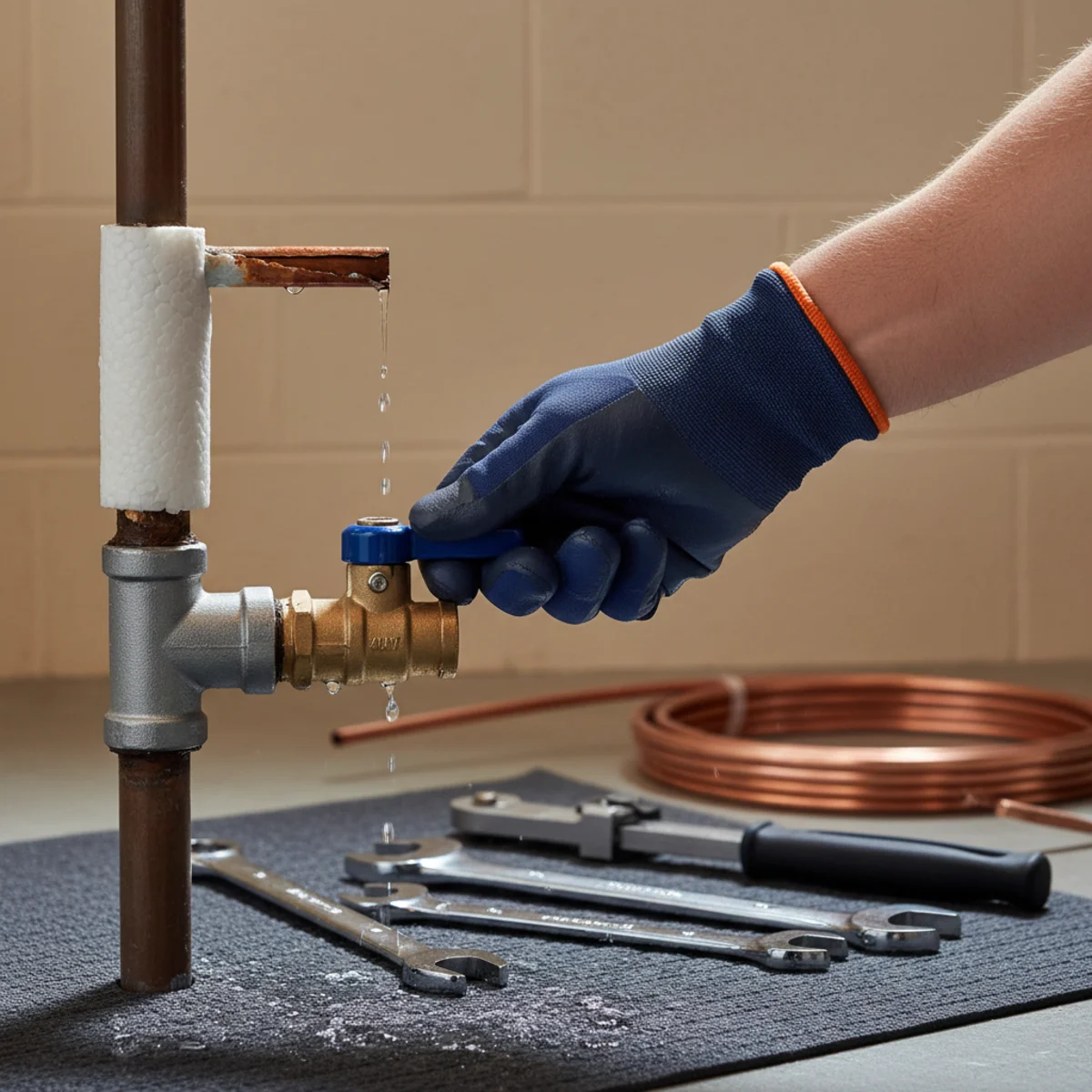
A burst pipe dumps water fast, and the first ten minutes decide how bad the damage gets. Here is the exact order of moves for a Roselle Park home — shutoff, power, photos, then the call.
Key Takeaways
- Shut the main first, not the valve nearest the break, before grabbing a single towel.
- Cut power to wet areas only with dry hands on a dry surface, never wade in.
- Open a low and a high faucet to drain the trapped water from the lines fast.
- Photograph everything before you mop, since sudden bursts are usually covered and slow leaks often are not.
- Call (207) 419-2600 once the main is off and lead with whether the shutoff is holding.
Minute One: Shut Off the Water Main
A burst pipe in a Roselle Park, NJ home can push out gallons a minute. Forget the towels. Go straight for the main shutoff valve.
In most homes here, the main is in the basement on the street-facing wall, within a few feet of the water meter. Look for a round wheel handle or a lever on the pipe coming up through the floor or wall. Lever handles turn a quarter turn until the handle sits crossways to the pipe. Wheel handles turn clockwise — righty-tighty — until they stop.
Do not waste minutes hunting for the small valve closest to the break. Under stress, people burn five minutes looking for a fixture stop while the ceiling comes down. Kill everything at the main first. You can sort out the smaller valves once the flooding stops.
If the main valve spins without doing anything, or it is seized solid with corrosion, that is its own emergency. Call (207) 419-2600 and lead with two facts: burst pipe, valve will not close. Dispatch treats that combination as a drop-everything call.
Minute Three: Cut Power to Anything Wet
Water and electricity share your basement, and they do not get along. Once the main is off, look at where the water went.
If water is pooling near outlets, the electrical panel, extension cords, or appliances, do not wade in. Standing water can carry current from a single submerged outlet. If you can reach your breaker panel with dry hands while standing on a dry surface, shut off the breakers feeding the wet rooms. If the panel itself is in the flooded area, leave it alone and tell the dispatcher — they will flag it.
Unplug nothing while you are standing in water. That is how people get hurt.
Most Roselle Park basements hold the furnace, the water heater, the washer, and half the family storage, so a burst overhead line soaks expensive equipment quickly. Gas appliances with pilot lights that got doused should be checked before relighting. Electric water heaters that took water on the element covers need an inspection before they are powered back up. Make notes — you will need them for the next step.
Open Faucets and Let the Lines Drain
Closing the main stops new water from coming in, but the pipes in the house are still full. That trapped water keeps feeding the break until the lines empty.
Open the lowest faucet in the house — usually a basement utility sink or an outside hose bib — and a faucet on the top floor. The high faucet lets air in, the low one lets water out, and the whole system drains in minutes instead of dripping through your ceiling for an hour.
Flush a toilet once or twice to empty those tanks too.
In winter, this step matters double. If the burst came from a frozen pipe, other sections of the same run may still be iced up and ready to split when they thaw. Draining the system takes the pressure off every weak spot at once. Leave the faucets open until the plumber arrives — it also tells us instantly whether the main valve is holding or letting water seep past.
Take Photos Before You Clean Anything
The instinct is to start mopping. Hold off for five minutes.
Your homeowner's insurance adjuster was not standing in your basement when the pipe let go, so your photos have to do the testifying. Shoot wide shots of every affected room, close-ups of the broken pipe itself, the water line on walls and boxes, and anything damaged — rugs, furniture, electronics, the works. Get the standing water before you remove it. Video with narration works even better than stills.
Photograph the pipe break from several angles, including anything that explains the cause: frost on the line, a corroded fitting, a green-crusted joint. Cause matters for coverage. Sudden bursts are usually covered; slow leaks that ran for months often are not, so evidence that this was a sudden failure protects you.
Keep the broken pipe section after the repair. Adjusters sometimes want to see it, and it costs nothing to set it on a shelf. Then mop, wet-vac, and move air. Mold gets going in a day or two, so once the photos exist, speed matters again.
Move What You Can, Contain What You Can't
With the water stopped and documented, triage the room.
- Get cardboard boxes off wet floors first — they wick water up into whatever they hold.
- Put aluminum foil or plastic lids under furniture legs you cannot move; wet wood stains carpet fast.
- Pull area rugs out flat to dry instead of leaving them folded and soggy.
- Aim a box fan across the wet floor, not straight down at it, and open windows if the weather is dry.
- Pop the baseboard heater covers and cabinet kickplates if water ran along the walls — trapped water behind them is what grows mold.
If the burst happened upstairs, watch the ceiling below. A sagging bulge of drywall is holding water. Put a bucket under it and poke a small hole with a screwdriver to drain it in a controlled spot — that sounds wrong, but a pencil-size hole beats the whole ceiling coming down at once.
For anything beyond a wet floor — soaked insulation, saturated drywall, finished-basement carpet — be honest with yourself about scale. Plumbers fix the pipe. Big drying jobs are restoration work, and starting that call early saves the framing.
Why Pipes Burst in Roselle Park Homes
Most of the borough's housing went up in the early 1900s, and the plumbing shows it. Three failure patterns cover almost every burst we see in Roselle Park.
Freeze-bursts top the list. January cold snaps find every pipe running through an uninsulated crawl space, a garage ceiling, or along a basement rim joist. Water expands as it freezes, the pipe splits quietly, and the flood starts hours later when things thaw.
Old metal comes second. Galvanized steel supply lines from the original construction rust from the inside out for decades, then let go without warning. A pipe that is mostly rust holds together right up until it does not, and patching one spot just moves the stress to the next weakest inch. That is the honest argument for pipe replacement over a third repair on the same run.
Water hammer does the rest. Fast-closing valves on washers and dishwashers slam moving water to a stop, and the shock pounds weak joints until one opens. If your pipes bang when appliances shut off, that is a warning worth taking seriously before winter does it for you.
When to Call and What to Say
Call as soon as the main is off — not after cleanup. The repair clock and the drying clock both run faster than people expect.
When you reach us at (207) 419-2600, three details help dispatch slot you correctly: where the pipe broke, whether the main shutoff is holding, and whether the water reached anything electrical. A burst with a working shutoff is urgent. A burst with a failed shutoff or a wet panel goes to the front of the line.
Emergencies get prioritized and the truck moves as fast as the schedule allows — you get a straight ETA before anyone rolls, not a vague window. While you wait, leave the faucets open, keep people and pets out of the wet area, and pull together those insurance photos.
The fix itself is usually straightforward: cut out the split section, replace it with new copper or PEX, and pressure-test the line before the water comes back on. Burst pipe repair calls in Roselle Park rarely take more than a few hours once we are on site — the damage you prevent in the first ten minutes is the part only you control.
Frequently Asked Questions
Keep Reading
Emergency
Why Water Leaks Get Worse Overnight
That drip you noticed at dinner really is worse by breakfast, and it is not your imagination. Night brings higher water pressure, colder pipes, and eight unwatched hours. Here is the mechanics.
8 min read · December 8, 2025
Emergency
How to Handle an Emergency Plumbing Leak: A Triage Guide
Every active leak gets handled the same way: identify what kind it is, stop the water, contain the spread, and give dispatch the right details. Here is the triage order that works.
8 min read · November 3, 2025
Emergency
Signs You Need a 24 Hour Plumber (And What Can Wait Until Morning)
Some plumbing failures cost you real money every hour they wait, and some just feel that way at midnight. Here is an honest sorting of what needs a 24 hour plumber tonight.
8 min read · October 7, 2025