Water Heaters
Why Your Water Heater Makes Popping Noises (And What to Do)
7 min read · Published January 5, 2026
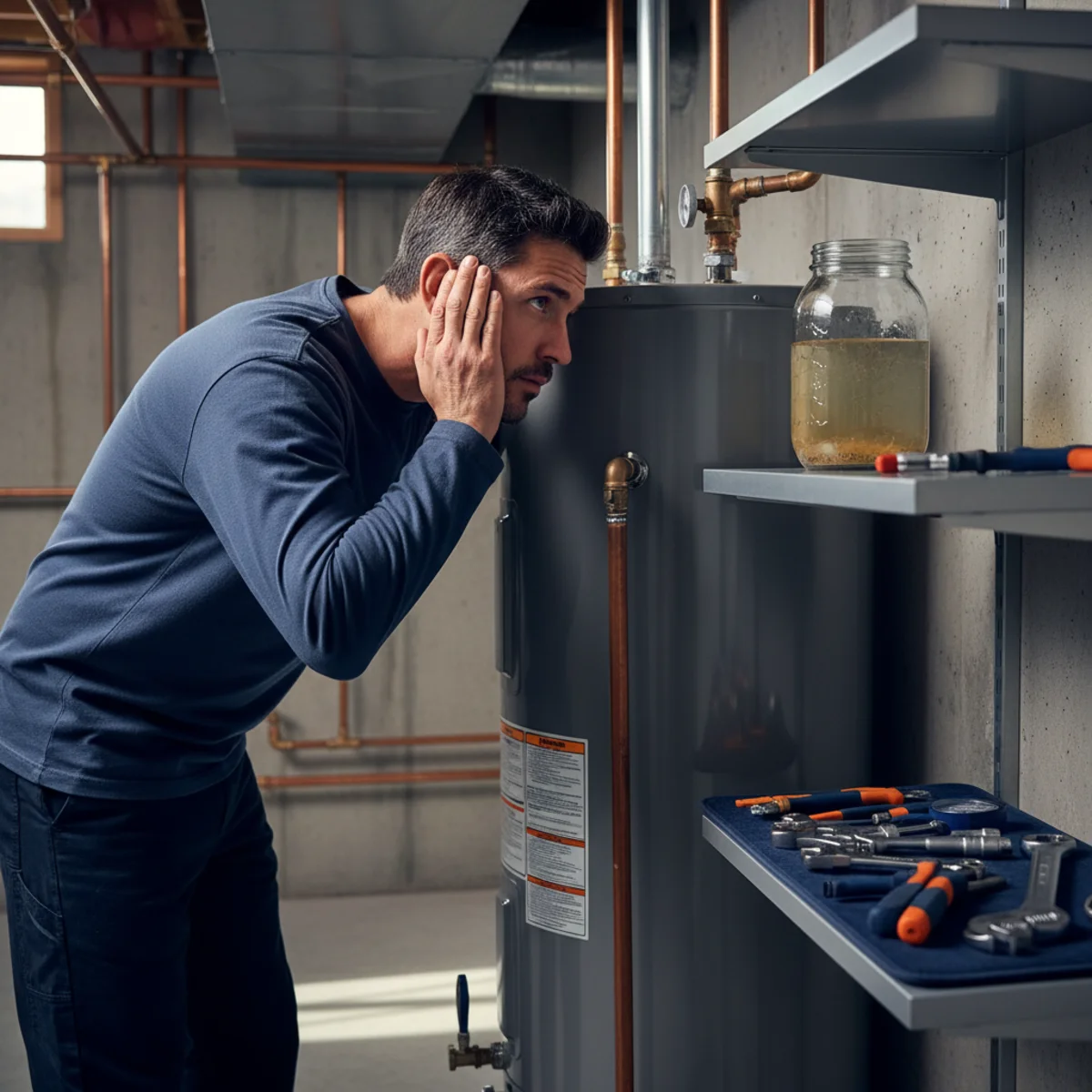
That popping or rumbling from the basement is sediment cooking on the bottom of your tank. Sometimes a flush fixes it. Sometimes it is a countdown. Here is how to tell.
Key Takeaways
- That popping is sediment trapping water under a crust that superheats and bursts through.
- Sediment wastes energy, steals tank capacity, and overheats the steel toward a leak.
- Catch it early and an annual flush clears loose grit and quiets the heater right down.
- Once the layer bakes concrete-hard, flushing barely touches it and the popping returns.
- Loud noise on an old, never-flushed tank means plan a replacement before it leaks.
That Noise Is Sediment, Not a Ghost
You are standing in the kitchen and you hear it: a series of pops, a low rumble, maybe a sound like marbles rolling around inside the tank. It always seems to happen when the heater kicks on. It is not your imagination and it is not the house settling.
It is sediment. Over the years, minerals naturally dissolved in your water settle out and collect on the bottom of the tank as a crusty, gritty layer. In Roselle Park, where the water carries a moderate mineral load, this happens to nearly every tank eventually.
The noise itself will not hurt you, but it is the tank telling you something is changing inside. Whether that something is a quick fix or the beginning of the end depends on how far it has gone. The good news is you caught it now, while you can still do something about it. If the noise is new and loud, a quick call to (207) 419-2600 gets it diagnosed before it costs you a tank.
The Physics of the Pop
Here is what is actually happening down there. On a gas water heater, the burner sits underneath the steel tank and heats the water from the bottom up. On an electric unit, heating elements warm the water from inside.
When sediment builds up across the bottom, it forms an insulating crust over the burner area. Water gets trapped in pockets underneath that crust. The burner keeps pouring heat in, the trapped water superheats, and it finally boils and bursts up through the sediment layer. That burst is the pop you hear. A rumble is the same thing happening across the whole tank floor at once.
It is the exact sound of a kettle full of gravel coming to a boil. The more sediment, the louder and more frequent the noise. And every one of those pops is heat that should have gone into your water instead going into overheating the steel and grinding through your energy budget.
Why Sediment Is More Than Just Annoying
If the noise were the only problem, you could live with it. It is not. Sediment causes three real harms beyond the racket.
First, it wastes energy. The crust insulates the water from the burner, so the heater runs longer and burns more fuel to deliver the same hot shower. You pay for that on every bill.
Second, it steals capacity. Inches of sediment take up space that used to hold hot water, so the tank effectively shrinks and you run out faster, one of the most common reasons homeowners book a water heater repair.
Third, and most serious, it shortens the tank's life. Trapped water lets the steel above the burner overheat well past its design temperature. That thermal stress weakens the tank wall and accelerates corrosion, which is how a noisy tank becomes a leaking tank. The popping is not just noise. It is wear you can hear.
When a Flush Fixes It
If you catch the sediment early, while it is still loose, a tank flush can clear most of it out and quiet the heater right down. The basic process is to shut off the gas or power, turn off the cold supply, connect a garden hose to the drain valve at the bottom, and let the tank empty, sometimes with the cold supply briefly on to stir up the grit.
A careful homeowner can attempt this on a tank that has been flushed regularly. If you have never flushed yours and it is several years old, be aware the drain valve can clog with hardened sediment or fail to reseal afterward, which turns a maintenance task into a service call. There is no shame in letting a pro handle the first one.
Done as part of routine plumbing maintenance, an annual flush keeps sediment from ever hardening in the first place. That is the cheapest way to protect a water heater there is.
When the Noise Means the Tank Is Done
Here is the honest part. A flush only works while the sediment is still loose. Once that layer has baked into a hard, concrete-like crust, which happens on tanks that went years without maintenance, flushing barely touches it. The drain valve clogs, the water trickles out clear, and the popping comes right back.
At that point the noise is no longer a maintenance issue. It is a symptom of a tank that has been overheating its own walls for a long time, and it is usually accompanied by the other late-stage signs: slow recovery, rising bills, maybe a little rust in the hot water. On a tank that is also pushing ten years old, the math points to replacement.
This is the repair-or-replace decision in miniature, weighing the age of the tank against the cost of fixing it. If your popping tank is old and a flush did not help, a planned water heater replacement on your own schedule beats waiting for the leak that follows.
The Bottom Line for Roselle Park Tanks
Popping is sediment, sediment is normal here, and the question is only how far it has gone. New noise on a younger tank that has been maintained usually means it is time for a flush, and you may be able to handle that yourself or have us knock it out quickly.
Loud, persistent noise on an older tank that has never been flushed usually means the sediment has hardened and the tank is wearing out from the inside. No flush will save that one, and the smart move is to plan a replacement before it leaks.
If you are not sure which situation you are in, do not guess with something that holds forty gallons of water above a finished floor. Call (207) 419-2600 and we will listen to the tank, check its age, and tell you honestly whether a flush buys you years or whether it is time to plan ahead. Homeowners across Union County count on that straight answer.
Frequently Asked Questions
Keep Reading
Water Heaters
Water Heater Replacement Cost: The Factors That Set the Price in NJ
Anyone quoting a water heater price over the phone without seeing your basement is guessing. Six real factors set the number. Here is what they are and why they matter.
7 min read · March 16, 2026
Water Heaters
How Long Do Water Heaters Last? Lifespan Factors Explained
Eight to twelve years is the headline, but the real answer depends on your water, your maintenance, and one cheap part most homeowners never knew existed. Here is the full picture.
7 min read · February 23, 2026

Water Heaters
No Hot Water? A Safe Troubleshooting Guide Before You Call
Cold shower this morning? Before you panic, there are a handful of safe checks that fix a surprising number of no-hot-water calls. Here is the gas and electric ladder.
7 min read · December 15, 2025