Water Heaters
No Hot Water? A Safe Troubleshooting Guide Before You Call
7 min read · Published December 15, 2025
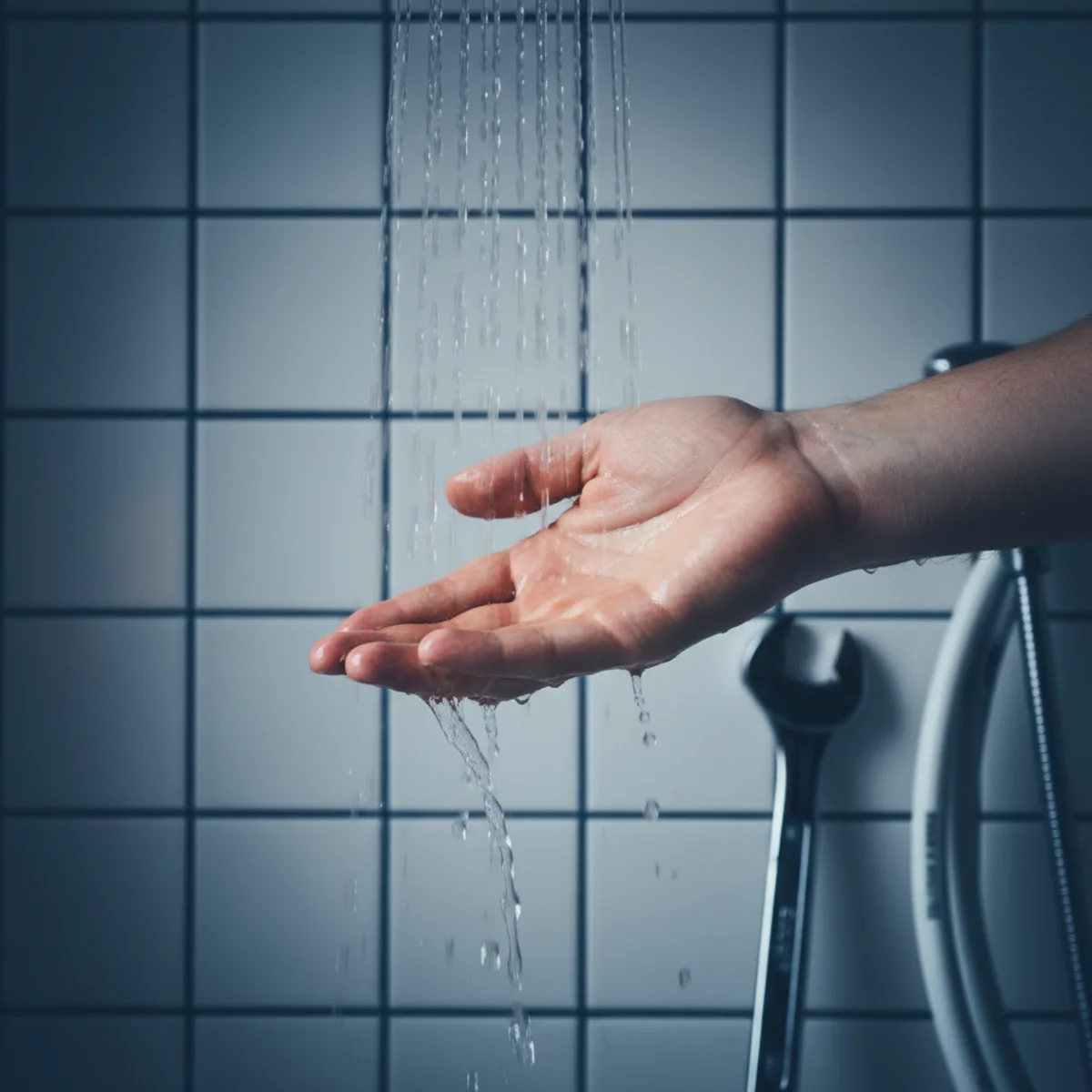
Cold shower this morning? Before you panic, there are a handful of safe checks that fix a surprising number of no-hot-water calls. Here is the gas and electric ladder.
Key Takeaways
- Confirm the heater is the culprit first by checking more than one faucet.
- On electric, reset the breaker and the red high-temp button once, then stop if either trips again.
- On gas, your nose comes first: smell gas, leave the house, and call from outside.
- Relight a standing pilot only by the printed instructions, and stop if it will not hold.
- Safe checks fix about a quarter of calls; rusty water, leaks, or repeat trips need a pro.
Cold Shower, Calm Head
You turned the shower to hot and got a slap of cold water. Before you assume the worst and start pricing a new tank, take a breath. A good share of no-hot-water calls trace back to something simple, and a few of those you can safely check yourself in ten minutes.
This guide walks the safe homeowner checks first, the ones that involve resetting a breaker or relighting a pilot per the manufacturer's instructions, not opening up gas valves or wiring. Plumbing and gas have a hard line where do-it-yourself ends and a professional begins, and I will be clear about where that line is.
First, figure out what fuel your heater uses. A gas unit has a burner, a pilot or igniter, and a flue or vent pipe out the top. An electric unit has a wire conduit running to it and access panels on the side. The checks differ, so start there. If anything below smells like gas or feels beyond you, stop and call (207) 419-2600.
First, Confirm It Is the Heater
Before you touch the water heater, rule out the easy stuff. Check more than one faucet. If only one fixture runs cold, the problem may be a failed mixing valve or cartridge at that fixture, not the heater at all, which is a faucet repair rather than a water-heater issue.
Next, check whether you have any hot water at all or just less than usual. No hot water anywhere points to the heater being off or failed. Lukewarm or short-lived hot water points to a partial failure, like one bad element or sediment, which is a different diagnosis.
Also glance at the obvious: did a breaker trip, did the gas get shut off for any reason, is the pilot out after a windy night? These small things cause a surprising number of cold mornings. Confirming the heater is genuinely the culprit saves you from troubleshooting the wrong thing entirely.
Electric Water Heater: Safe Checks
If you have an electric unit, start at the electrical panel. Find the double breaker for the water heater and look for one that has tripped to the middle or off position. Flip it fully off, then back on. If it trips again immediately, stop. A breaker that keeps tripping signals a short or a failed element, and that is a job for a pro, covered by our electric water heater repair.
Next, many electric heaters have a red reset button behind the upper access panel, the high-temperature cutoff. If the water got too hot, this switch trips and kills the heater. You can press it back in. If it pops again, the thermostat or element has failed and needs professional service.
That is the limit of safe DIY on an electric unit. Do not pull elements, test wiring, or probe inside the panel with the power on. There is enough voltage in a water heater circuit to seriously hurt you. Beyond the breaker and the reset button, the next step is a phone call.
Gas Water Heater: Safe Checks
For a gas unit, your nose comes first. If you smell gas, a rotten-egg odor, do not touch anything electrical, do not look for the source, leave the house and call your gas utility and a plumber from outside. That is non-negotiable. Gas is the one area where the only safe DIY is leaving.
If there is no gas smell, check the gas control knob is set to On, not Pilot or Off, and confirm gas is reaching the home by checking another gas appliance like the stove. Then look at the pilot. On older units with a standing pilot, you can relight it following the printed instructions on the tank exactly, no improvising. On newer units with an electronic igniter, there is no pilot to light.
If the pilot will not stay lit after you follow the instructions, the thermocouple or gas valve is likely failing. That is where homeowner troubleshooting ends and our gas water heater repair begins. Do not keep relighting a pilot that will not hold.
When to Stop and Call
There is a clear point where troubleshooting becomes risk. Stop and call a professional the moment you hit any of these: you smell gas at all, a breaker trips repeatedly, the reset button pops again, the pilot will not stay lit, you see water leaking from the tank, or the water runs rusty.
None of those are stubborn problems you outlast by trying harder. They are signs of a failed part or a tank at the end of its life, and several touch on gas or electricity where mistakes are dangerous, not just inconvenient.
The honest truth is that the safe homeowner checks above resolve maybe a quarter of no-hot-water calls, the simple ones. The rest need a pro with a multimeter, the right parts, and the training to work on gas safely. There is no failure in calling once you have run the basics. Reach us at (207) 419-2600 and describe what you found; it helps dispatch bring the right parts the first time.
What to Tell Us When You Call
A good description speeds up the fix. When you call, have a few things ready: whether your heater is gas or electric, roughly how old it is if you know, and exactly what is happening, no hot water at all versus lukewarm versus running out fast.
Mention what you already checked. If you reset the breaker and it tripped again, that tells us something. If the pilot will not hold, that points us at the thermocouple before we even arrive. If you found water around the base, say so, because that changes whether this is a repair or an emergency water heater service call.
The more specific you are, the better we can prioritize the visit and load the truck with the likely parts. A cold shower is annoying, but it is rarely the disaster it feels like at 6 AM. Most no-hot-water calls in Roselle Park get sorted in a single visit once we know what we are walking into.
Frequently Asked Questions
Keep Reading
Water Heaters
Water Heater Replacement Cost: The Factors That Set the Price in NJ
Anyone quoting a water heater price over the phone without seeing your basement is guessing. Six real factors set the number. Here is what they are and why they matter.
7 min read · March 16, 2026
Water Heaters
How Long Do Water Heaters Last? Lifespan Factors Explained
Eight to twelve years is the headline, but the real answer depends on your water, your maintenance, and one cheap part most homeowners never knew existed. Here is the full picture.
7 min read · February 23, 2026
Water Heaters
Why Your Water Heater Makes Popping Noises (And What to Do)
That popping or rumbling from the basement is sediment cooking on the bottom of your tank. Sometimes a flush fixes it. Sometimes it is a countdown. Here is how to tell.
7 min read · January 5, 2026