Drain & Sewer
Why Your Drains Keep Clogging (And How to Stop the Cycle)
8 min read · Published September 22, 2025
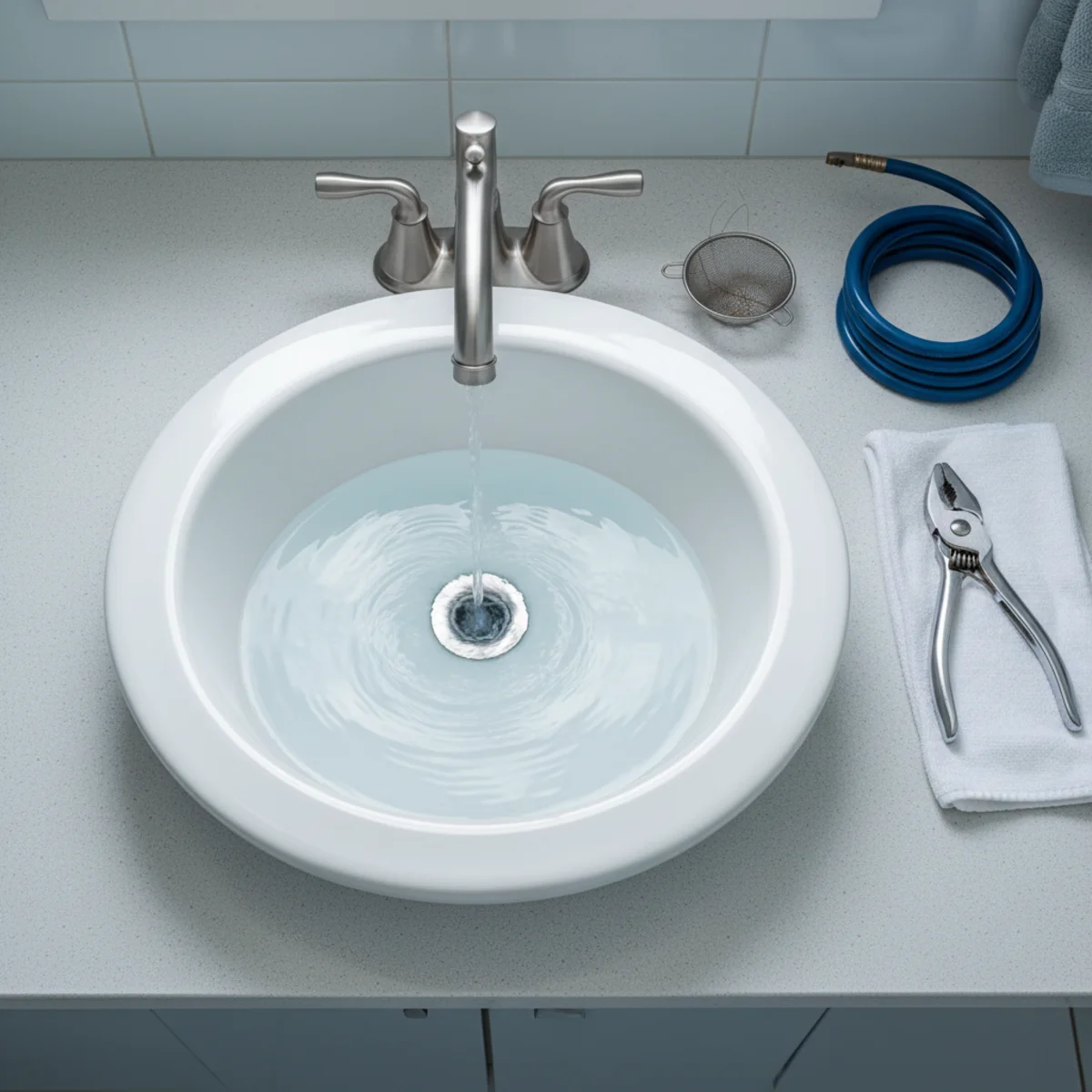
A drain that clogs once is bad luck. A drain that clogs every few weeks is telling you something about the pipe itself. Here is what recurring clogs actually mean in older Roselle Park homes.
Key Takeaways
- One clog is bad luck; a clog every few weeks is a diagnosis baked into the pipe.
- Scale narrows and roughens old cast iron, so a cable holes through but the wall still grabs debris.
- Grease pours in as a liquid and hardens like candle wax far down the cool line.
- A settled belly or back-pitched section collects debris and only a camera confirms it.
- Gurgling drains often mean a blocked vent, an air problem, not a physical plug.
One Clog Is Bad Luck. A Pattern Is a Diagnosis.
You plunge the kitchen sink, water runs free, and three weeks later you are standing over the same standing water. That is not coincidence, and it is not because your family is hard on the drains. A drain that clogs on a schedule has a reason baked into the pipe.
Think of it like a check-engine light. The clog is the symptom. The cause is upstream — literally — and until you fix that, you are renting the solution one bottle of drain gel at a time.
In Roselle Park, most of the homes went up in the early 1900s, and the original drain lines have had a century to develop personality. Cast-iron stacks scale up from the inside. Galvanized branch lines corrode. Slopes settle as the ground shifts under old foundations. Any one of those turns a smooth pipe into a rough, narrow channel that grabs everything you send down it.
The good news: recurring clogs are readable. The pattern tells a trained eye where the real problem sits, and a proper drain cleaning does more than poke a hole through the blockage — it clears the pipe wall back to full diameter.
Pipe Scale: The Inside of Your Pipe Got Smaller
Old cast-iron drain pipe does not stay smooth. Decades of soap, grease, minerals, and waste build a crusty layer on the inside wall — plumbers call it scale or tuberculation. A two-inch pipe can carry the flow of a one-inch pipe and still look fine from the outside.
That narrowed channel is rough, too, so it snags hair, food, and grease that a clean pipe would flush right past. You clear the clog, but the rough scaled wall is still there, ready to catch the next handful of debris.
This is why snaking sometimes feels like it barely buys you a month. A cable punches a hole through the soft clog but rides right over the hard scale. To actually restore the pipe, you have to scour the wall, and that is where hydro jetting earns its keep — high-pressure water strips scale and grease back to bare pipe.
Scale is also the honest argument for eventually replacing a badly tuberculated cast-iron branch line. There is a point where the pipe is more rust than steel, and no amount of cleaning brings back metal that has rotted away.
Grease and What Really Happens When It Cools
Hot bacon grease pours like water. Thirty feet down a cool drain line, it is the consistency of candle wax. That is the trap most homeowners fall into — the grease leaves the pan as a liquid and solidifies somewhere you cannot see it.
Once a film of grease coats the pipe wall, everything else sticks to it. Coffee grounds, food bits, the starchy water off boiled pasta — they all weld onto the grease layer and the channel closes a little more each week. Kitchen lines clog more than any other drain in the house for exactly this reason.
The fixes are unglamorous and they work. Pour cooled grease into a can and trash it. Wipe greasy pans with a paper towel before washing. Run hot water for thirty seconds after the sink drains. Keep a basket strainer in the drain.
What does not work: pouring boiling water or chemical cleaner down to melt the grease. You move the clog ten feet downstream where it cools and re-hardens in a spot that is harder to reach. If a kitchen line clogs no matter what you do, the grease is probably already lining a long run, and that is a clogged drain repair worth doing right.
Slope and Settling: When Gravity Stops Helping
Drain pipe is not level on purpose. It is pitched to fall about a quarter inch per foot, just enough that water carries waste along and just little enough that the water does not race ahead and leave solids stranded.
Get that slope wrong and you get trouble at both extremes. Too flat, and water pools and debris settles. Too steep, and the liquid outruns the solids, which dry out and pack into a plug. Either way, a section of pipe becomes a collection point that clogs over and over in the same exact spot.
In Roselle Park, the clay-and-sandy soil around century-old foundations shifts and settles, and a drain line that was pitched perfectly in 1915 can develop a low belly where the ground sank beneath it. Water stands in that dip between uses, and every flush deposits a little more sediment.
You cannot fix slope with a snake or a jetter — you can only clean the pocket out and watch it fill again. The way to know for sure is to put a camera in the line. A camera sewer inspection shows a belly or a back-pitched section in seconds, so you stop paying to clean a problem that needs repair.
Venting: The Clog That Is Really an Air Problem
Here is the one almost nobody suspects. Your drains need air to flow. Every fixture connects to a vent — usually a pipe that runs up through the roof — and that vent lets air in behind the water so the drain does not glug and stall.
When a vent gets blocked — a bird nest, leaves, a dead squirrel, even ice in a hard freeze — the drain pulls a vacuum behind the water. You hear it gurgle. The fixture drains in slow, halting surges instead of one smooth pull, and slow-moving water drops debris that fast water would carry away. So you get clogs that look like a blockage but are really a breathing problem.
The tell is sound and behavior. A sink that gurgles, a toilet whose water level bobs when a tub drains, drains that empty fine sometimes and crawl other times — those point at venting, not a physical plug.
This is a roof-and-attic diagnosis, not a homeowner job, especially in winter. If your clogs come with gurgling and bubbling, mention it when you call (207) 419-2600. It changes where we look first and saves you the cost of cleaning a pipe that was never really blocked.
The Stuff That Quietly Wrecks Drains
Some clogs are not the pipe's fault — they are habits, and they are easy to break once you know them.
- Wipes labeled flushable do not break down like toilet paper. They snag on every rough spot and build a mat.
- Coffee grounds clump and sink instead of flushing through.
- Eggshells and rice swell or grind into a paste that coats the pipe.
- Hair binds with soap scum into a felt-like clog in tub and shower drains.
- Cotton swabs, dental floss, and paper towels catch and hold everything behind them.
- Cat litter, even the flushable kind, turns to cement in a cold drain line.
Drop a hair catcher in every tub and shower. Keep a strainer in the kitchen sink. Treat the toilet as a one-job appliance — human waste and toilet paper, nothing else. These cost a few dollars and prevent most of the clogs we get called for.
If you have already cleaned up the habits and a drain still clogs on a cycle, the problem is in the pipe, not the use. That is when it is worth bringing in sewer cleaning or a camera to find the real bottleneck instead of fighting the same clog forever.
Breaking the Cycle for Good
The reason recurring clogs feel hopeless is that the usual response treats the symptom. Plunge it, snake it, pour something in — the water runs, and the underlying narrow, rough, or low-slung pipe is still waiting.
Breaking the cycle means matching the fix to the cause. Grease and scale buildup respond to thorough cleaning that scours the wall, not just a cable through the middle. A belly or a broken section needs the camera to confirm and then a repair. A venting problem needs the vent cleared, not the drain.
For a Roselle Park home, the smart sequence is usually: clean the line properly once, run a camera to see what the clean pipe actually looks like, and then decide. Sometimes the answer is good news — a clean pipe and better habits, done. Sometimes the camera finds a belly or a root intrusion that explains years of clogs, and now you can fix it at the source.
Either way you stop guessing. If you are tired of the same clog in the same drain, call (207) 419-2600 and we will start with the diagnosis, not the upsell. Homes in Roselle Park have predictable drain problems, and predictable problems have real fixes.
Frequently Asked Questions
Keep Reading
Drain & Sewer
How to Unclog a Toilet Without a Plunger (Safely)
The plunger is missing and the bowl is full. Before you panic or pour something dangerous, try these safe home methods — and learn the bright line for when to stop and call a plumber.
7 min read · March 2, 2026

Drain & Sewer
Sewer Smell in the House? Work Through This Diagnosis Ladder
That sewer-gas smell has a source, and you can often find it by working from the simplest cause to the most serious. Here is the diagnosis ladder a plumber runs in their head, top rung to bottom.
8 min read · February 9, 2026

Drain & Sewer
Why a Camera Sewer Inspection Is the Smartest Plumbing Money You Spend
You would not buy a car without looking under the hood. A camera sewer inspection is how you look inside the one pipe you cannot see — before you dig, before you buy an older home, before a clog becomes a flood.
7 min read · January 26, 2026