Water Heaters
Tankless vs Traditional Water Heater: The Real Trade-Offs
7 min read · Published November 24, 2025
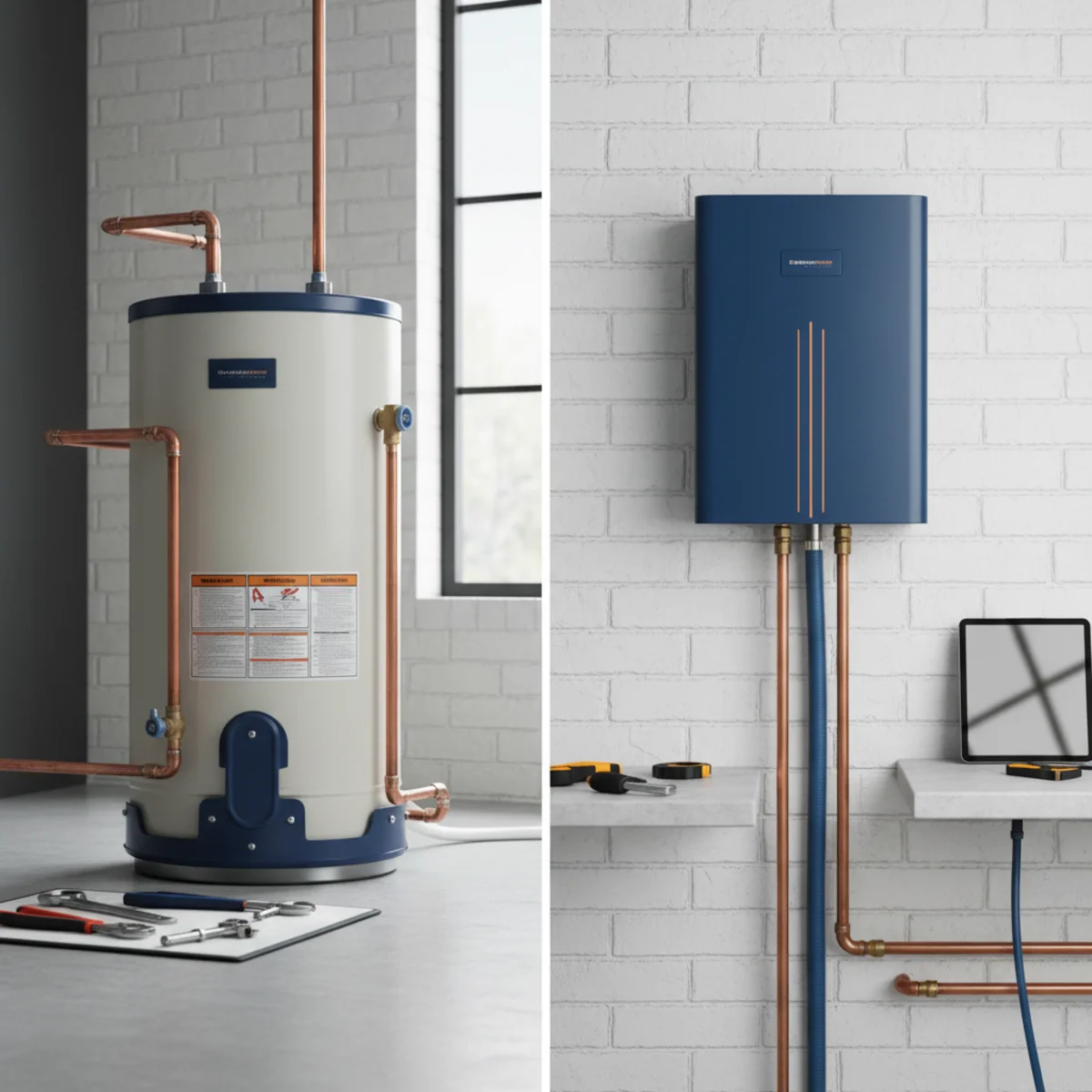
Tankless gets sold as a no-brainer upgrade. It is not. In an older Roselle Park home the gas line and venting often decide the answer. Here is the honest comparison.
Key Takeaways
- Tankless is not automatically better; an older home often cannot feed it without extra work.
- A whole-home tankless can demand far more gas than the half-inch line on an old tank can deliver.
- Budget for new sidewall venting, possible electrical, and a condensate drain on a tankless install.
- A quality tank still wins for modest use, tight budgets, or if you may move in a few years.
- Size a tankless for the cold January groundwater, not the mild month it felt fine in.
Tankless Is Not Automatically Better
Walk into any big-box store and the marketing makes tankless sound like the obvious choice: endless hot water, smaller footprint, lower bills, lasts twice as long. All of that can be true. None of it is the whole story.
What the brochure leaves out is that a tankless unit makes demands on your house that an older Roselle Park home often cannot meet without extra work. The gas line may be too small. The venting needs to change. The electrical may need attention. Those are not deal-breakers, but they are real costs that the showroom price never mentions.
My job is to give you the trade-offs straight, not to push the unit with the bigger margin. For some households tankless is genuinely the right move. For others a quality tank is the smarter spend. Below is how I help homeowners tell which camp they are in. If you want the short version for your specific house, call (207) 419-2600 and describe your setup.
How Each One Actually Works
A traditional tank keeps thirty to fifty gallons of water hot around the clock, ready whenever you open a tap. Simple, proven, and the technology nearly every plumber can service. The downside is standby loss: it spends energy keeping that water hot even at 3 AM when nobody is awake, and once you drain the tank you wait for it to recover.
A tankless unit heats water only when you call for it. Open a hot tap and the unit fires, runs water across a heat exchanger, and delivers hot water for as long as you keep the tap open. No standby loss, no tank to run out, and a much smaller box on the wall.
That on-demand design is the source of every advantage and every catch. To heat water instantly, a gas tankless unit needs a large, fast gas supply, far more than a tank does at any single moment. That single fact drives most of what follows.
The Gas-Line Catch in Older Homes
Here is the issue that catches Roselle Park homeowners off guard. A typical tank water heater might draw 40,000 BTU. A whole-home gas tankless unit can demand 150,000 to 199,000 BTU because it has to heat water the instant you ask for it.
Many of the borough's early-1900s homes were piped for a gas load that never imagined that kind of demand. The existing half-inch line that feeds the old tank simply cannot deliver enough gas to a tankless unit. Running a properly sized line from the meter, and confirming the meter and service can handle the added load, is often part of the job, and it is real work involving gas line repair and a permit.
This is the number-one reason a tankless quote comes in higher than people expect. It is not the unit, it is the infrastructure to feed it. None of this is a reason to avoid tankless, but you deserve to know it before you commit, not after the truck is in your driveway.
Venting, Electric, and Condensate
Gas matters most, but it is not the only change. Tankless units vent differently than tanks. Most modern condensing models use sealed PVC venting that runs out a sidewall instead of up the old chimney, which means new venting penetrations and routing.
They also need electrical power for the controls and fan, so a nearby outlet or a new circuit may be required, even on a gas unit. And condensing tankless models produce acidic condensate that has to drain somewhere appropriate, which adds a small drain line to the install.
An electric tankless is a different animal again: it needs a very large electrical service, often more than an older Roselle Park panel can spare, which is why whole-home electric tankless is uncommon in the borough's older stock. I mention all this not to scare you off but because a clean install handles every one of these details up front. When we quote a tankless water heater, we have already checked your gas, venting, and electrical so there are no surprises.
When Tankless Wins and When a Tank Wins
Tankless makes the most sense for a busy household that runs out of hot water with a tank, for homes tight on space where the wall-mounted unit frees up the floor, for owners planning to stay long enough to recoup the higher upfront cost, and for anyone who values the longer service life and lower standby loss.
A traditional tank still wins in plenty of cases. If your gas line and venting would need expensive upgrades, if your hot-water use is modest, if your budget favors a lower upfront cost, or if you might move in a few years, a quality tank is the pragmatic choice. There is no prize for buying the fancier unit if it does not fit your house or your plans.
The honest truth is that both are good technologies. The right one depends on your home and your habits, and a water heater installation done right starts with that conversation rather than a default answer.
Sizing and Lifespan: The Long View
Whichever way you lean, sizing decides whether you are happy with it. A tank is sized by first-hour recovery, how much hot water it can deliver in the busiest hour of your day. A tankless is sized by flow rate and temperature rise, how many fixtures it can feed at once given how cold the incoming water is in a New Jersey winter.
That winter detail matters here. When the groundwater feeding your home drops near 40 degrees in January, a tankless unit has to work harder to raise it to shower temperature, which lowers how many fixtures it can run at once. An undersized unit that felt fine in October disappoints in February. We size for the cold month, not the mild one.
On lifespan, a well-maintained tankless can run twenty years against a tank's eight to twelve, but that edge only pays off if you annually descale it, especially with Roselle Park's moderately hard water. Ready to weigh it for your home? Reach us at (207) 419-2600 and we will walk your basement together. Plenty of Roselle Park homeowners have made this call with us.
Frequently Asked Questions
Keep Reading
Water Heaters
Water Heater Replacement Cost: The Factors That Set the Price in NJ
Anyone quoting a water heater price over the phone without seeing your basement is guessing. Six real factors set the number. Here is what they are and why they matter.
7 min read · March 16, 2026
Water Heaters
How Long Do Water Heaters Last? Lifespan Factors Explained
Eight to twelve years is the headline, but the real answer depends on your water, your maintenance, and one cheap part most homeowners never knew existed. Here is the full picture.
7 min read · February 23, 2026
Water Heaters
Why Your Water Heater Makes Popping Noises (And What to Do)
That popping or rumbling from the basement is sediment cooking on the bottom of your tank. Sometimes a flush fixes it. Sometimes it is a countdown. Here is how to tell.
7 min read · January 5, 2026