Water Heaters
7 Signs Your Water Heater Needs Repair (And What Each One Means)
8 min read · Published September 8, 2025
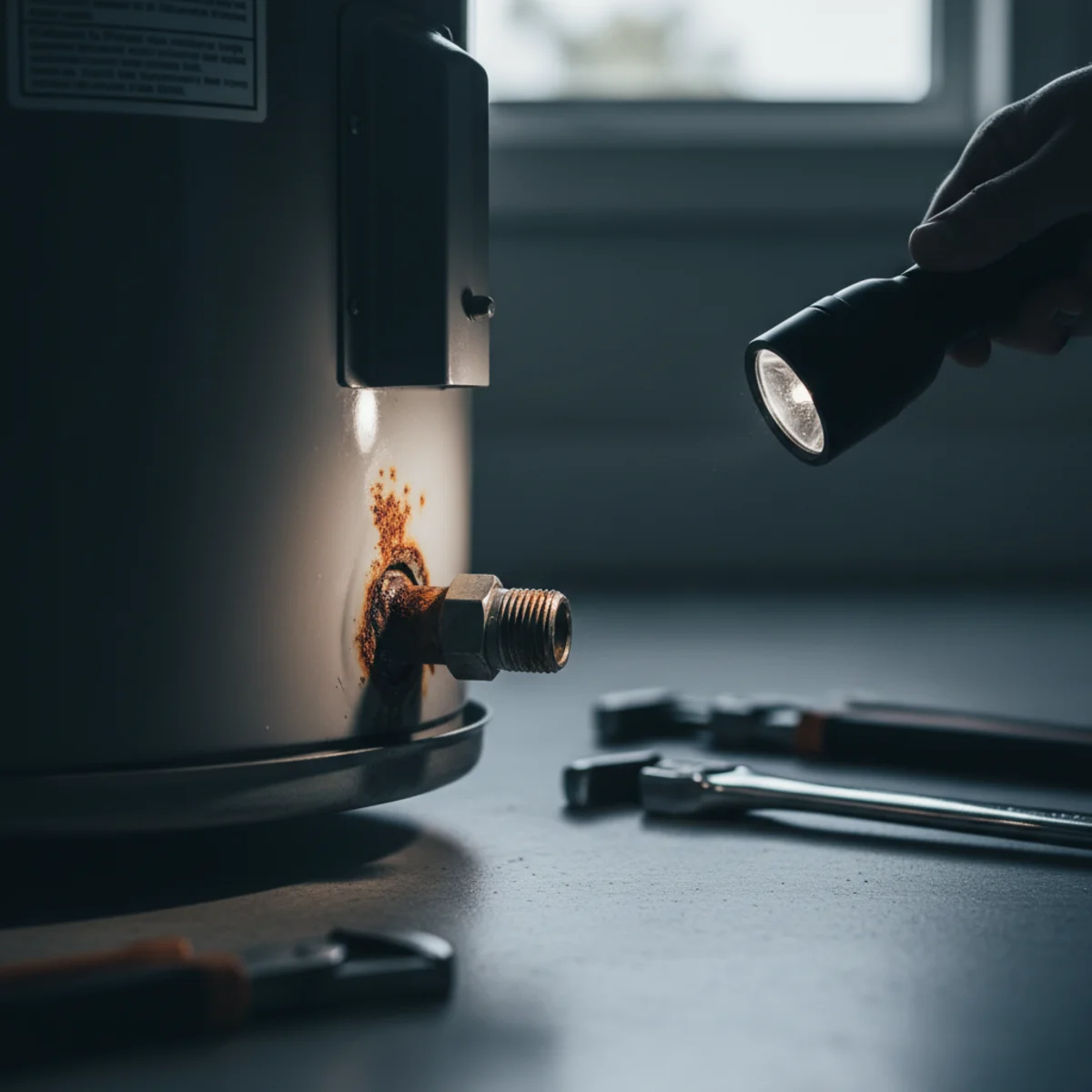
A water heater rarely dies without warning. Strange noises, rusty water, and shrinking hot showers are the tank telling you something. Here is what each symptom actually means.
Key Takeaways
- Rusty water on the hot side only means the tank is corroding from the inside.
- Popping or rumbling is sediment cooking on the tank floor, wasting energy and shortening its life.
- Shrinking hot showers can be a cheap element or a struggling burner, worth diagnosing first.
- Water seeping from the tank body itself has no patch; shut it down and replace it.
- Under eight years with a bolt-on part failure, repair almost always wins; past ten, stop spending.
Your Water Heater Talks Before It Quits
A water heater rarely fails out of nowhere. It drops hints for weeks, sometimes months, and most homeowners ignore them until the morning there is no hot water at all. That is the expensive way to learn.
In Roselle Park, a lot of the tanks I see are tucked into a basement corner next to the furnace, out of sight and out of mind. Nobody checks on them until the showers go cold or a puddle shows up on the concrete. By then the easy, cheap fix has often turned into a replacement.
The symptoms below are the tank trying to tell you what is wrong. Some point to a small part you can swap and get years more out of the unit. Others mean the tank itself is failing and no repair will save it. Knowing which is which is the whole game. When you are not sure, a quick call to (207) 419-2600 gets you a straight answer instead of a guess.
Sign 1: Rusty or Discolored Hot Water
Turn on the hot side and watch the first few seconds. If the water runs brown, orange, or tinted and it only happens on hot (not cold), the rust is coming from inside the tank, not the city main.
That usually means the steel tank lining is corroding, often because the anode rod that protects it has worn away. Catch it early and a fresh anode rod can buy you real time. Catch it late, after the tank wall has thinned, and you are looking at a leak waiting to happen.
If both hot and cold run rusty, the problem is likely your supply piping instead, common in older homes with galvanized lines, and that is a different repair entirely. Either way, discolored water is never something to wait out. A plumber can tell in minutes whether it is the rod, the tank, or the pipes. Our water heater repair visit starts with exactly that test.
Sign 2: Popping, Rumbling, or Crackling Noises
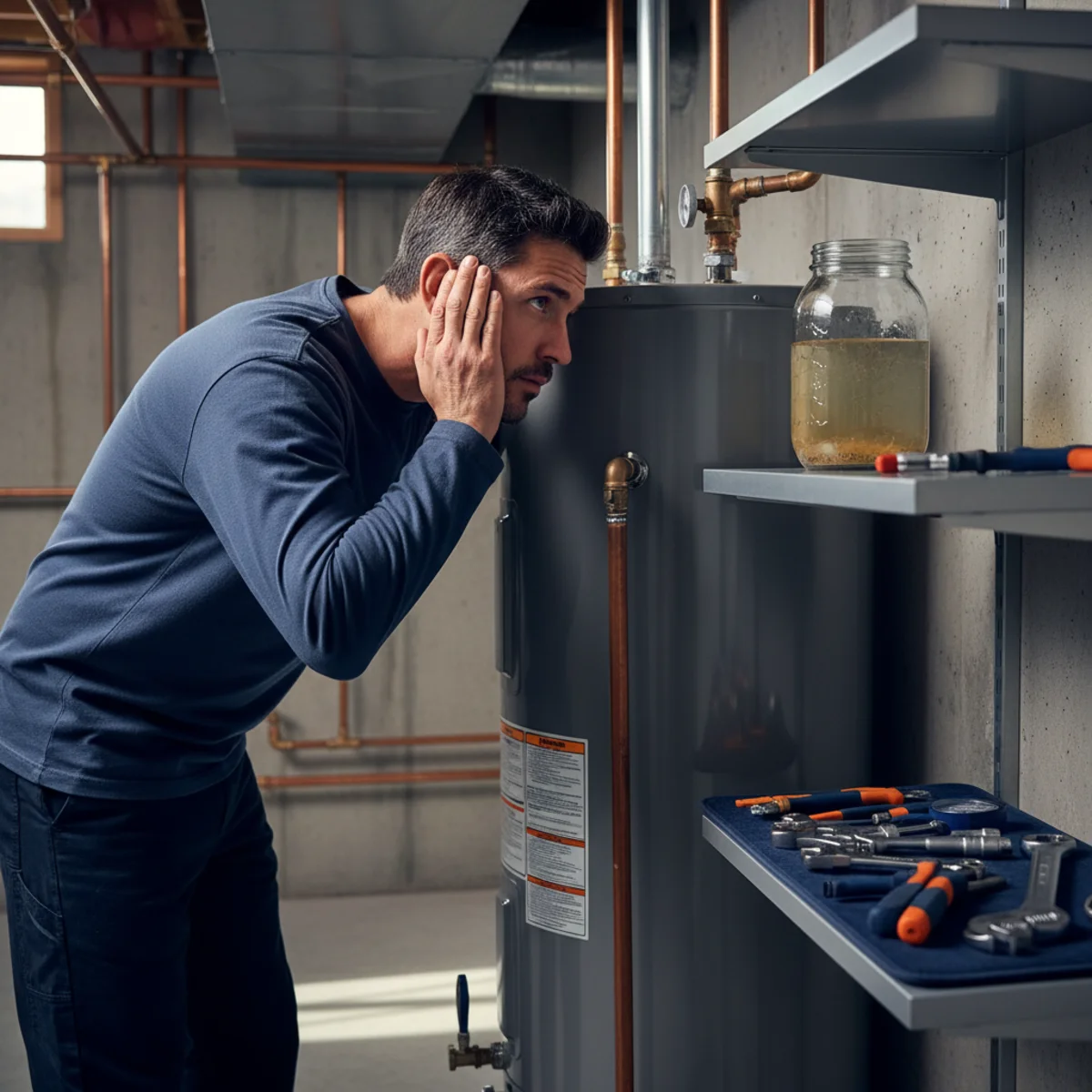
A healthy tank is quiet. When you start hearing popping or a low rumble, especially during a heating cycle, sediment has built up on the bottom of the tank. Minerals settle out of the water, harden into a crusty layer, and water gets trapped underneath. As the burner heats that trapped water it boils and pops through the sediment, like a kettle full of gravel.
The noise itself is not dangerous, but what it signals is. Sediment makes the burner work harder, drives up your gas or electric bill, and overheats the steel above the flame, which shortens the tank's life.
Flushing the tank early can clear loose sediment and quiet things down. Once the layer hardens like concrete, flushing does little, and the popping is really a countdown to replacement. Routine plumbing maintenance that flushes the tank before the buildup sets is the cheapest way to keep a heater quiet and healthy.
Sign 3: Not Enough Hot Water, or It Runs Out Fast
If your showers were fine last year and now the water goes lukewarm halfway through, something changed. The usual suspects are a failing heating element (electric), a struggling burner or thermocouple (gas), a broken dip tube mixing cold water into the hot, or that same sediment layer stealing tank capacity.
This one is worth diagnosing rather than assuming the tank is shot. A burned-out element on an electric unit is a genuinely cheap part. A bad gas valve is pricier but still far less than a new tank. On the other hand, if the unit is twelve years old and recovery has gotten worse every winter, the math starts favoring replacement.
The honest answer depends on the age of the tank and which part failed. Weighing a repair against a full water heater replacement is the first thing we sort out on a service call, and it is a framework built on age times failure type times what the part costs.
Sign 4: Water Pooling Around the Base
Water on the floor around the tank is the symptom you cannot ignore. First, figure out where it is coming from. Condensation on a humid day, a dripping temperature-and-pressure relief valve, or a loose drain valve are all fixable and do not mean the tank is dead.
But if water is seeping from the body of the tank itself, from a seam or the base, the steel has corroded through. There is no patch for that. A tank that is leaking from its shell needs to be replaced, full stop, and the sooner the better before that slow seep becomes a flood across a finished basement.
Shut the water supply to the heater, kill the power or gas, and call. A small leak at 8 AM is a manageable problem. The same leak ignored for a week while you are at work in the city becomes water damage. If it is actively pouring, that is when our emergency water heater service earns its keep.
Sign 5, 6, and 7: Age, Pilot Trouble, and Rising Bills
Three quieter signs round out the list. First, age: most tanks last eight to twelve years, and once yours crosses ten, every symptom should be read in that light. An old tank with new problems is usually telling you it is done.
Second, a pilot light that keeps going out, or an electric unit that keeps tripping its breaker, points to a thermocouple, gas valve, or element issue. These are often repairable, but on a gas unit they are also a safety matter you do not troubleshoot forever. If you ever smell gas, leave the house and call from outside.
Third, a creeping utility bill with no change in your habits often traces back to a heater fighting sediment or a failing part to keep up. None of these three are emergencies on their own, but together with the others they paint a picture. When two or more show up at once, get it looked at.
When to Repair and When to Stop Spending
Here is the framework I give every Roselle Park homeowner. If the tank is under about eight years old and the failed part is an element, thermocouple, anode rod, or valve, repair almost always wins. Those parts are reasonable and the tank has years left.
If the tank is ten-plus years old, leaking from the body, or piling up repairs every season, stop spending on it. You are pouring money into a unit that will fail anyway, probably at the worst possible moment.
The gray zone is eight to ten years with a moderate repair. That is a judgment call, and it depends on the specific failure and how the rest of the tank looks inside. This is the conversation worth having with someone who will tell you the truth instead of upselling. Whether you land on a water heater repair or a full water heater replacement, the right call saves you money over the next decade. Homeowners across Roselle Park reach us at (207) 419-2600.
Frequently Asked Questions
Keep Reading
Water Heaters
Water Heater Replacement Cost: The Factors That Set the Price in NJ
Anyone quoting a water heater price over the phone without seeing your basement is guessing. Six real factors set the number. Here is what they are and why they matter.
7 min read · March 16, 2026
Water Heaters
How Long Do Water Heaters Last? Lifespan Factors Explained
Eight to twelve years is the headline, but the real answer depends on your water, your maintenance, and one cheap part most homeowners never knew existed. Here is the full picture.
7 min read · February 23, 2026
Water Heaters
Why Your Water Heater Makes Popping Noises (And What to Do)
That popping or rumbling from the basement is sediment cooking on the bottom of your tank. Sometimes a flush fixes it. Sometimes it is a countdown. Here is how to tell.
7 min read · January 5, 2026