Basement & Pumps
7 Signs Your Sump Pump Is Failing Before It Quits for Good
8 min read · Published November 10, 2025
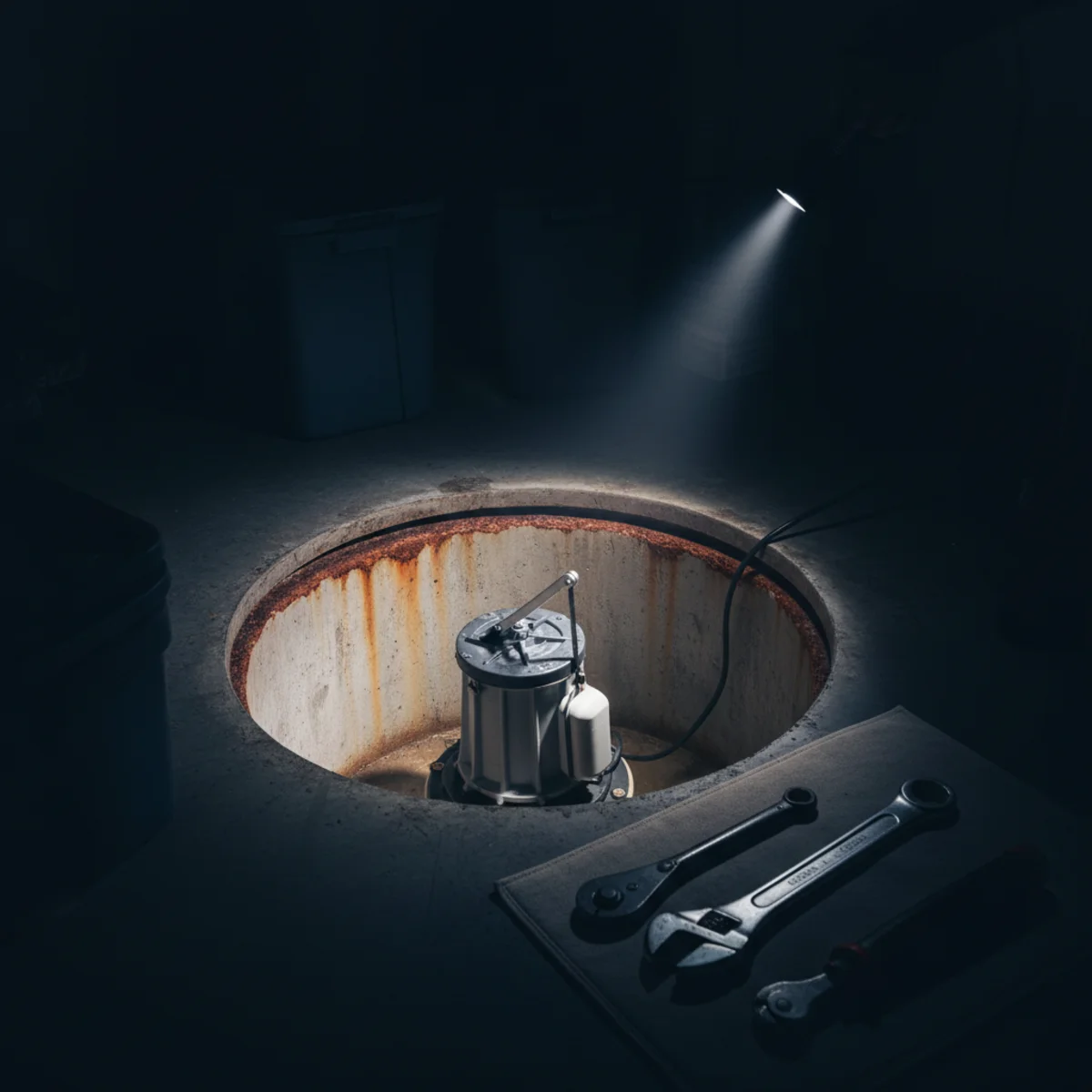
A sump pump rarely dies without warning — it rattles, short-cycles, and rusts for months first. Learn the seven tells that mean yours is on the way out, before the next storm proves it.
Key Takeaways
- A failing pump warns you for months — learn the tells and replace it on a dry Tuesday.
- Grinding or rattling points to a damaged impeller; a whine usually means a failing motor bearing.
- Short cycling on and off in quick bursts is often a failed check valve, and it burns the motor out.
- Most pumps last seven to ten years; past ten plus any other sign means plan a replacement.
- Standing water with a silent pump is not a warning anymore — that is the failure itself.
A Failing Pump Warns You First
Sump pumps are quiet about a lot of things, but they are loud about dying. The unit that floods a basement on a Saturday night was usually giving off signals for months — odd noises, irregular cycling, a creeping rust stain. People miss them because the pump still technically works, right up until the night it has to work hard and cannot.
The goal here is simple: learn the tells, catch the decline early, and replace a pump on a dry Tuesday instead of bailing out a flooded playroom in the dark.
In Roselle Park — and in flood-prone neighbors like Cranford, where the Rahway River raises the stakes — finished basements are the norm and almost every home sits over a pit, so the cost of missing these signs is measured in drywall, flooring, and ruined storage. None of these seven signs guarantees an immediate failure. But two or three of them together mean the pump owes you nothing, and it is time to plan a replacement on your terms.
Sign One: Strange Noises From the Pit
A healthy sump pump makes a low, steady hum while it runs and a single clean thunk from the check valve when it stops. Anything else is the pump telling you something is wrong.
A loud rattling or grinding usually means the impeller — the part that actually moves the water — is damaged or has debris jammed in it. A high-pitched whine often points to a failing motor bearing. A gurgling or slurping sound as the pump finishes can mean air in the line or a discharge problem.
Clanking metal-on-metal is sometimes just the discharge pipe vibrating against the pit wall, which is harmless and easy to quiet with a bit of foam. But it can also be a pump that has tipped over and is knocking against the side.
The key is that you know your pump's normal sound. When the soundtrack changes, go look. A new noise is the cheapest warning you will ever get, and ignoring it is how a small worn part becomes a flooded floor.
Sign Two: Short Cycling On and Off
Short cycling is when the pump turns on and off rapidly in quick bursts instead of running a steady cycle to empty the pit. It is one of the most reliable signs that something is wrong, and it burns a motor out fast.
The usual culprit is a failed check valve. Without a working one-way valve, the water in the vertical discharge pipe falls back into the pit the instant the pump shuts off, the float drops, and the pump kicks on again to move the same water it just moved. The pump ends up doing double the work for nothing.
The other common cause is a pit that is too small or a float set too sensitively, so even a little inflow trips the switch constantly.
Either way, short cycling means the motor is running far more than it should and aging accordingly. If your pump is clicking on and off every minute or two without a downpour to explain it, that is a sump pump repair worth booking now — a worn motor that has been short cycling for a year is a prime candidate to quit during the next real storm.
Sign Three: A Stuck or Sticky Float Switch
The float switch moves every time the pump runs, which makes it the most failure-prone part in the system. When it sticks, the pump either never turns on or never turns off — both bad.
A float stuck low or hung up on the pit wall means the pump sits dead while the water rises. A float stuck high means the pump runs continuously against an empty pit, overheats, and burns out. Grit, mineral buildup, a tangled tether, or a pump that has tipped in the pit can all cause it.
Test it during a bucket test: pour water in and watch whether the float rises and falls freely through its whole range. If it catches, hesitates, or needs a nudge to release, it is failing.
You can often clean or replace a single float cheaply. But a float that keeps sticking after cleaning is pointing at a deeper issue — a leaning pump, a fouled switch body, or a pit full of debris that needs more than a wipe-down.
Sign Four: Visible Rust and a Rust Ring
Rust on a sump pump is rarely cosmetic. A reddish-brown crust on the pump body, the bolts, or a stain ring around the inside of the pit tells a story about what the pump has been through.
Some of it is ordinary corrosion from sitting in water for years — expected wear that says the pump is getting old. But a heavy orange-brown gel, especially clogging the intake screen, can be iron bacteria. That is a living buildup that thrives in groundwater here, and it slowly chokes the pump's intake and gums up the moving parts until flow drops off.
A rust ring high on the pit wall is also a flood-line record. It marks how high the water rose in past events, and if that line is near the top of the pit, your pump has been close to losing the race before.
Surface rust on an older pump plus a high water-line ring is a two-part signal: the pump is aging and your pit has been stressed. Both point toward planning a sump pump installation before the next big storm rather than after it.
Sign Five: Age, Constant Running, and Visible Motor Wear
Most sump pumps last seven to ten years. If you do not know how old yours is, look for a date stamp on the housing or check your home records. A pump past the decade mark has earned its retirement, full stop — clean pit or not, the internals are worn.
Constant running between storms is another red flag. A pump that cycles on a dry week is either fighting a failed check valve, sitting too low so it never fully empties, or facing groundwater that should not be there. All of it adds runtime hours and shortens what life is left.
Visible motor distress seals it. A pump that smells hot, vibrates hard enough to walk across the pit floor, or trips its breaker is in mechanical decline. Excessive vibration wears the seals and bearings, which lets water reach the motor — the failure that usually ends a pump for good.
Age plus any one of these is my line for replacement. A ten-year-old pump that runs constantly and rattles is not a maintenance candidate. It is a flood waiting for the right night, and a planned swap beats an emergency one every time.
Sign Six and Seven: Backflow, and It Simply Didn't Run
Two more signs close the list, and they are the most serious.
Backflow is water returning to the pit after the pump shuts off. Stand by the pit during a bucket test and listen: a clean thunk and silence is good, while a long trickle of water draining back is a failed check valve forcing the pump to repeat its work. Left alone, that backflow drives the short cycling and the early burnout already covered. It is a cheap part with a big payoff.
The seventh sign is the worst one — you found water on the floor and the pump never ran. That is not a warning anymore; that is the failure. The causes range from a tripped breaker or unplugged cord to a seized motor or a float that never tripped. Sometimes it is as dumb as a GFCI outlet that quietly tripped weeks ago and left the pump dead the whole time.
If you find standing water and a silent pump, get the area dry, keep people and pets clear if the water reached anything electrical, and call (207) 419-2600. We will find out whether it was the outlet, the float, or the pump — and get you protected before the next round of rain.
Frequently Asked Questions
Keep Reading
Basement & Pumps
How to Prevent Basement Plumbing Backups in Your Roselle Park Home
A basement backup is the worst kind of plumbing failure — it comes up through the floor and it is not clean water. Here is how to stop it before it starts, and what your insurance actually covers.
8 min read · April 20, 2026
Basement & Pumps
What Causes Low Water Pressure in an Older Roselle Park Home
Low water pressure has a dozen causes, from a clogged aerator you can fix in five minutes to galvanized pipe closing up inside the walls. Here is how to tell which one you have.
8 min read · February 16, 2026

Basement & Pumps
Water Line Leak Warning Signs Every Roselle Park Homeowner Should Know
The water line from the street to your house can leak underground for weeks before you notice. These are the warning signs — soggy lawn, spinning meter, falling pressure — that catch it early.
8 min read · January 19, 2026