Commercial
Commercial Plumbing Maintenance Checklist for Roselle Park Businesses
8 min read · Published September 29, 2025

A practical quarterly checklist a facilities manager or storefront owner on Westfield Ave can actually run, plus the line items worth handing to a plumber before they turn into downtime.
Key Takeaways
- A failure in a commercial building costs lost revenue, not just a repair bill — prevention wins.
- Run a 15-minute monthly walk-through: every faucet, every toilet, under every sink with a flashlight.
- Quarterly, clean aerators, refill dry floor-drain traps, and gauge your water pressure for drops.
- Backflow assemblies on many NJ commercial properties must be tested annually by a certified tester.
- Tag every shutoff so staff find the main valve in seconds, and replace one that is painted over.
Why Maintenance Beats Emergency Repairs Every Time
In a commercial building, plumbing failures do not just cost a repair bill. They cost a closed bathroom, a roped-off dining room, a wet stockroom, and a day of lost revenue you never get back. A restroom that floods on a Friday afternoon is not a plumbing problem anymore. It is a customer-experience problem and a payroll problem.
The businesses that avoid that are not lucky. They run a schedule. They check the things that fail predictably before those things fail, because a slow drain is cheaper to clear than a backed-up one, and a weeping shutoff valve is cheaper to replace than a burst supply line on a holiday weekend.
This is the checklist we wish more Westfield Ave storefronts and small-office landlords would run. Most of it a sharp facilities manager can handle in-house. The rest is worth a scheduled visit. The point is simple: spend a little attention every quarter so you never have to make the 6 PM panic call. When you do need that call, (207) 419-2600 reaches a plumber who knows Union County commercial buildings.
The Monthly Walk-Through (15 Minutes, No Tools)
Once a month, walk the building with your eyes and ears open. You are not fixing anything yet. You are catching the early warnings while they are still cheap.
- Run every faucet and watch the drain. Water that lingers in the bowl is a clog forming, not a clog yet.
- Flush every toilet twice. Listen for one that keeps running or refills slowly. A running commercial toilet can waste thousands of gallons a month.
- Look under every sink with a flashlight. A dark ring on the cabinet floor or a swollen particleboard base means a slow leak you cannot hear.
- Check the water heater closet for puddles, rust streaks, or a sulfur smell.
- Step on the floor near every floor drain. Soft or stained tile can mean a leak underneath.
Write down what you find with the date. Patterns matter. A drain that slows a little more each month is telling you something a one-time glance never would.
Quarterly: Drains, Traps, and Water Pressure
Every quarter, go deeper. This is where small commercial buildings either stay ahead of their plumbing or fall behind it.
Pull and clean the aerators on high-use faucets. In Roselle Park's older buildings, scale and grit from aging galvanized supply lines clog them fast and choke your flow. Pour a few quarts of water down any floor drain that rarely gets used. The trap underneath dries out, and a dry trap is an open pipe that lets sewer gas into your space. That mystery smell in the back room is almost always a dry trap.
Test your water pressure with a simple gauge on a hose bibb. A reading that has dropped since last quarter points to a developing restriction or a hidden leak. If your sinks and prep stations keep clogging, schedule professional drain cleaning before it becomes a backup during business hours. Recurring slow drains on the same line usually mean buildup that a quick plunge will never reach.
Water Heaters and Backflow: The Items You Cannot Skip
Commercial water heaters work harder than home units and they show their age sooner. Once a quarter, check the temperature-and-pressure relief valve, look for corrosion at the fittings, and listen for the popping or rumbling that means sediment has built up on the bottom of the tank. Sediment forces the burner to work through a layer of crust, which wastes gas and shortens the tank's life. If yours is rumbling, it is time for a flush or a conversation about replacement before it quits during a lunch rush.
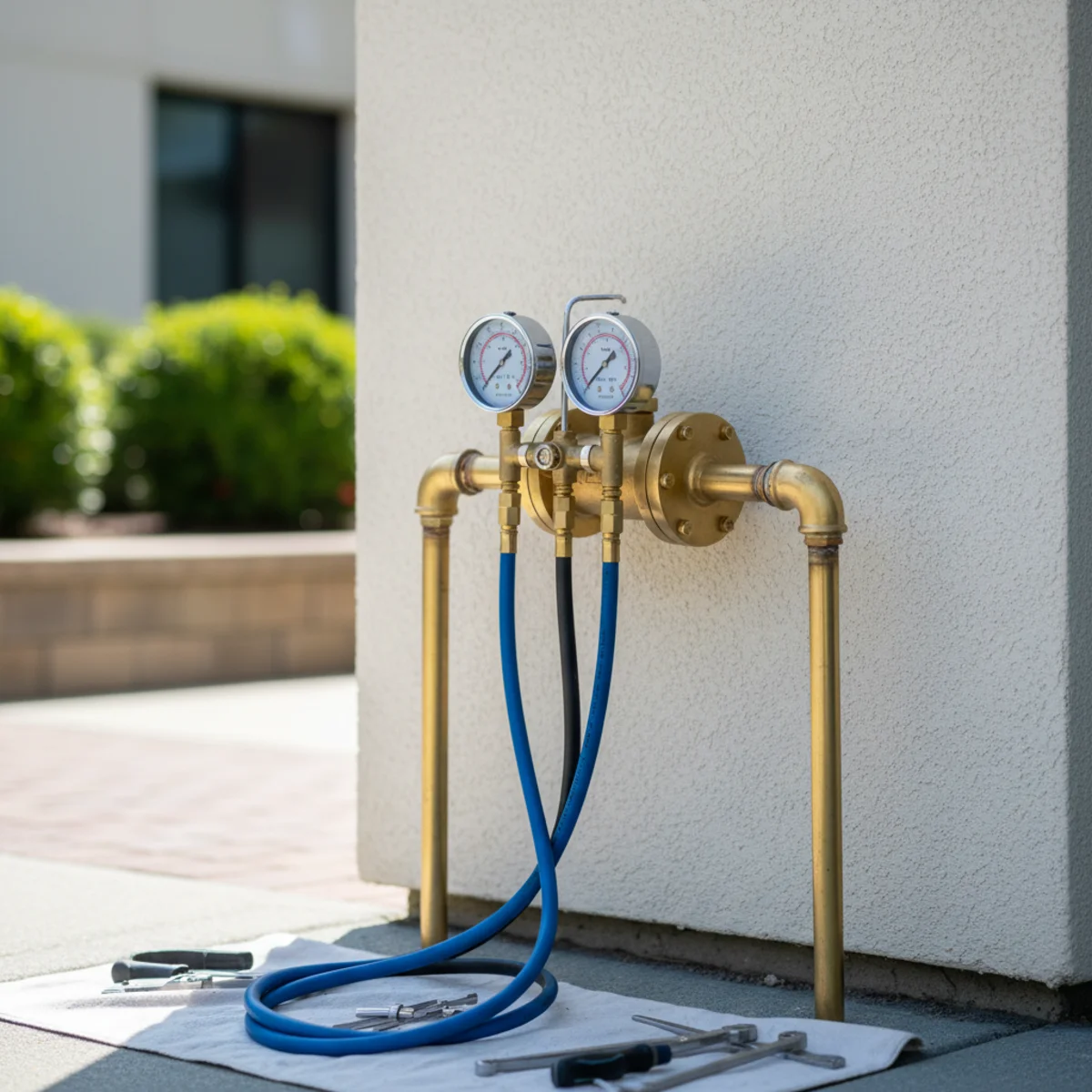
Backflow prevention is the line item businesses forget until a notice arrives. Many NJ commercial properties are required to have their backflow assembly tested annually by a certified tester, and the device protects the public water supply from contamination flowing backward out of your building. This is not optional and it is not a place to cut corners. If you are unsure whether your building has a testable assembly, our backflow prevention page explains what to look for and when testing is due.
Know Your Shutoffs Before You Need Them
Every person who opens or closes your building should know where the main water shutoff is and how to turn it. Not your plumber. Your staff. When a supply line lets go behind a wall, the gallons you save are the difference between a mop and a remediation crew.
Walk the building and find your shutoffs:
- The main valve where water enters the building, usually near the meter at the front foundation wall.
- The individual shutoffs under each sink and behind each toilet.
- The isolation valve at the water heater.
- The gas shutoff, if you run gas equipment, so staff can close it if they ever smell gas and evacuate.
Tag them. A simple labeled tag turns a frantic search into a five-second motion. Older Roselle Park commercial buildings sometimes have a stuck or painted-over main valve that will not budge when you need it most. If yours feels frozen, have it replaced on a calm afternoon, not discovered during a flood.
What to Hand Off to a Plumber (and What to Keep In-House)
Be honest about the line between routine and risk. Cleaning aerators, pouring water in floor drains, watching for leaks, tagging shutoffs: keep all of that in-house. It is cheap, fast, and it builds a record.
Hand off anything involving the sewer main, the gas line, the water heater's gas controls, or a leak you cannot see the source of. A snake in untrained hands can punch through an old clay sewer line and turn a clog into an excavation. Gas work is never a DIY job in a commercial space, full stop.
The smartest move for most Westfield Ave businesses is a standing relationship with a plumber who already knows your building. When something does break, dispatch is not learning your layout from scratch. We serve businesses across Roselle Park and the surrounding towns, and a scheduled maintenance visit costs a fraction of the emergency call it prevents. Set it up by calling (207) 419-2600.
Building Your Own Maintenance Calendar
A checklist only works if it actually runs. Put the monthly walk-through on a recurring calendar reminder with a named owner. Put the quarterly deeper checks on the first business day of each season so they never slip. Keep a single log, paper or digital, with dates and findings, so the next manager inherits the building's history instead of starting blind.
That log is also what tells you when a pattern has crossed from maintenance into repair. Three quarters of a slowing drain is a clear signal to call before it backs up. A water heater that has popped louder each visit is on borrowed time.
Good commercial plumbing maintenance is boring on purpose. Boring means no surprise closures, no soggy stockroom, no scrambling for a plumber who has never seen your building. Run the schedule, keep the log, and call a pro for the items above the homeowner line. That is the whole game.
Frequently Asked Questions
Keep Reading
Commercial
Backflow Prevention for Businesses: What It Is and Why Testing Exists
Backflow prevention is the compliance item most business owners forget until a notice arrives. Here is what backflow actually is, why testing exists, and how to stay ahead of it.
8 min read · April 27, 2026
Commercial
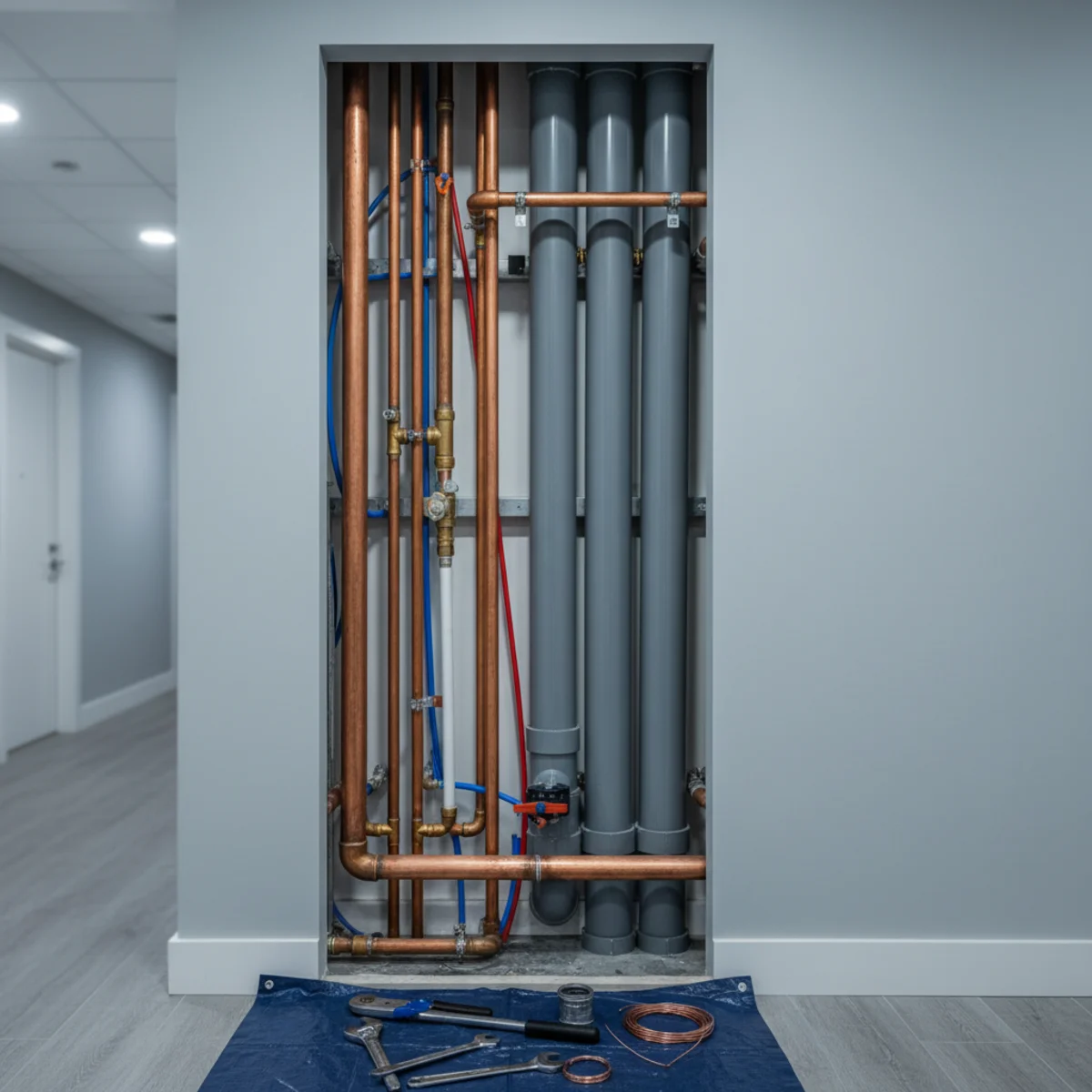
Apartment Building Plumbing Issues and How They Spread
In a multifamily building, plumbing is never just one unit's problem. Here is how stacked units and shared risers turn a single leak into a building-wide headache, and who pays.
8 min read · March 30, 2026

Commercial
The Property Manager's Plumbing Emergency Plan
A tenant calls at 2 AM about water coming through the ceiling. Here is the playbook every Roselle Park property manager should have ready before that phone rings.
8 min read · February 26, 2026